Where Safety Meets Expert Tree Service.

Carbonado Crane-assisted Tree Removal
The removal of trees using a crane to lift sections clear of obstacles.
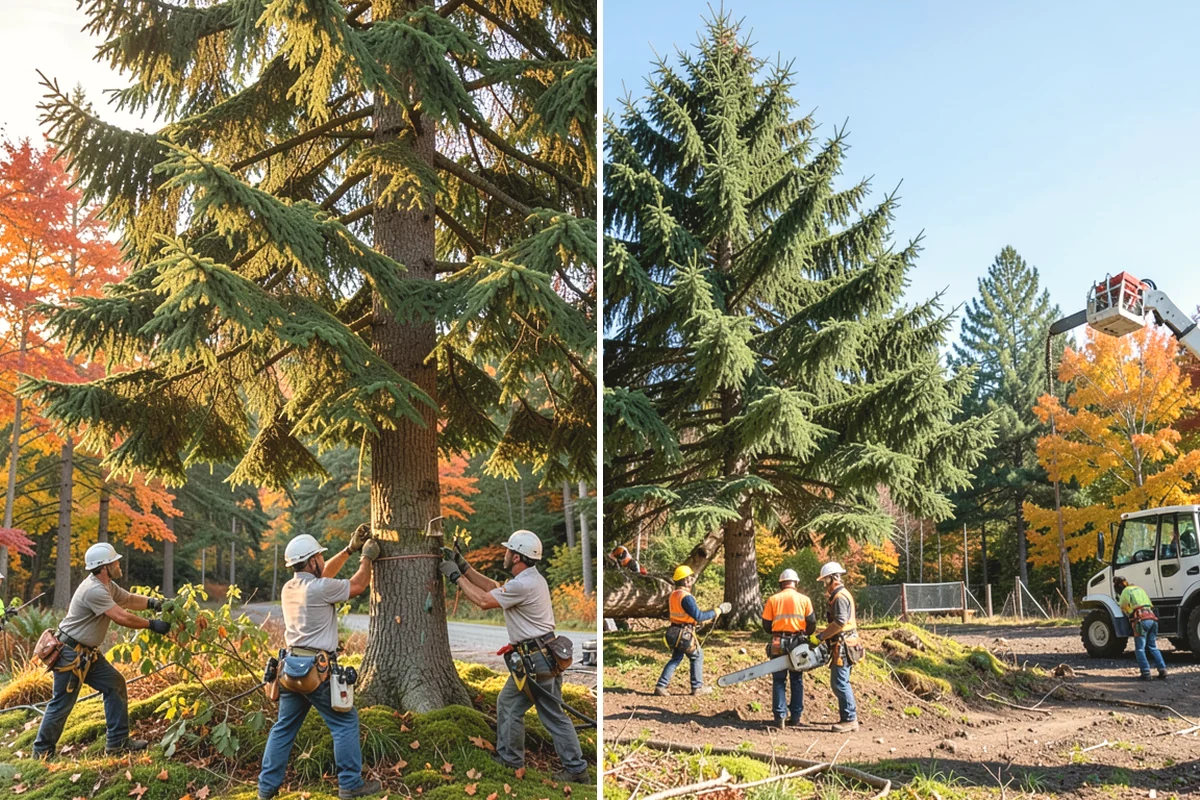
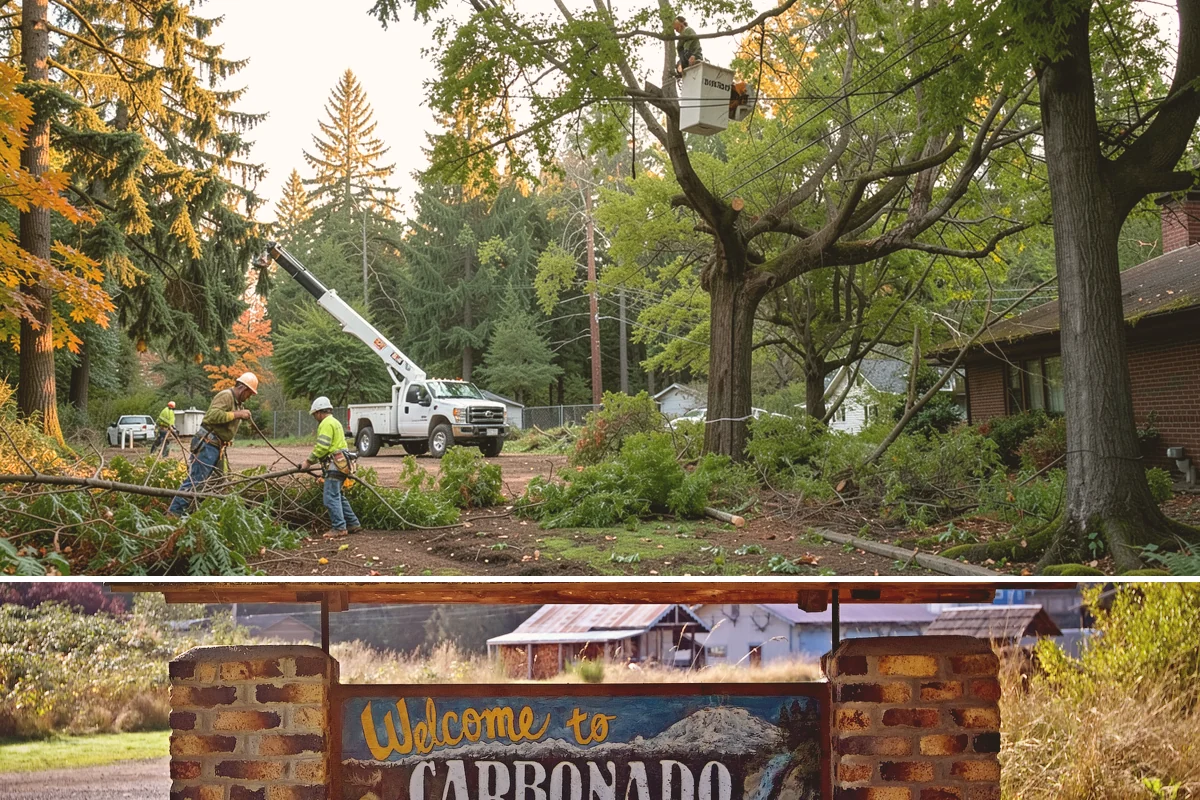
Crane-assisted removal is for properties where a tree cannot be safely climbed and dropped in pieces, or where there is no clear space to lower wood to the ground. Typical cases are a large tree leaning over a house, a trunk with decay or splits, or a tree in a tight yard with a roof, fence or wires below it.
A crane holds each section while it is cut, then lifts it away. Below, we compare the main ways to take a tree down and explain which Carbonado conditions point toward each one.
About Crane-assisted Tree Removal in Carbonado
If your property has a large tree or tight access that makes standard removal difficult, crane-assisted services offer a safe solution for homeowners in our area. This method helps clear obstacles while protecting nearby structures and landscaping from potential damage during the job. We are here to help you manage challenging trees with care and precision.
What Carbonado Crane-assisted Tree Removal Includes
Crane-assisted tree removal uses specialized equipment to lift sections of a tree, keeping them clear of sensitive targets like homes or power lines. This approach is ideal when access is restricted, nearby features require extra protection, or the size of the tree makes conventional rigging impractical. Our crews follow recognized arboricultural standards to ensure every step matches your specific site conditions and tree species.
Carbonado Crane-assisted Tree Removal Process
The work begins with an on-site assessment to evaluate hazards and establish safe drop zones around the property. Crews then carefully rig limbs or fell the stem in a controlled sequence before processing the wood and hauling debris away. Once all material is removed, we complete final cleanup to leave your site clear and ready for use again.
Equipment We Use for Carbonado Crane-assisted Tree Removal
Our teams utilize chainsaws, climbing gear, and ground protection equipment alongside cranes or aerial lifts as needed for each job. A wood chipper helps manage branches on-site while personal protective equipment ensures the safety of everyone involved in the operation. All tools are selected to match the specific requirements of your tree’s size and location.
Carbonado Crane-assisted Tree Removal Safety & Best Practices
Safety is a priority, so we maintain clear drop zones and follow controlled fall paths throughout the removal process. Before starting any work, our crews identify overhead utility lines and inspect trees for hidden decay or structural defects that could affect stability. We also use coordinated ground communication and proper fall protection to manage risks during every phase of the job.
Signs You Need Crane-assisted Tree Removal in Carbonado
You may need this service if you notice a tree leaning unpredictably or have limited space for standard equipment on your property. Situations where targets are sensitive, such as homes close by, or internal decay makes conventional methods unsafe also indicate when crane assistance is required. This method helps prevent pests and disease from spreading to nearby trees while removing safety hazards quickly.
What Affects the Cost of Crane-assisted Tree Removal in Carbonado
The final cost depends on factors like the size of the tree and any hidden conditions affecting its structural integrity. Proximity to structures and power lines, limited equipment access, and specific wood disposal requirements will also influence pricing for your project. These variables ensure we provide an accurate estimate that reflects the unique challenges of your site.
Best Time of Year for Carbonado Crane-assisted Tree Removal
This service can be performed year-round in our local weather patterns with appropriate planning for ground stability during wetter seasons. While rain requires careful management to keep crane operations safe, crews are ready to work whenever conditions allow and access is available. We prioritize managing moisture levels on the ground to ensure a secure operation regardless of the season.
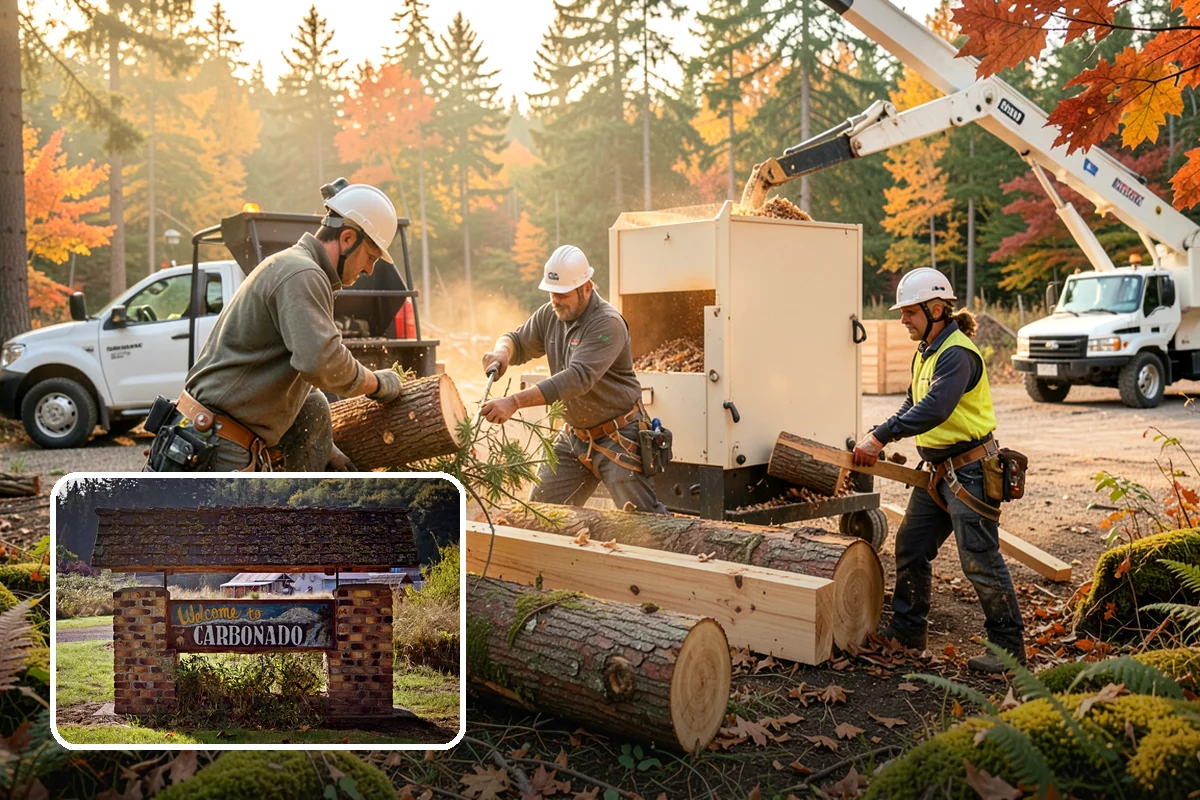
Choosing a removal method for your Carbonado property
Owners usually choose between three approaches. The right one depends on the tree, the access and what sits underneath it.
- Straight felling: the tree is cut at the base and dropped in a planned direction. It needs open ground, longer than the tree is tall, with nothing valuable in the path.
- Climbing and rigging: a climber removes the tree in pieces and lowers each one on ropes. It suits trees with room to work and a sound structure that can hold a climber.
- Crane-assisted removal: the crane takes the weight of each section before the cut is made. It suits large, hazardous or hard-to-reach trees, and trees too weak to climb.
Slope matters here. USGS elevation data shows Carbonado has some steep slopes, though fewer than the hilliest Puget Sound cities. On a sloped lot, felled wood can roll or slide, and ropes put more strain on the ground crew. A crane lifts sections straight up and away, so less wood touches the hillside. Access is still a question. The crane needs a stable place to set up, and we look at that during the estimate.
Power lines are the second local factor. Puget Sound Energy is the electric utility in Carbonado. For the service line, the wire from a PSE pole to your house or meter pole, PSE says it does not trim it. The homeowner or a private arborist does. If a tree you want removed is over or near that wire, plan the work with that in mind, and call us before you assume anyone else will handle it.
Permits are the third. The published Carbonado rules we found do not clearly say which removals need city approval. So we check with the city before work starts, and you do not have to guess.
To compare methods for your tree, call or text 425-484-4442. The ISA Certified Arborist on staff can look at the tree, the slope and the wires, and the estimate is free.
Carbonado tree conditions at a glance
| USDA hardiness zone | 8b |
|---|---|
| Tree canopy | Among the most heavily treed Puget Sound cities (satellite data) |
| Slopes | Some steep slopes |
| Soils | 0% of land has hardpan or another restrictive layer within 40 in; most common series Barneston; 100% well drained |
| High and strong wind episodes, 2005-2025 | 40 in the forecast zone |
| Electric utility | Puget Sound Energy (PSE) |
Tree removal rules in Carbonado
Carbonado’s published rules don’t spell out clearly which removals need city approval. We check with the city before work starts.
Trees near the power line to your house
Puget Sound Energy (PSE): Service line (wire from PSE pole to home or meter pole): PSE does not trim it; homeowner/private arborist trims.
PSE performs a safety disconnection so the homeowner or private tree trimmer/arborist can work; Call at least 5 business days ahead to check crew availability and potential charges.
Safety disconnect: 1-888-321-7779 (5+ business days ahead). Utility page.
Any fee for a disconnect is set by the utility.
Strongest wind events near Carbonado
- Dec 17, 2010: gusts to 72 mph
- Feb 1, 2017: gusts to 70 mph
- Feb 7, 2012: gusts to 70 mph
NOAA Storm Events, forecast zone that includes Carbonado, 2005-2025.
Sources: Daymet daily weather (NASA/ORNL), NOAA Storm Events, USDA plant hardiness map 2023, NRCS soil survey, USGS elevation, WA DNR landslide inventory, USDA Forest Service aerial survey, WSDA, city tree assessments and street-tree inventories, SILVIS Lab, Arbor Day Foundation, and official city and utility pages.
Crane-assisted Tree Removal Serving Carbonado
Carbonado
Crane-assisted tree removal in nearby areas
Also serving Carbonado
- Shade Tree Planting in Carbonadoat Washington Landscaping
- Street Tree Pruning in Carbonadoat Washington City Services
- Storm Wood Processing in Carbonadoat Washington Firewood