Where Safety Meets Expert Tree Service.

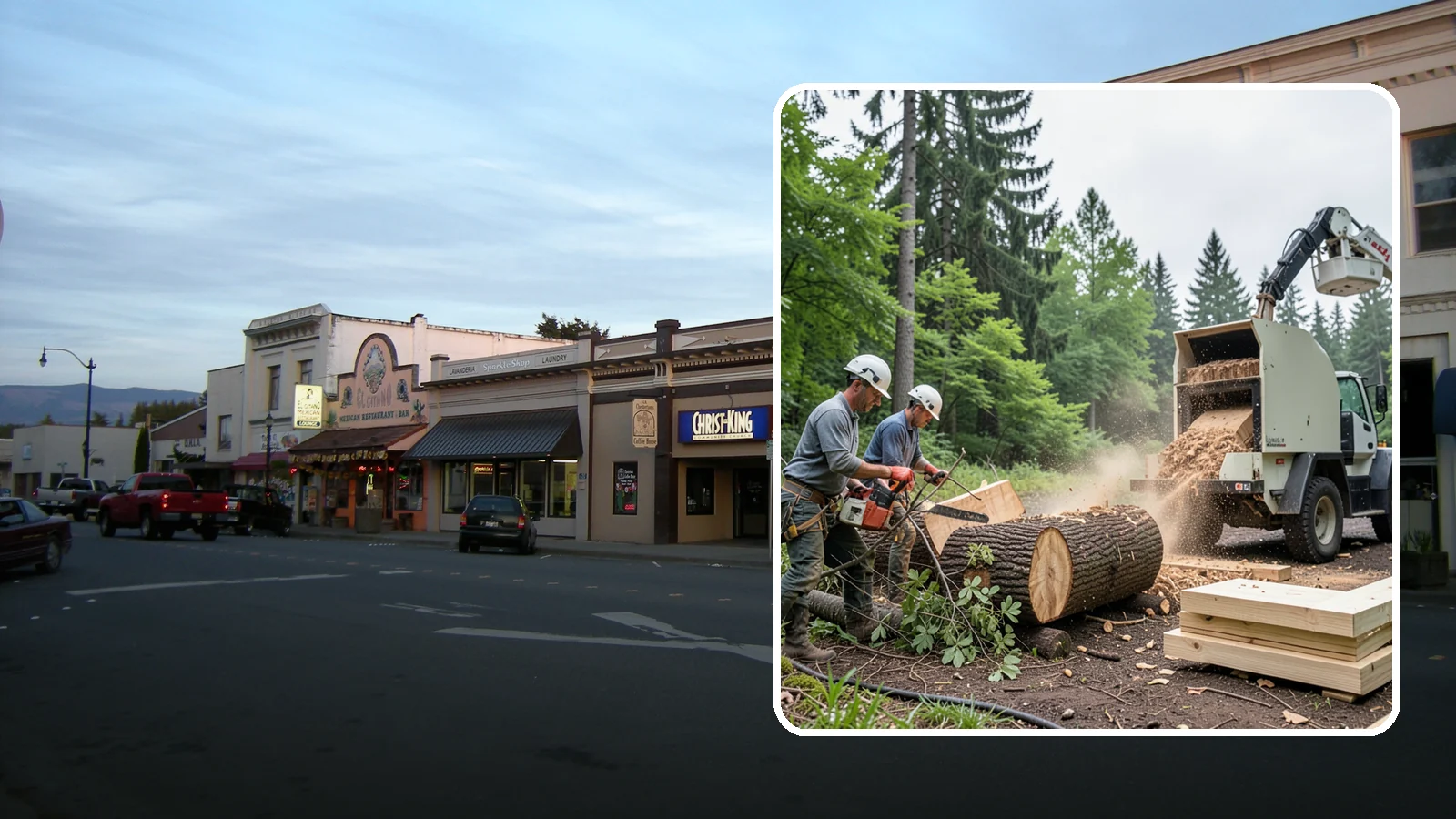
Burlington Wood Milling
The milling of logs into usable slabs or boards.
You have a tree on the ground or one that has to come down, and it seems wrong to see good trunk sections end up as firewood or chips. Wood milling is the other option. A portable or shop mill cuts the log into boards, slabs, or beams you can use for shelves, tables, benches, or building projects.
Not every log is worth milling. Size, straightness, species, and condition decide what you can get out of it. Knowing that before the tree is cut changes how the trunk is bucked and handled.
About Wood Milling in Burlington
Wood milling gives removed trees a second life by turning logs into usable slabs or boards. This service is perfect for homeowners who want their yard clean while creating valuable lumber from debris we remove together. We help you see the potential in wood that might otherwise be discarded, ensuring nothing goes to waste unnecessarily.
What Burlington Wood Milling Includes
Our team specializes in milling logs directly on site to produce high-quality slabs and boards suitable for various projects. This process is designed to keep your property tidy by converting debris into products rather than sending everything straight to a landfill. We match our methods carefully to the specific tree species, current site conditions, and available access points at your home.
Burlington Wood Milling Process
The work begins with sorting material based on type and size before we chip, cut, or mill it as needed for your desired product. Once processed into lumber of the required quality, we either haul away excess waste or deliver finished pieces to you. We always take care to clean up the entire work area so your property is left in better shape than when we arrived.
Equipment We Use for Burlington Wood Milling
To complete this job safely and efficiently, our crews use wood chippers, chainsaws, and specialized milling equipment as required for each log. Loaders and hauling vehicles are brought along to manage materials throughout the site, ensuring smooth movement of heavy items. Every crew member also wears necessary personal protective gear while operating these powerful tools around your property.
Burlington Wood Milling Safety & Best Practices
We strictly keep hands and bystanders clear from feed equipment during all operations involving our machinery. Loads are secured properly before transport to prevent shifting or accidents on the way home, protecting both people and cargo. Crew members wear eye and hearing protection at all times while handling logs with proper technique and using appropriate lifting equipment.
Signs You Need Wood Milling in Burlington
You may need wood milling when you have removed trees that could become lumber instead of just being chipped into mulch. If your project requires specific sizes or qualities of boards, this service allows us to tailor the output directly from the fallen timber we remove. Situations where embedded metal debris exists in logs also signal a need for careful sorting and processing before milling can begin.
What Affects the Cost of Wood Milling in Burlington
The final price is influenced by factors such as log size and moisture content which affect product quality standards. Any embedded metal or other debris found inside the logs will require additional removal steps that impact overall costs. Equipment access limits at your specific job site are also considered when determining how much work we can perform efficiently.
Best Time of Year for Burlington Wood Milling
Wood milling works best during dry seasons in our region to ensure logs have low enough moisture levels for high-quality lumber production. Attempting this service too early or late may result in wood that is not suitable for making fine boards or slabs due to natural water content changes. Planning your project around these seasonal conditions helps us deliver the highest quality finished products from every tree we remove.

Milling logs from Burlington trees: what to know before cutting
Good lumber starts with how the tree is felled and cut. Long, clean trunk sections give the most usable boards. Cutting a trunk into short lengths too early can waste wood. If you plan to mill, tell us before the work starts so the log lengths can be planned around what you want to build.
Condition matters as much as size. Rot, deep cracks, metal embedded in the trunk, and heavy dieback all reduce what a log can yield. A federal aerial survey of forest within 10 km of Burlington, run by the USDA Forest Service and WA DNR from 2021 to 2025, mapped 3,555 acres of decline with no single cause identified, mostly in unknown hardwoods, bigleaf maple, and western redcedar. That survey covers forest land, not yard trees, so it says nothing about the tree on your property. It is a reminder that maple and cedar logs should be checked for stained or soft wood before you count on them for furniture.
Drying takes time
Milled boards are wet. About 78% of Burlington's yearly rain and snow falls from October to April, according to Daymet data for 2005 to 2025. Stacked lumber left uncovered through that stretch will stay damp and can stain or grow mold. Plan to stack boards off the ground, with spacers between layers, under a roof with open sides for airflow. Air drying commonly takes many months, and thicker slabs take longer. Moisture content should be checked before you build with the wood indoors.
Before work begins
If the tree is being removed, we check with the city of Burlington about any rules that apply to removal before work starts. Milling the logs afterward is separate from that question. We can look at the trunk, talk through what lumber is realistic, and get a free estimate. You can call or text 425-484-4442.
Burlington tree conditions at a glance
| Land under dense tree cover (50%+ canopy) | 5% |
|---|---|
| Rain and snow falling October to April | 78% of the year’s total |
| Days with 0.1 in or more of rain | 107 a year |
Tree health near Burlington
- Decline, cause not identified3,555 ac
- Western tent caterpillar433 ac
- Bears244 ac
Forest damage mapped from the air within 10 km of Burlington, 2021-2025 (USDA Forest Service and WA DNR). This covers forest land, not street or yard trees. “Decline, cause not identified” is dieback with no single cause found.
Sources: Daymet daily weather (NASA/ORNL), NOAA Storm Events, USDA plant hardiness map 2023, NRCS soil survey, USGS elevation, WA DNR landslide inventory, USDA Forest Service aerial survey, WSDA, city tree assessments and street-tree inventories, SILVIS Lab, Arbor Day Foundation, and official city and utility pages.
Wood Milling Serving Burlington
Burlington
Wood milling in nearby areas
Also serving Burlington
- Kiln-Dried Firewood in Burlingtonat Washington Firewood
- Boulder Placement in Burlingtonat Washington Landscaping