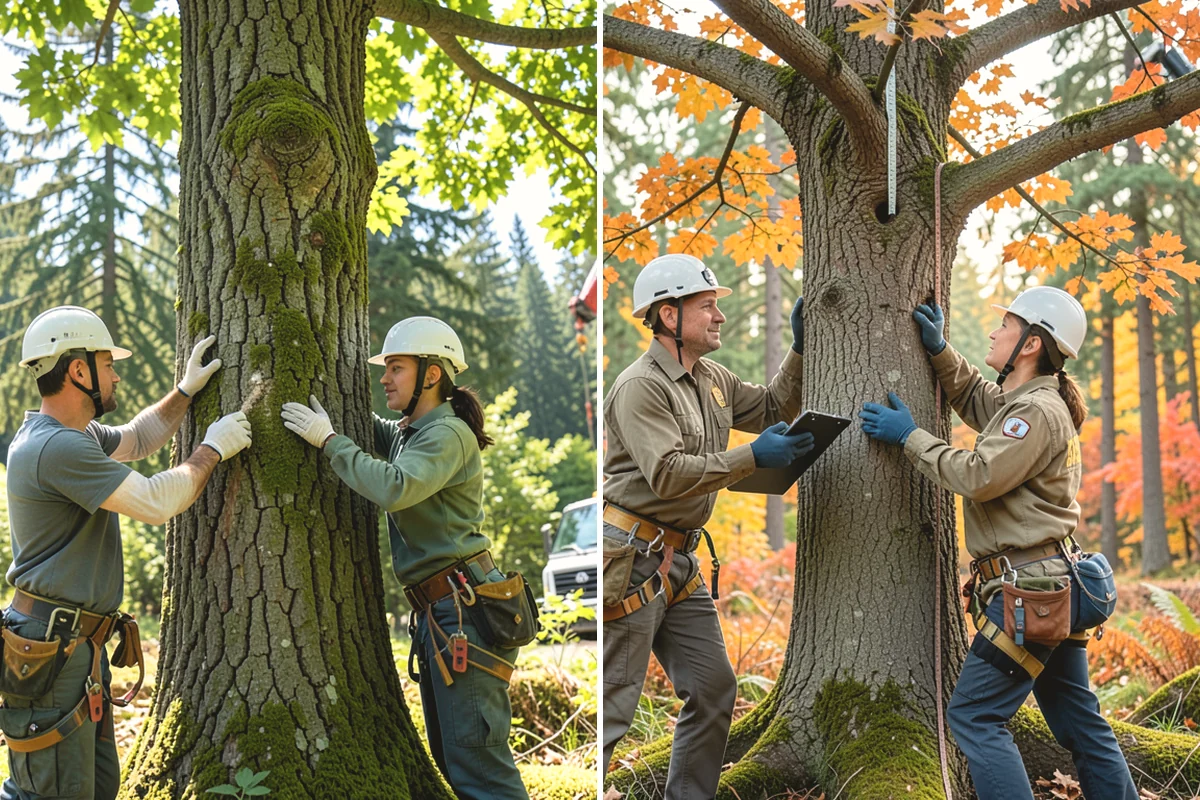
Where Safety Meets Expert Tree Service.


Burlington Static Cabling Installation
The installation of rigid cable systems that limit movement.
Static cabling is for owners of trees with a structural weakness that is not yet a failure. Think of a mature tree with two main stems joined at a tight V, a long limb reaching over a roof or driveway, or a tree with a crack that has not opened further.
A cable is installed high in the canopy to limit how far weak parts can move. It does not fix the defect, and it does not suit every tree. Here is how to weigh cabling against the other choices for a tree in Burlington.
About Static Cabling Installation in Burlington
Static cabling installation is a specialized solution designed to support trees that have structurally weak limbs or codominant stems. This service helps preserve valued specimens by reducing the risk of failure in areas where branches are heavy or unions are included-bark. We work with homeowners who want to extend the safe life of significant trees on their property while following recognized arboricultural standards.
What Burlington Static Cabling Installation Includes
This category focuses on installing rigid cable systems specifically intended to limit movement and provide structural support. The process includes selecting an appropriate system based on your specific tree species, site conditions, and access requirements. Our trained crews use these methods to reinforce weak unions and heavy limbs without compromising the natural growth of the tree.
Burlington Static Cabling Installation Process
Work begins with a thorough assessment of structural defects and load paths to determine where support is most needed. We then select an appropriate cabling system and install hardware at correct positions according to industry standards. The final steps involve documenting the installation details and setting up a schedule for future inspections to ensure long-term stability.
Equipment We Use for Burlington Static Cabling Installation
Our crews utilize specialized cabling and bracing hardware along with professional installation tools to complete the job safely. Depending on the size of the tree, we may use climbing and rigging gear or an aerial lift to reach higher branches. All team members wear personal protective equipment throughout the project to ensure safety for everyone involved in the operation.
Burlington Static Cabling Installation Safety & Best Practices
We install cabling only where support is appropriate and effective, using hardware that is correctly rated for the specific load it will carry. It is important to recognize when removal might be a safer option than adding new supports or continuing with an aging system. Systems are designed to be inspected periodically so we can address any wear before they become a hazard.
Signs You Need Static Cabling Installation in Burlington
You may need this service if you notice cracks and cavities, overextended limbs, or signs of included-bark unions in your tree structure. Codominant stems that split under stress often require reinforcement to prevent sudden failure during storms or high winds. Additionally, aging hardware from previous installations should be inspected regularly as part of a proactive maintenance plan for your landscape trees.
What Affects the Cost of Static Cabling Installation in Burlington
The price is influenced by the specific species of tree you have and how difficult it is to access different parts of the site. Complexity plays a major role in cost, particularly when installing hardware at correct positions around structurally weak limbs that require precise placement. These factors ensure we provide a tailored solution rather than applying a one-size-fits-all approach to every job.
Best Time of Year for Burlington Static Cabling Installation
Work can generally be performed year-round given our local weather patterns and the flexibility of cabling installation tasks. The main exception occurs when branches are frozen or ice-laden, as these conditions could damage new hardware during placement. We plan projects around branch health rather than strict seasons so we can address your needs whenever they arise safely.
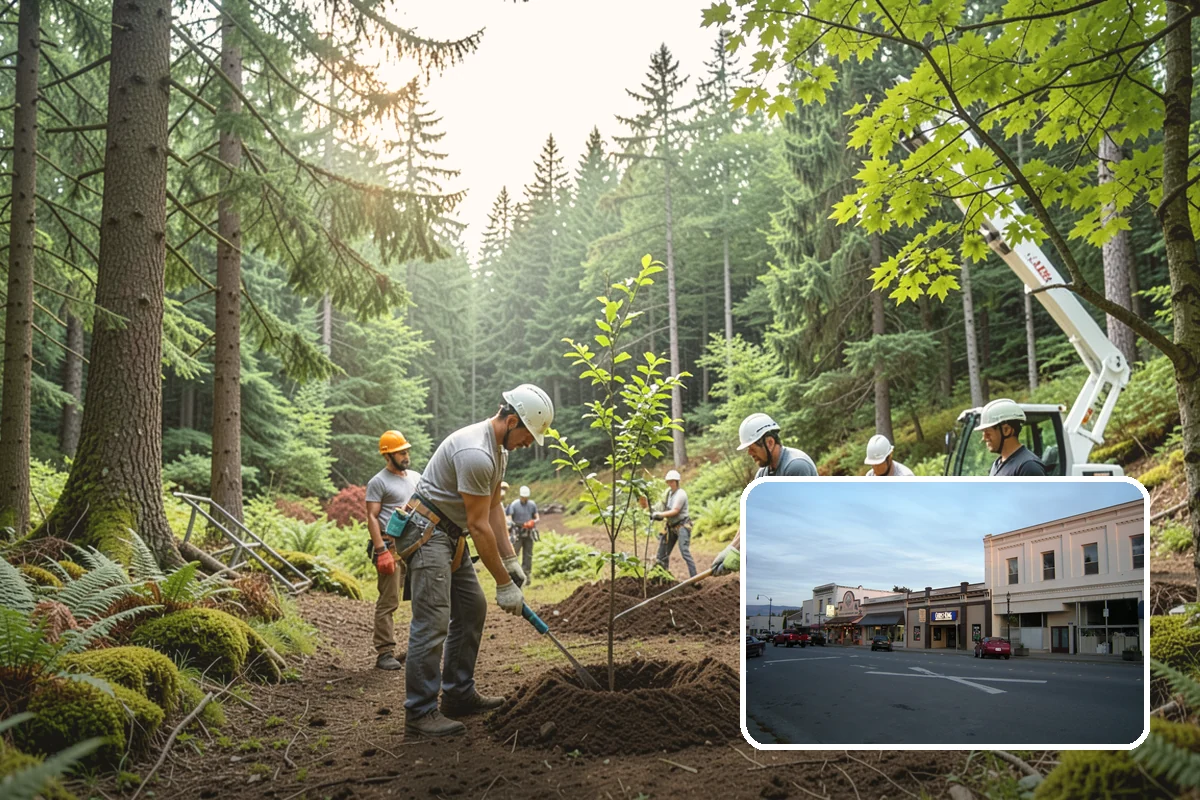
Cabling or other options for Burlington trees
Cabling is one of several ways to handle a weak tree. The right one depends on the defect, the tree's health, and what sits underneath it.
The options
- Static cabling: a steel cable is placed across the canopy, usually about two-thirds of the way up from the union to the branch tips, to limit movement of a weak union or heavy limb. Standard practice follows ISA ANSI A300 guidance.
- Reduction pruning: shortens or thins a heavy limb to cut its leverage. It works well when the tree can tolerate the cuts and the defect is modest.
- Monitoring only: reasonable for minor defects with nothing valuable below.
- Removal: the safer choice when decay is advanced, the trunk is cracked through, or the tree is already leaning or failing.
What local conditions favor
Wind is the main local reason to take this seriously. The National Weather Service forecast zone that includes Burlington logged 33 high and strong wind episodes from 2005 to 2025. The strongest gust recorded in that zone since 2005 was 85 mph on December 14, 2006. Those are zone-wide figures, not measurements of any one yard, but they show that a weak union can be tested by real storms. That favors cabling or pruning sooner rather than after a bad winter.
Burlington sits in USDA hardiness zone 8b, according to the 2023 USDA map. That tells you which species do well here. It does not tell you whether a given tree is sound, so the choice still comes from inspecting the tree.
Getting an assessment
Cables need inspection over time, and a tree that is hollow or decayed at the union should not be cabled. If a storm has already damaged a tree, Washington DNR advises hiring a licensed, insured company with ISA Certified Arborists. We can look at your tree and tell you which option fits. Call or text 425-484-4442 for a free estimate.
Burlington tree conditions at a glance
| High and strong wind episodes, 2005-2025 | 33 in the forecast zone |
|---|---|
| Average snowfall | 8.6 in a season |
| Soils | 4% of land has hardpan or another restrictive layer within 40 in; most common series Field |
| Slopes | Some steep slopes |
Strongest wind events near Burlington
- Dec 14, 2006: gusts to 85 mph
- Feb 3, 2006: gusts to 78 mph
- Nov 15, 2006: gusts to 74 mph
NOAA Storm Events, forecast zone that includes Burlington, 2005-2025.
Sources: Daymet daily weather (NASA/ORNL), NOAA Storm Events, USDA plant hardiness map 2023, NRCS soil survey, USGS elevation, WA DNR landslide inventory, USDA Forest Service aerial survey, WSDA, city tree assessments and street-tree inventories, SILVIS Lab, Arbor Day Foundation, and official city and utility pages.
Static Cabling Installation Serving Burlington
Burlington