Where Safety Meets Expert Tree Service.

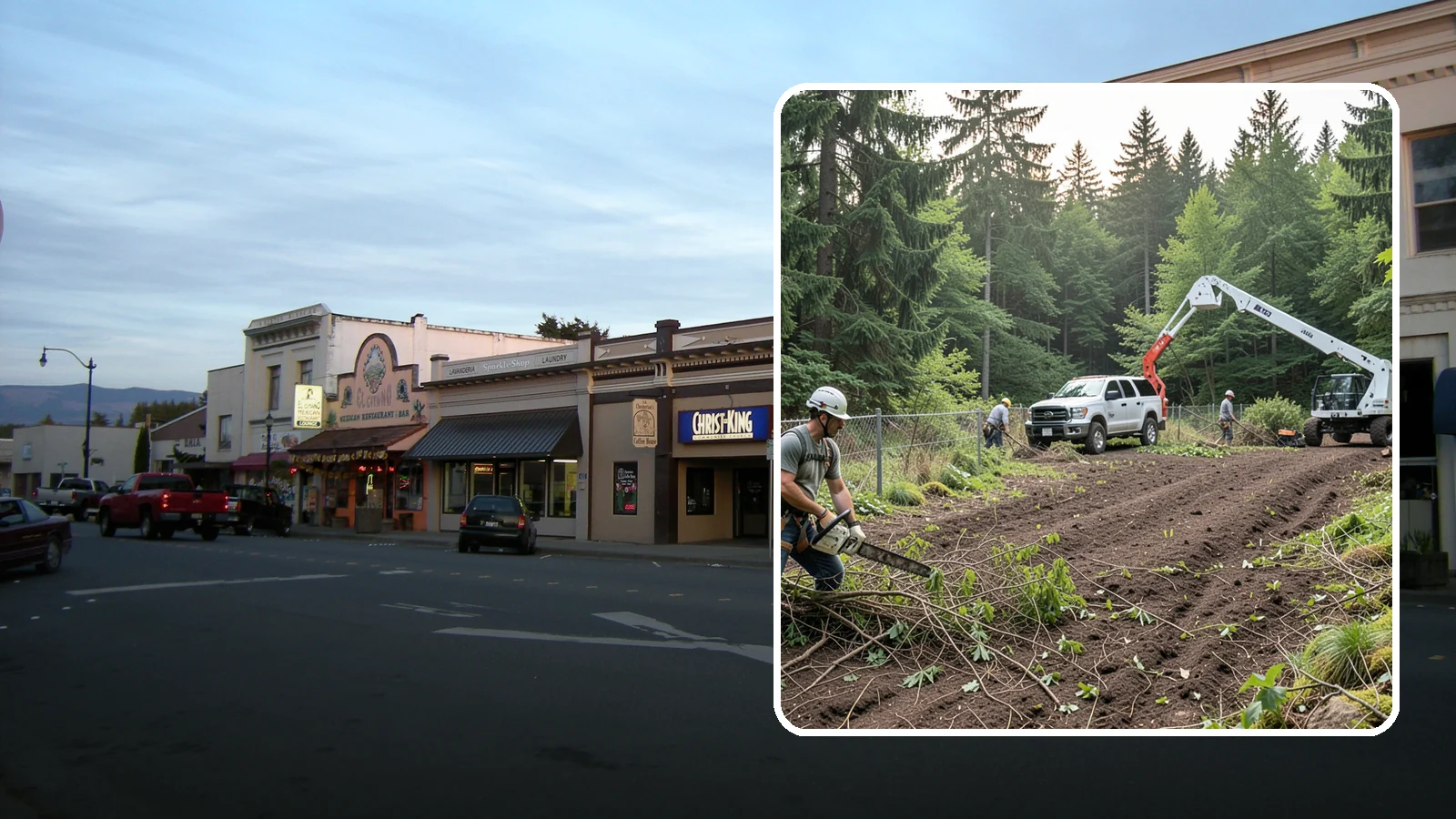
Burlington Fence Line Clearing
The clearing of vegetation along fence lines.
Fence line clearing is for owners whose fence has disappeared behind brush, or whose neighbor's limbs and your own saplings are pushing on the boards. It also fits anyone who needs a clear strip before replacing or surveying a fence.
The work can be light or heavy. It might mean cutting back overhanging limbs, removing small trees and brush along the line, or taking out a larger tree that is leaning into the fence. Which approach fits depends on what is growing there and how close it sits to the boards.
About Fence Line Clearing in Burlington
Fence line clearing helps homeowners keep their property lines defined and easy to maintain while protecting your fencing from overgrowth. Our trained crews work carefully through dense vegetation along fence lines to simplify future upkeep for you. This service is ideal if you want a cleaner, safer edge between your yard and neighboring properties or public spaces.
What Burlington Fence Line Clearing Includes
This land clearing task focuses specifically on removing unwanted plants that grow right next to your fences. The goal is to reduce fire risk by lowering fuel loads while controlling invasive species that might otherwise take over the area. We clear these areas in a planned sequence to ensure the fence remains secure and accessible for daily use.
Burlington Fence Line Clearing Process
Our team begins by assessing the site, marking important features like utility lines or specific plants you wish to keep intact. Once marked, we remove vegetation using methods matched to your specific tree species and current ground conditions. After clearing is complete, we process and haul away debris responsibly, then tidy up the area so it looks neat again.
Equipment We Use for Burlington Fence Line Clearing
We utilize a mix of brush cutters, chainsaws, chippers, and hauling equipment tailored to the job at hand. Hand tools are often used for delicate work near fences or around sensitive root zones that need extra care. All crew members wear necessary personal protective gear while operating this machinery safely along your property lines.
Burlington Fence Line Clearing Safety & Best Practices
Safety is our priority as we identify utility locations and uneven terrain before starting any cutting or clearing work. We take special precautions to protect retained trees, their roots, and the fence structure from accidental damage during operations. By managing debris effectively on site, we prevent hazards that could arise from loose branches or slippery conditions after rain.
Signs You Need Fence Line Clearing in Burlington
You may need this service if you notice thorny growth making your property difficult to walk through or inspect regularly. Invasive species are another sign it is time for clearing, as they can quickly regrow and overwhelm fence lines without help. If wet mud makes access tricky or the vegetation looks too dense to manage on your own, professional assistance may be needed.
What Affects the Cost of Fence Line Clearing in Burlington
The price of this work depends largely on how thick the vegetation grows along your specific fence line. Uneven ground that is hard to navigate will also influence the final cost compared to flat and easy-to-access areas. Additionally, if you have thorny plants requiring special protection methods or a large volume of debris for disposal, these factors play a role in pricing.
Best Time of Year for Burlington Fence Line Clearing
While we can perform this work year-round given our local climate conditions, wet weather may complicate access on uneven terrain at times. It is best to schedule projects when the ground is not overly muddy so that heavy equipment and crews can move safely along your property lines. We will always account for current soil moisture levels before beginning any clearing operation near fences or slopes.
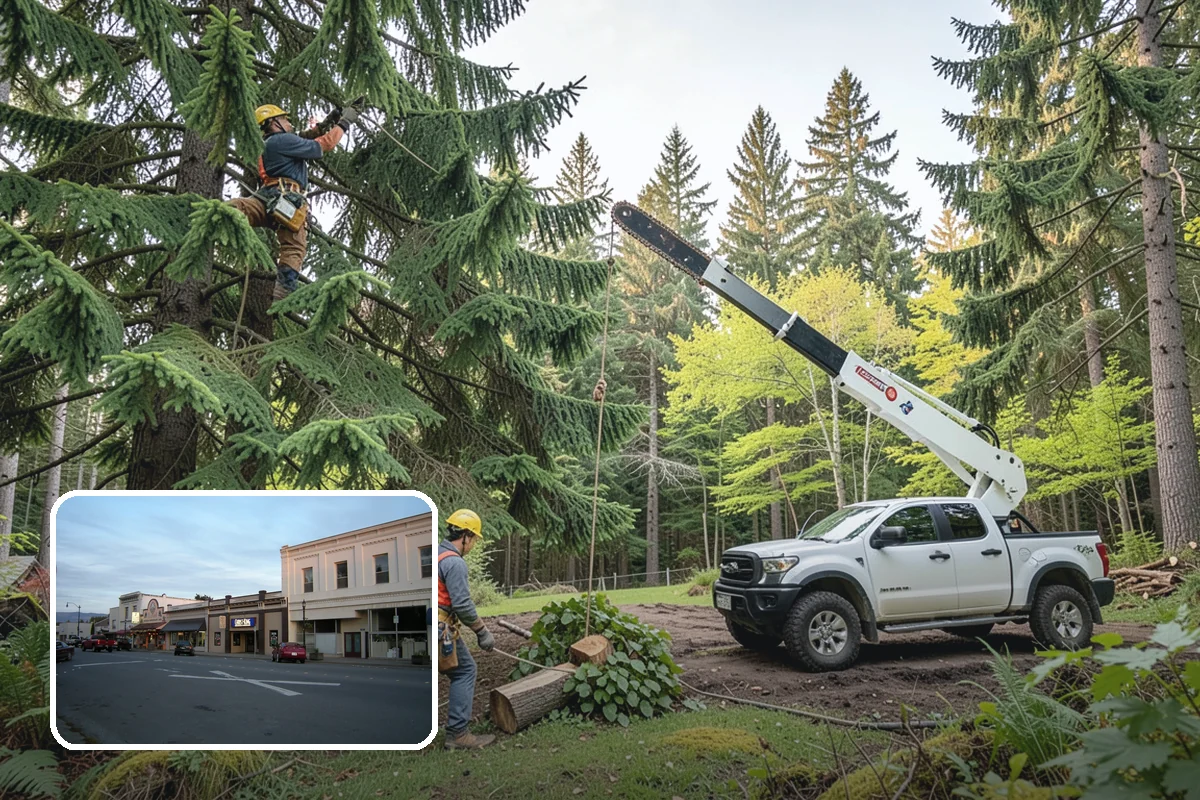
Fence line clearing options for Burlington properties
Most fence lines call for one of three approaches. Here is how they compare.
- Brush and vine clearing. Cutting back blackberry, ivy and small volunteer growth. This suits fences that are mostly sound but buried.
- Pruning overhanging limbs. Limbs are shortened back to a branch or trunk, following ISA and ANSI A300 pruning practice. This suits healthy trees you want to keep.
- Tree removal along the line. This suits trees growing into the fence, split trunks, or trees leaning over it.
What local conditions favor
About half of Burlington's housing is single-family detached houses, according to the Census ACS for 2020-2024. That usually means yards with fences on shared lines, so a limb or trunk often involves a neighbor. Talk with them before work starts, especially if a tree sits on or near the boundary.
Satellite data shows only about 5% of Burlington's land under dense tree cover, meaning 50% canopy or more. That is a citywide figure, not a statement about your lot. It does suggest that a stand of large trees on a fence line is worth a careful look rather than a quick cut.
The forecast zone that includes Burlington recorded 33 high and strong wind episodes from 2005 to 2025. A tree leaning over a fence takes more load in those conditions, so a leaning or cracked trunk points toward removal rather than trimming. A sound tree with a few heavy limbs over the boards usually points toward pruning.
Before work starts
Removing a tree can be subject to city rules, and the rules are not always clear for a given lot. We check with the city before work starts, so you know where things stand. Our ISA Certified Arborist can assess the trees along your line, and estimates are free.
Tell us where the fence runs and what is pressing on it. A few photos by text to 425-484-4442 helps us tell which approach fits.
Burlington tree conditions at a glance
| Homes in the wildland-urban interface | 0% |
|---|---|
| Land under dense tree cover (50%+ canopy) | 5% |
| Slopes | Some steep slopes |
| Rain and snow falling October to April | 78% of the year’s total |
Tree removal rules in Burlington
Significant trees may not be removed without prior authorization from the department, BUT the significant-tree rules do not apply to trees within the boundaries of an existing landscaped yard associated with an individual dwelling (except redevelopment projects), nor to construction of a single detached dwelling, duplex or small multiunit building or land divisions of four lots or less. So ordinary removal in an existing single-family yard needs no tree approval outside critical areas.
Regulated size: 6 inches DBH (multi-stem: any stem at least 4 in. measured 6 in. from the trunk joint).
Official city source. Rules change; we confirm with the city before work starts.
Tree health near Burlington
- Decline, cause not identified3,555 ac
- Western tent caterpillar433 ac
- Bears244 ac
Forest damage mapped from the air within 10 km of Burlington, 2021-2025 (USDA Forest Service and WA DNR). This covers forest land, not street or yard trees. “Decline, cause not identified” is dieback with no single cause found.
Sources: Daymet daily weather (NASA/ORNL), NOAA Storm Events, USDA plant hardiness map 2023, NRCS soil survey, USGS elevation, WA DNR landslide inventory, USDA Forest Service aerial survey, WSDA, city tree assessments and street-tree inventories, SILVIS Lab, Arbor Day Foundation, and official city and utility pages.
Fence Line Clearing Serving Burlington
Burlington

Fence line clearing in nearby areas
Also serving Burlington
- Land Grading in Burlingtonat Washington Landscaping
- Excavation in Burlingtonat Washington Construction
- Roadside Spraying in Burlingtonat Washington City Services
- Fallen Tree Firewood in Burlingtonat Washington Firewood