Where Safety Meets Expert Tree Service.

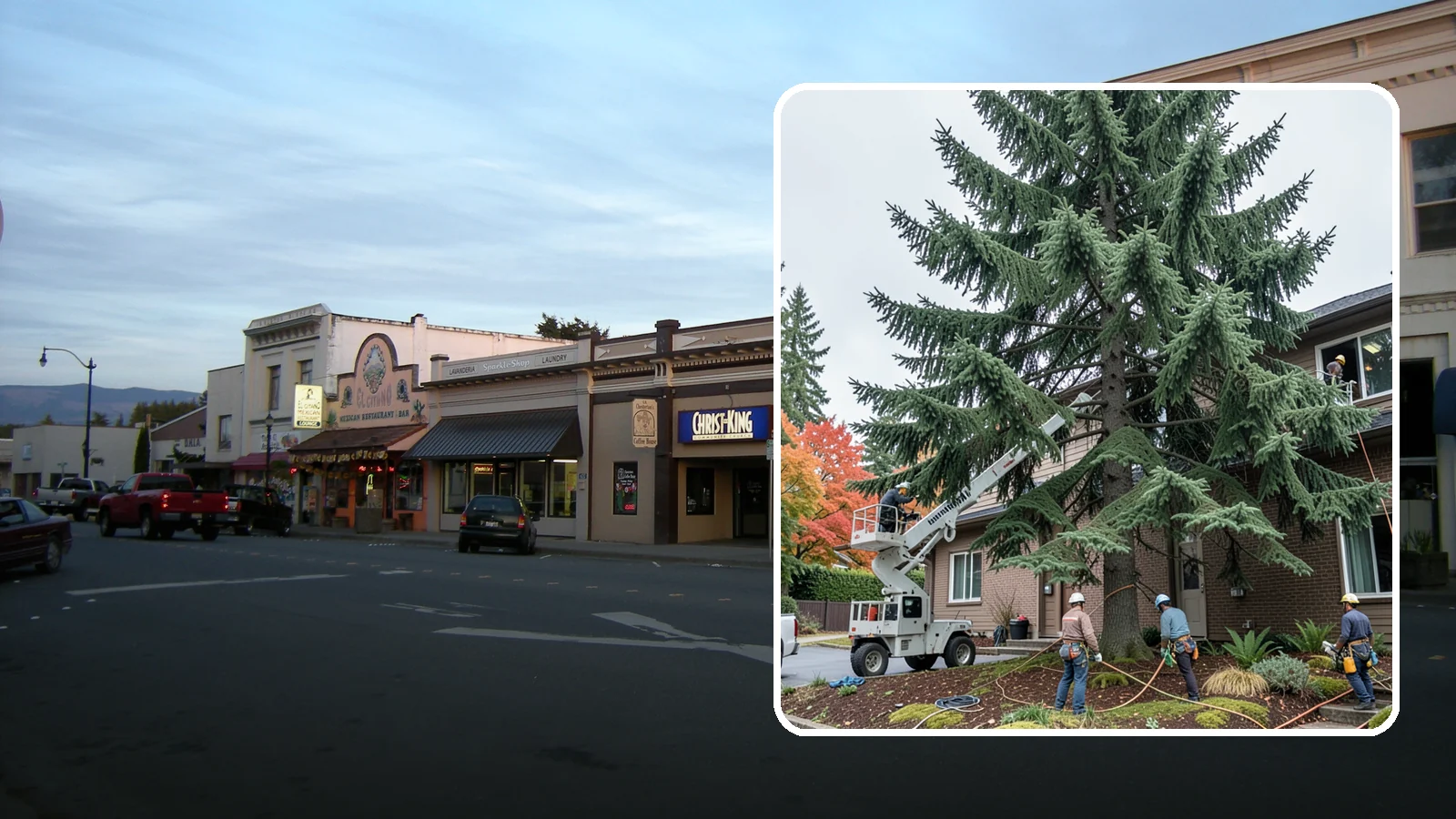
Burlington Commercial Tree Maintenance
Ongoing tree maintenance for commercial properties.
How often should a commercial property in Burlington have its trees looked at? Plan on a walk-through at least once a year, plus a check after any strong wind. Look for dead branches over parking areas, walkways and entrances, cracks in unions, lifted soil at the base, and fungus on the trunk or roots.
Maintenance is easier to schedule when you know what each tree needs. A written list of trees, their condition and the work due lets a manager budget by priority instead of reacting to a failure.
About Commercial Tree Maintenance in Burlington
This ongoing tree maintenance is designed specifically for commercial properties that need their landscapes kept safe and presentable. Our trained crews work alongside your team to ensure consistent care without disrupting daily operations or traffic flow. We help businesses maintain a professional appearance while reducing potential liability risks associated with large trees on site.
What Burlington Commercial Tree Maintenance Includes
Commercial tree maintenance includes recurring pruning, inspections, and general care tailored to the specific species and conditions of each tree. Our methods are matched carefully to your unique site layout and access points to provide effective results every time. This service supports a budget-friendly approach by addressing deferred backlogs and keeping high-traffic areas secure for everyone.
Burlington Commercial Tree Maintenance Process
The work begins with an inventory and assessment of all trees across the property to identify priorities and develop a customized schedule. We then perform the necessary pruning, inspections, and care tasks while documenting our progress to keep your plan up to date. This cycle ensures that varied tree conditions are managed consistently throughout large sites without causing unnecessary delays.
Equipment We Use for Burlington Commercial Tree Maintenance
Our crews utilize specialized pruning and rigging gear along with aerial lifts when needed to reach difficult branches safely. We bring inspection tools, chippers, hauling equipment, and full personal protective gear to handle every job efficiently. Having the right machinery on hand allows us to navigate complex access challenges while keeping work zones clear for occupants.
Burlington Commercial Tree Maintenance Safety & Best Practices
Every project starts by coordinating our activities around building occupants and active traffic patterns to maintain a safe environment. We strictly follow recognized arboricultural standards and keep detailed records in public areas to ensure full accountability at all times. Maintaining these safety protocols helps protect workers, visitors, and the property itself from potential hazards during maintenance work.
Signs You Need Commercial Tree Maintenance in Burlington
You may need this service if you notice deferred maintenance backlogs building up or see varied tree conditions affecting different parts of your site. High-traffic areas that require extra attention to keep them safe are also a clear indicator that professional care is needed now. If coordinating access and scheduling has become difficult due to the size or complexity of your property, this service can help streamline those challenges.
What Affects the Cost of Commercial Tree Maintenance in Burlington
The investment for commercial tree maintenance depends on factors like existing deferred backlogs and the specific requirements of high-traffic areas within your site. Varied conditions across a large property and coordination challenges related to access will also influence how much care is needed overall. By addressing these elements proactively, you can support consistent, budget-friendly care that preserves your property value over time.
Best Time of Year for Burlington Commercial Tree Maintenance
Work on commercial landscapes continues year-round based on specific pruning needs rather than being limited to a single fixed season. Safety priorities dictated by recognized arboricultural standards guide our schedule whenever weather or tree health requires immediate attention. This flexible approach ensures that critical tasks are completed when they matter most for your property’s safety and appearance.
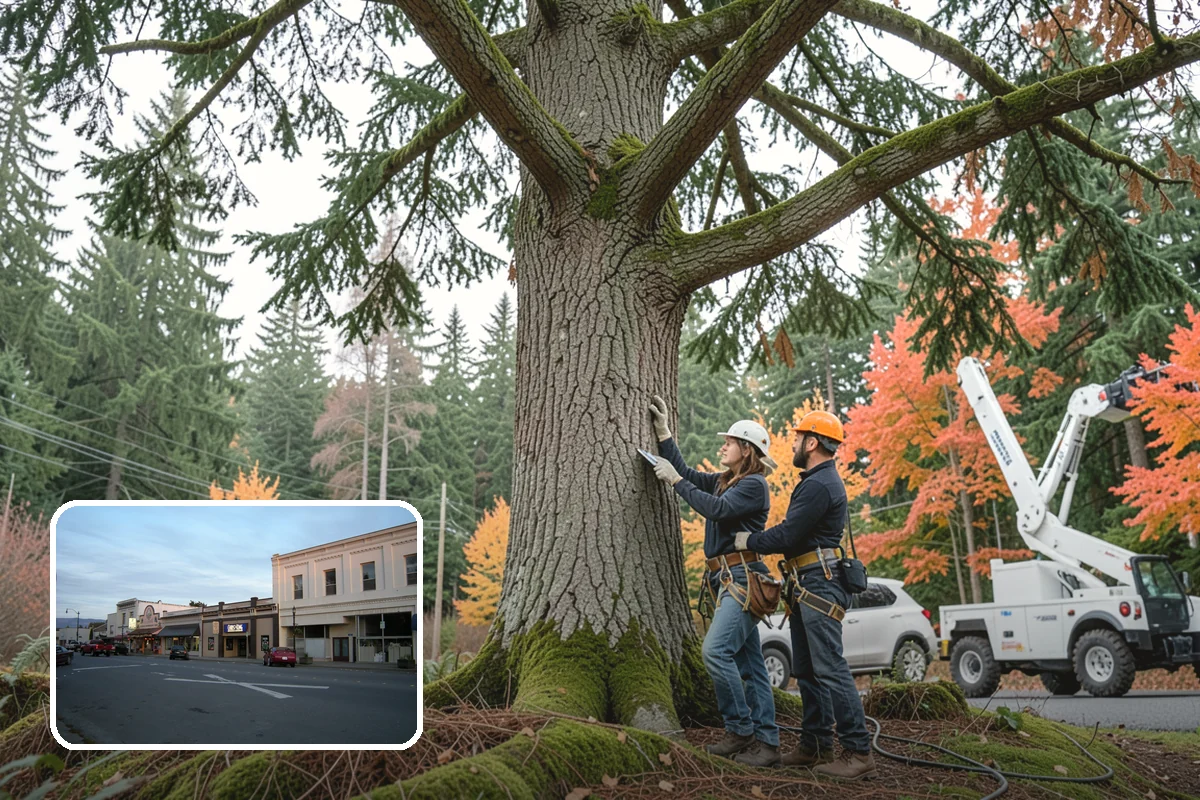
Planning commercial tree care in Burlington, WA
Wind is part of the schedule
Forecast data for the zone that includes Burlington shows 33 high and strong wind episodes between 2005 and 2025. That is a zone-wide record, not a measure of any one tree on your site. It does tell you that wind is a regular event here, so inspections should not wait for a storm. Pruning to remove dead wood, reduce end weight on long limbs, and correct weak branch attachments follows standard ANSI A300 practice. It lowers the chance of dropped limbs but cannot promise a tree will hold in every storm. We do not recommend topping, which creates weakly attached regrowth.
Check the city rule before any removal
Burlington's city code says significant trees may not be removed without prior authorization from the department. The regulated size is 6 inches DBH, or for multi-stem trees any stem of at least 4 inches measured 6 inches from the trunk joint. The code also says the significant-tree rules do not apply to trees inside an existing landscaped yard associated with an individual dwelling, except in redevelopment projects. Most commercial sites are not that kind of yard, so a removal on a business property may need authorization. The rule as quoted covers removal. For any job where the rule is unclear, we check with the city before work starts.
What a maintenance plan can include
- An annual condition review of each tree on the property
- Pruning for clearance over drives, signs, lighting and rooflines
- Removal of dead, broken or hazardous branches
- Notes on trees that need closer assessment or city review
Burlington also has 13 parks and nature areas totaling about 74 hectares, according to OpenStreetMap. If your property borders one, mention it when you book, since the boundary affects access and who owns nearby trees. To set up a review, call or text 425-484-4442 for a free estimate.
Burlington tree conditions at a glance
| USDA hardiness zone | 8b |
|---|---|
| High and strong wind episodes, 2005-2025 | 33 in the forecast zone |
| Soils | 4% of land has hardpan or another restrictive layer within 40 in; most common series Field |
Tree removal rules in Burlington
Significant trees may not be removed without prior authorization from the department, BUT the significant-tree rules do not apply to trees within the boundaries of an existing landscaped yard associated with an individual dwelling (except redevelopment projects), nor to construction of a single detached dwelling, duplex or small multiunit building or land divisions of four lots or less. So ordinary removal in an existing single-family yard needs no tree approval outside critical areas.
Regulated size: 6 inches DBH (multi-stem: any stem at least 4 in. measured 6 in. from the trunk joint).
Official city source. Rules change; we confirm with the city before work starts.
Sources: Daymet daily weather (NASA/ORNL), NOAA Storm Events, USDA plant hardiness map 2023, NRCS soil survey, USGS elevation, WA DNR landslide inventory, USDA Forest Service aerial survey, WSDA, city tree assessments and street-tree inventories, SILVIS Lab, Arbor Day Foundation, and official city and utility pages.
Commercial Tree Maintenance Serving Burlington
Burlington
Commercial tree maintenance in nearby areas
Also serving Burlington
- Street Tree Removal in Burlingtonat Washington City Services
- Estate Maintenance in Burlingtonat Washington Landscaping
- Commercial Kitchen Construction in Burlingtonat Washington Construction
- Parking Garage Cleaning in Burlingtonat Washington Pressure Washing