Where Safety Meets Expert Tree Service.

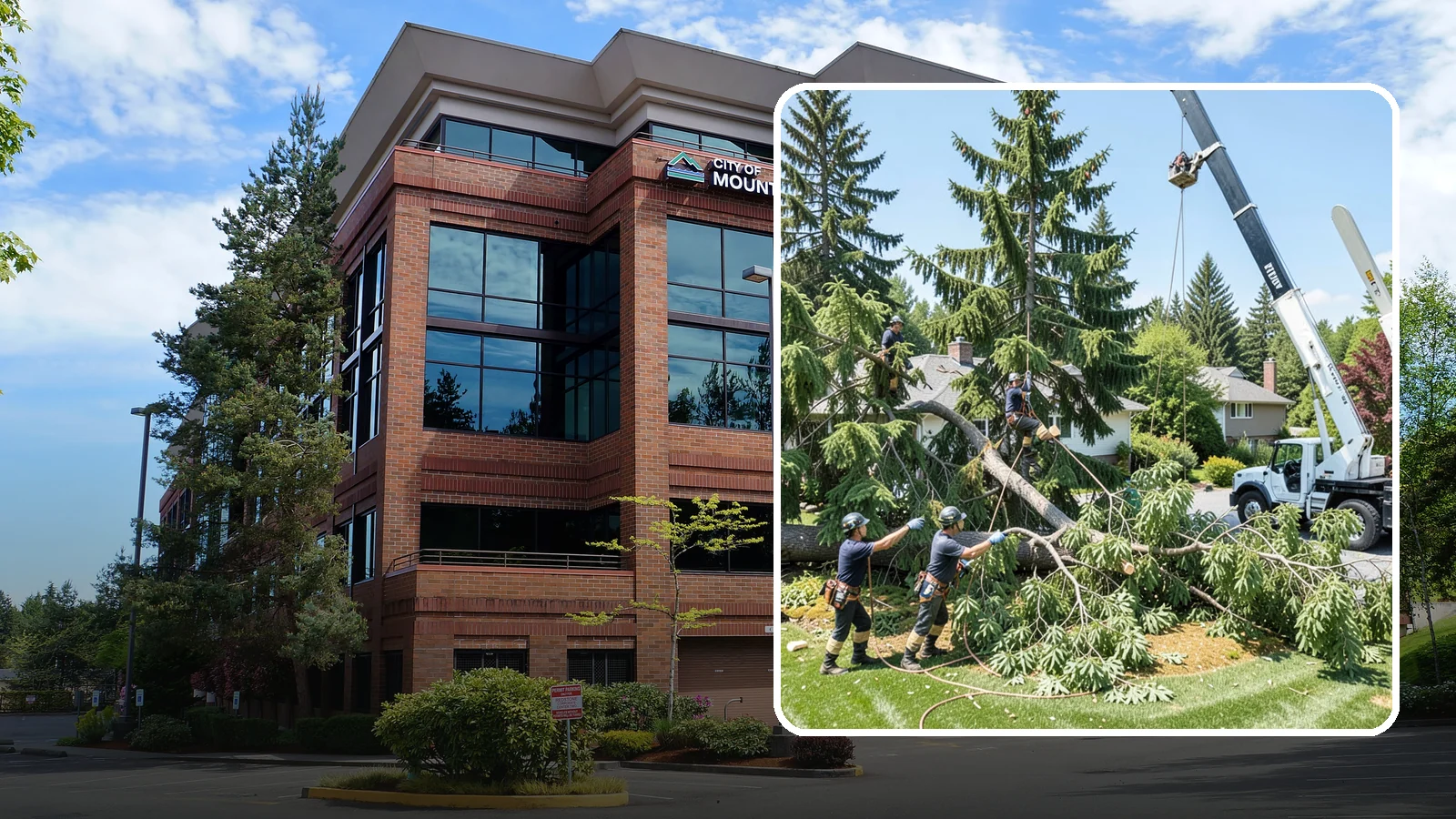
Mountlake Terrace Tree Removal
Safe and complete removal of unwanted, dead, or hazardous trees.
You may be looking at a tree that leans more than it used to, drops large dead limbs, has fungus at the base, or sits close to the house or the wire running to it. Any of these can be a reason to have it assessed before the next storm season.
Removal is a big step, so the first question is whether the tree really has to come down. Sometimes pruning solves the problem. Sometimes the structure is too compromised. A close look at the trunk, roots and crown usually tells you which.
About Tree Removal in Mountlake Terrace
We handle the safe removal of unwanted or hazardous trees so you can feel secure on your property again. Whether a tree has fallen in a storm or is simply blocking access to part of your yard, our team is ready to help. This service brings peace of mind by eliminating risks and restoring order to your landscape.
What Mountlake Terrace Tree Removal Includes
Tree removal involves cutting down the entire structure from top to bottom and clearing it from your site completely. We manage every step of this process to ensure no damage occurs to nearby buildings, fences, or other vegetation. The work includes taking away all limbs and trunk sections once they are safely lowered to the ground.
Mountlake Terrace Tree Removal Process
Our team begins with a careful assessment to plan how each tree will be taken down without causing harm. We establish clear drop zones and safety perimeters before starting any cutting from top-down sectioning or full felling. After removing the main structure, we handle limb extraction and optional stump grinding followed by thorough debris cleanup.
Equipment We Use for Mountlake Terrace Tree Removal
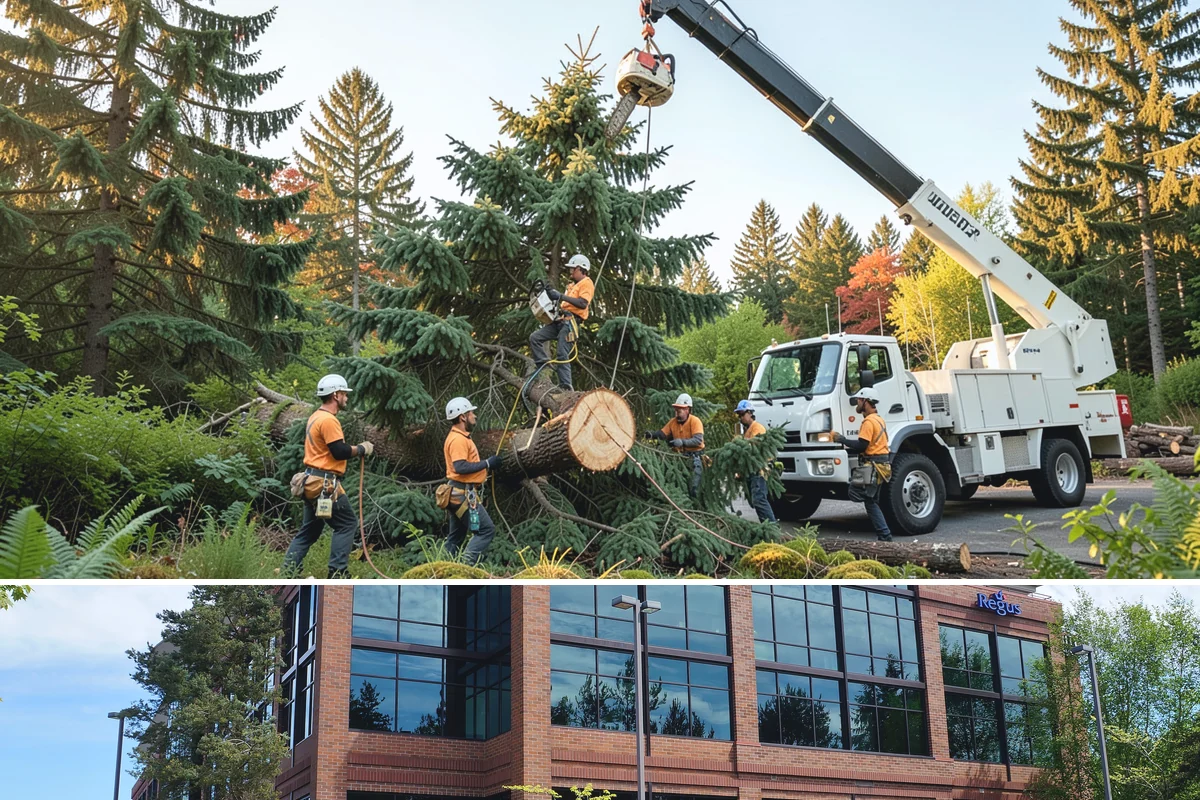
Professional work relies on chainsaws for precise cuts and heavy-duty rigging gear to control how trees fall safely. We utilize wood chippers to process branches efficiently and stump grinders to address remaining roots at ground level. For taller jobs or tight spaces, we bring bucket trucks or cranes to reach high clearance areas without risk.
Mountlake Terrace Tree Removal Safety & Best Practices
Maintaining clear drop zones is essential so that falling limbs do not strike people or property unexpectedly. We always watch closely for overhead power lines and never work alone when removing large trees from a site. Checking for hidden structural rot before climbing ensures our team stays safe while working at height on your job.
Signs You Need Tree Removal in Mountlake Terrace
You may need this service if a tree has died, become diseased, or is leaning dangerously toward your home. Storm damage that leaves branches hanging precariously or roots damaging foundations are clear indicators it is time to act. If you plan new construction and the existing trees interfere with building plans, removal might be necessary for progress.
What Affects the Cost of Tree Removal in Mountlake Terrace
The final price depends heavily on the size of the tree and how dense its branch structure becomes during cutting. Access requirements play a major role, such as needing a bucket truck when working around high clearance obstacles or limited space. Whether stump grinding and debris haul-away are included in your project scope will also influence the total investment required.
Best Time of Year for Mountlake Terrace Tree Removal
While we can perform removal year-round here in Washington State, many homeowners prefer scheduling during drier months for better ground conditions. Waiting until the soil is firm prevents heavy machinery from sinking into soft earth while ensuring a stable base for our equipment. This approach allows us to complete your project efficiently regardless of when you decide it needs attention.
Tree removal in Mountlake Terrace: causes, rules and the work
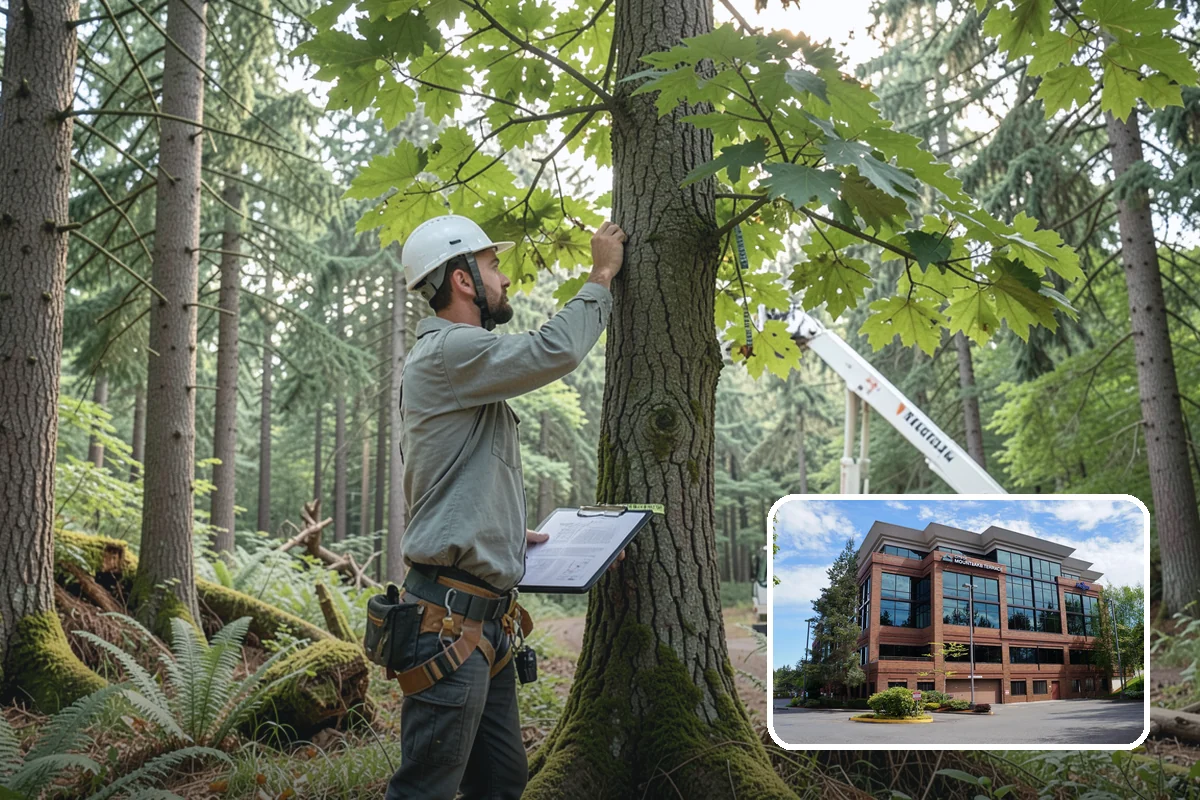
Most removals trace back to a few causes: decay in the trunk or roots, storm damage, a crown that has grown heavy on one side, or a tree that has simply outgrown its spot. Decay is often hidden. Conks, soft wood, cracks and soil heaving at the base are the signs an arborist looks for, and they help decide whether the tree is a real hazard.
Local conditions add a few things to check. The Washington DNR maps 2 landslides in Mountlake Terrace. That does not say anything about your lot, but if your property is on a slope, tell us. Roots help hold soil, so what happens to the ground after a tree comes out matters, and so does how heavy equipment moves across it.
The city's critical-areas tree FAQ is the rule to know. It says single-family homeowners generally do not need a permit to remove a tree unless the tree is in a critical area or the removal is tied to a land use action such as a development proposal. It also says a clearing and grading permit may be needed if equipment significantly disturbs the ground. The regulated size is deciduous trees 6 inches DBH or greater, or conifers at least 7 feet tall, excluding trees on the city's Prohibited Tree List. Because critical-area status and ground disturbance depend on the site, we check with the city before work starts when it is unclear.
Wires matter too. Snohomish County PUD says it does not maintain vegetation around service lines. The customer keeps 5 feet of clearance on all sides of the service drop, except the first 10 feet nearest the primary line, which the PUD trims. If a tree is touching or near that line to your house, plan for it as part of the job rather than cutting near it yourself.
The work itself starts with a site review and a plan for where each piece will fall or be lowered. Large trees near structures are usually taken down in sections with ropes and rigging. Then the wood is cleared, and the stump is ground or left, depending on what you want. A free estimate from our ISA Certified Arborist can walk through those choices; call or text 425-484-4442.
Mountlake Terrace tree conditions at a glance
| USDA hardiness zone | 9a |
|---|---|
| Landslides mapped by WA DNR | 2 |
| Soils | 59% of land has hardpan or another restrictive layer within 40 in; most common series Alderwood |
| High and strong wind episodes, 2005-2025 | 38 in the forecast zone |
| Electric utility | Snohomish County PUD |
Tree removal rules in Mountlake Terrace
City critical-areas tree FAQ: in general single-family homeowners do not need a permit to remove a tree unless it is in a critical area or the removal is associated with a land use action such as a development proposal; a clearing and grading permit may be needed if the ground is significantly disturbed by equipment (especially multiple trees). Under MTMC 19.130.170 (Ord.
Regulated size: Deciduous trees 6 inches DBH or greater, or coniferous trees at least 7 ft tall, excluding trees on the City's Prohibited Tree List (MTMC 16.30, Ord.
Official city source. Rules change; we confirm with the city before work starts.
Trees near the power line to your house
Snohomish County PUD: PUD "does not maintain vegetation around service lines or standalone communication lines." Customer must keep 5 ft clearance on all sides of the service drop (10 ft diameter), except the first 10 ft nearest the primary line which the PUD trims.
Customer Service Regulations list tree trimming as a non-routine disconnection/reconnection of residential service;00 each on overtime. Customers must not cut/disconnect the drop themselves (tampering charge).
Tree/vegetation questions: 425-783-5579 (Mon-Fri 7am-3pm) or [email protected]. Utility page.
Any fee for a disconnect is set by the utility.
Strongest wind events near Mountlake Terrace
- Dec 20, 2018: gusts to 66 mph
- Dec 14, 2006: gusts to 66 mph
- Apr 2, 2010: gusts to 62 mph
NOAA Storm Events, forecast zone that includes Mountlake Terrace, 2005-2025.
Sources: Daymet daily weather (NASA/ORNL), NOAA Storm Events, USDA plant hardiness map 2023, NRCS soil survey, USGS elevation, WA DNR landslide inventory, USDA Forest Service aerial survey, WSDA, city tree assessments and street-tree inventories, SILVIS Lab, Arbor Day Foundation, and official city and utility pages.
Tree Removal Serving Mountlake Terrace
Mountlake Terrace
Also serving Mountlake Terrace
- Raised Garden Bed Construction in Mountlake Terraceat Washington Landscaping
- Tree Inventory in Mountlake Terraceat Washington City Services
- Log Splitting in Mountlake Terraceat Washington Firewood