Where Safety Meets Expert Tree Service.


Kenmore Utility Line Clearance Pruning
Pruning to maintain safe clearance between trees and utility lines.
Who trims the tree branches touching the wire that runs from the pole to your house? In Kenmore, that wire is the service line, and Puget Sound Energy (PSE) does not trim around it. The job falls to the homeowner, usually through a private arborist.
Start by looking at where branches meet the line between the pole and your home or meter pole. Note which limbs touch it, hang over it, or could reach it in a storm. Photos from the ground help when you plan the work and any needed shutoff.
About Utility Line Clearance Pruning in Kenmore
Utility line clearance pruning helps keep your trees safe from overhead power lines while protecting your home’s electrical infrastructure. This essential service is ideal for homeowners who want to reduce the risk of outages or accidental contact near their property. We work with you to maintain a healthy distance between branches and utility wires without harming your landscape.
What Kenmore Utility Line Clearance Pruning Includes
This pruning category focuses specifically on maintaining safe clearance distances between trees and existing utility lines. The goal is to lower the chance of branch failure touching overhead cables, which can lead to dangerous outages or contact risks. Our approach matches specific cutting methods to your tree species and current site conditions for effective results.
Kenmore Utility Line Clearance Pruning Process
We begin by assessing the overall canopy condition and defining clear pruning objectives for each tree on your property. Trained crews select precise cuts suited to the season and species, ensuring clean incisions that avoid over-pruning or stress. After making these strategic cuts, we carefully lower branches, process the wood, and thoroughly clean up the work area around you.
Equipment We Use for Kenmore Utility Line Clearance Pruning
Our teams utilize a range of tools including hand saws, pole saws, chainsaws, and various climbing and rigging gear to reach difficult spots. When necessary, we deploy aerial lifts to access higher limbs safely while using personal protective equipment throughout the job. A wood chipper is also used on-site to efficiently manage and dispose of cut material from your property.
Kenmore Utility Line Clearance Pruning Safety & Best Practices
We strictly follow recognized pruning standards to avoid making harmful cuts that could weaken a tree’s structure or health. Our crews watch closely for unstable limbs and overhead lines, using proper fall protection whenever anyone works aloft. By limiting removal to healthy amounts of live tissue, we ensure the work supports long-term vigor rather than causing stress.
Signs You Need Utility Line Clearance Pruning in Kenmore
You may need this service if you notice branches growing dangerously close to power lines or structures that interfere with sightlines. Deadwood and weak unions near utility wires are also indicators that clearance pruning is required to prevent future hazards. If your tree species has specific timing sensitivities, addressing these issues early helps avoid interference with essential infrastructure.
What Affects the Cost of Utility Line Clearance Pruning in Kenmore
The final cost depends on factors like the specific type of trees you have and how complex their canopy structure becomes during cutting. Site access conditions play a major role in pricing, as difficult terrain requires specialized techniques to reach certain branches. Additionally, costs are influenced by the amount of material that needs disposal after we complete our pruning work.
Best Time of Year for Kenmore Utility Line Clearance Pruning
Work should be scheduled according to recognized arboricultural standards and matched to the specific seasonal timing sensitivities for your tree species. In our local Puget Sound climate, adhering to these natural cycles ensures trees heal properly without unnecessary stress from improper cuts. Planning around these windows helps maintain both the health of your landscape and safety near overhead lines year-round.
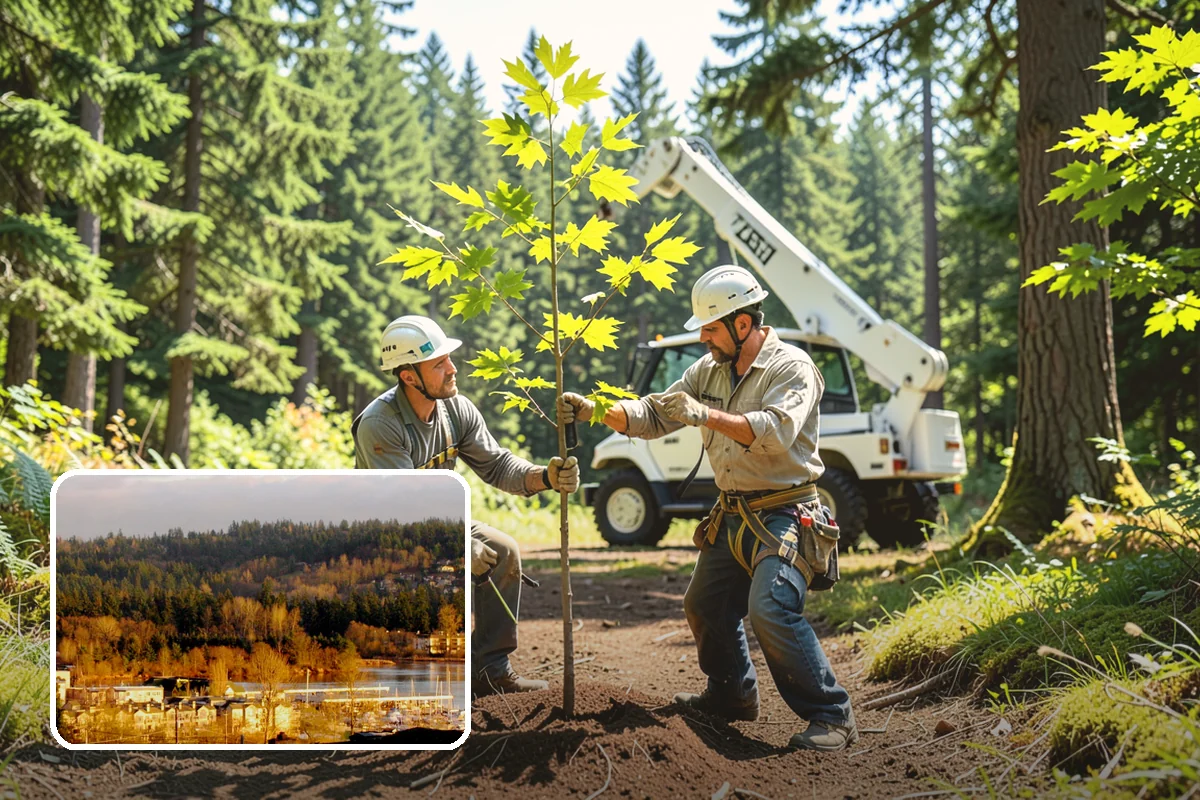
Service line pruning for Kenmore homes near PSE wires
Who handles which wire
PSE's rule is specific. The service line, the wire from a PSE pole to your home or meter pole, is not trimmed by PSE. The homeowner or a private arborist trims it. Since the rule puts the work on you, it helps to know the line's route before you call anyone. We can walk it with you and mark which branches need to come off.
Arranging a safety disconnection
Work close to a service line should not happen while it is live. PSE performs a safety disconnection so a homeowner or private tree trimmer can work. PSE asks that you call at least 5 business days ahead, so it can check crew availability and possible charges. Any fee is set by the utility, not by us. Plan your date around that notice rather than booking tree work first and calling later.
Our ISA Certified Arborist can help you sort out the timing, and we offer free estimates. You can reach us at 425-484-4442 by call or text.
Why wind and canopy matter here
Satellite tree-canopy data (USFS/NLCD 2025) puts Kenmore among the most heavily treed Puget Sound cities we compared. That is a citywide picture, not a measure of any one yard, but it suggests many lines pass near trees. Federal records also list 33 high and strong wind episodes between 2005 and 2025 in the forecast zone that includes Kenmore. Branches that clear a wire on a calm day can move into it when wind picks up.
Good clearance pruning follows standard practice such as ANSI A300. In general that means:
- Cutting back to a branch union or the trunk, not leaving stubs.
- Removing only what the job needs.
- Not topping the tree.
- Checking the tree's growth direction so regrowth does not head straight back to the line.
If a tree is too close to the line to prune well, we will say so and talk through options before any work starts. If removal comes up, we check with the city first.
Kenmore tree conditions at a glance
| Electric utility | Puget Sound Energy (PSE) |
|---|---|
| Tree canopy | Among the most heavily treed Puget Sound cities (satellite data) |
| Land under dense tree cover (50%+ canopy) | 30% |
| High and strong wind episodes, 2005-2025 | 33 in the forecast zone |
| Ice storm episodes, 2005-2025 | 2 in the forecast zone |
Trees near the power line to your house
Puget Sound Energy (PSE): Service line (wire from PSE pole to home or meter pole): PSE does not trim it; homeowner/private arborist trims.
PSE performs a safety disconnection so the homeowner or private tree trimmer/arborist can work; Call at least 5 business days ahead to check crew availability and potential charges.
Safety disconnect: 1-888-321-7779 (5+ business days ahead). Utility page.
Any fee for a disconnect is set by the utility.
Sources: Daymet daily weather (NASA/ORNL), NOAA Storm Events, USDA plant hardiness map 2023, NRCS soil survey, USGS elevation, WA DNR landslide inventory, USDA Forest Service aerial survey, WSDA, city tree assessments and street-tree inventories, SILVIS Lab, Arbor Day Foundation, and official city and utility pages.
Utility Line Clearance Pruning Serving Kenmore
Kenmore

Utility line clearance pruning in nearby areas
Also serving Kenmore
- Fruit Tree Pruning in Kenmoreat Washington Landscaping
- Roof Debris Removal in Kenmoreat Washington Roofing
- Park Tree Maintenance in Kenmoreat Washington City Services