Where Safety Meets Expert Tree Service.

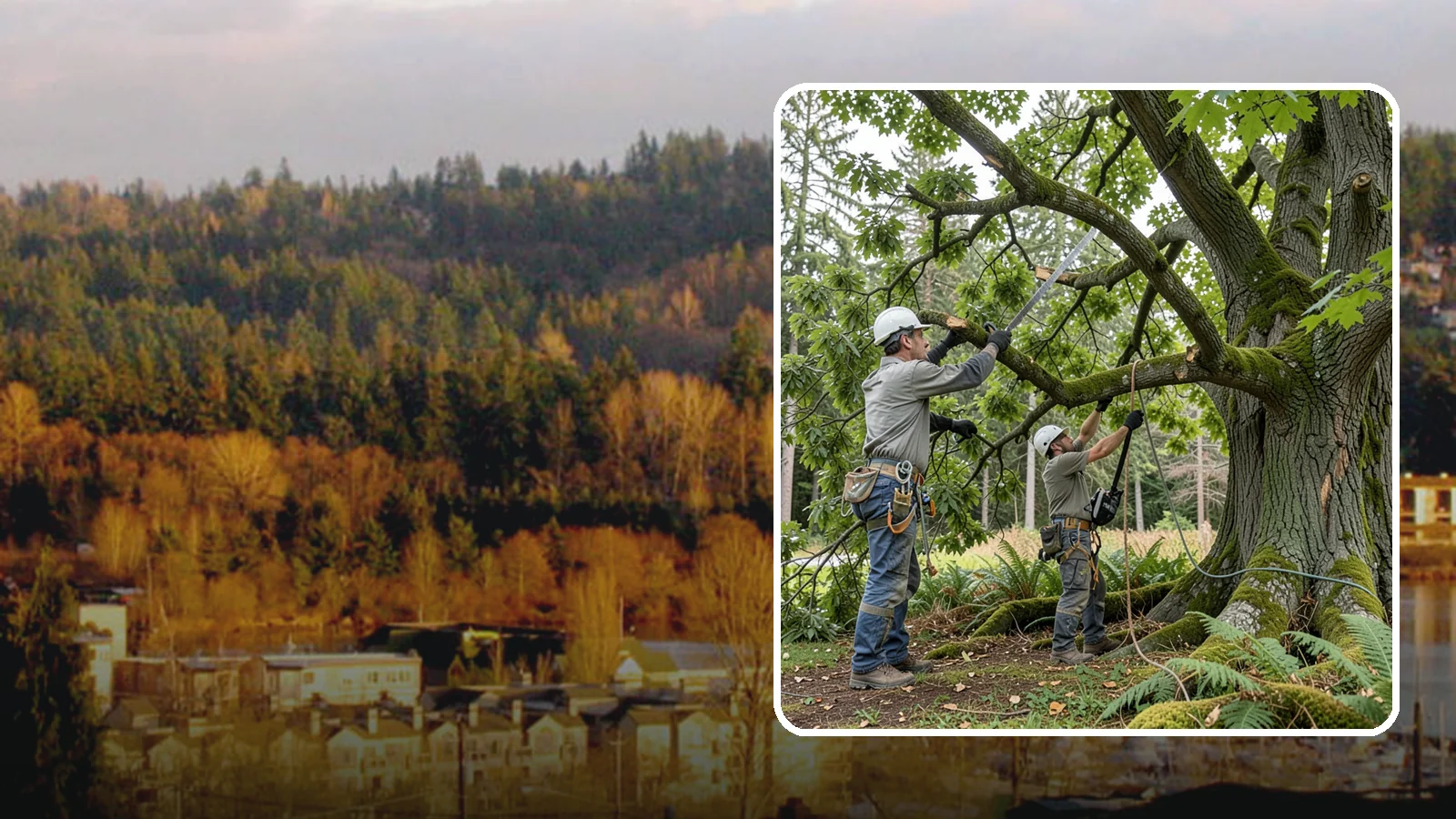
Kenmore Tree Trimming
The selective trimming of branches to maintain a tree’s size, shape, and clearance.
Tree trimming suits Kenmore homeowners whose trees are crowding a roof, hanging over a driveway, shading a window, or growing into wires. It also fits owners who simply have not had a tree looked at in several years and want to know what it needs.
Trimming is not one job. A light cleanup, a crown thinning and a larger reduction each remove different amounts of wood and suit different trees. Choosing the right one starts with what you want the tree to do next season and in ten years.
About Tree Trimming in Kenmore
We offer professional tree trimming services designed to help you maintain healthy trees around your home or property. Our trained crews work carefully to keep branches at a safe distance from structures while supporting the long-term strength of each tree. Whether you have large specimens in an open yard or smaller trees near walkways, we are here to assist with selective branch management.
What Kenmore Tree Trimming Includes
This service involves selectively trimming branches to maintain your tree’s size, shape, and clearance around buildings and power lines. We focus on improving overall structure and appearance while reducing the risk of failing limbs during storms. The work is tailored to each specific species and site condition to ensure a well-kept canopy that looks great year-round.
Kenmore Tree Trimming Process
Our team begins by assessing your tree’s current health and defining clear pruning objectives for the job. We select precise cuts suited to the season and species, ensuring we remove only healthy amounts of live tissue without causing stress. After making clean incisions at proper points, our crew lowers branches safely, processes the wood material, and leaves your work area completely clean.
Equipment We Use for Kenmore Tree Trimming
To complete this service efficiently, we utilize hand saws, pole saws, chainsaws, and climbing gear matched to the specific task. Depending on access needs, aerial lifts may be deployed alongside personal protective equipment for everyone involved. A dedicated wood chipper is also used to process cut material quickly so your property remains tidy throughout the project.
Kenmore Tree Trimming Safety & Best Practices
We strictly follow recognized pruning standards to avoid making harmful cuts that could weaken a tree’s structure or health. Our crews stay alert to overhead power lines and unstable limbs, using fall protection whenever anyone works aloft. By limiting removal to appropriate amounts of live tissue, we ensure your trees remain vigorous while keeping your home safe from falling branches.
Signs You Need Tree Trimming in Kenmore
You may need this service if you notice deadwood in the canopy or weak unions that could lead to branch failure. Overgrown limbs interfering with structures, sightlines, or utility lines are also clear indicators that trimming is required. If a tree’s growth pattern threatens clearance near your driveway or windows, professional selective trimming can restore balance and safety.
What Affects the Cost of Tree Trimming in Kenmore
The investment for this work depends on the specific species of trees you have and how complex their canopy structure becomes during assessment. Factors such as difficult site access conditions and the volume of material that needs to be processed for disposal will also influence the final price. We provide transparent estimates based on these real-world variables rather than fixed rates or percentages.
Best Time of Year for Kenmore Tree Trimming
Work is scheduled according to seasonal timing sensitivities inherent to each tree species in our local Puget Sound region. Our crews follow recognized arboricultural standards that match pruning activities to the natural growth cycles of your specific trees. This approach ensures minimal stress on the plants while allowing them to heal effectively before winter or peak growing seasons arrive.
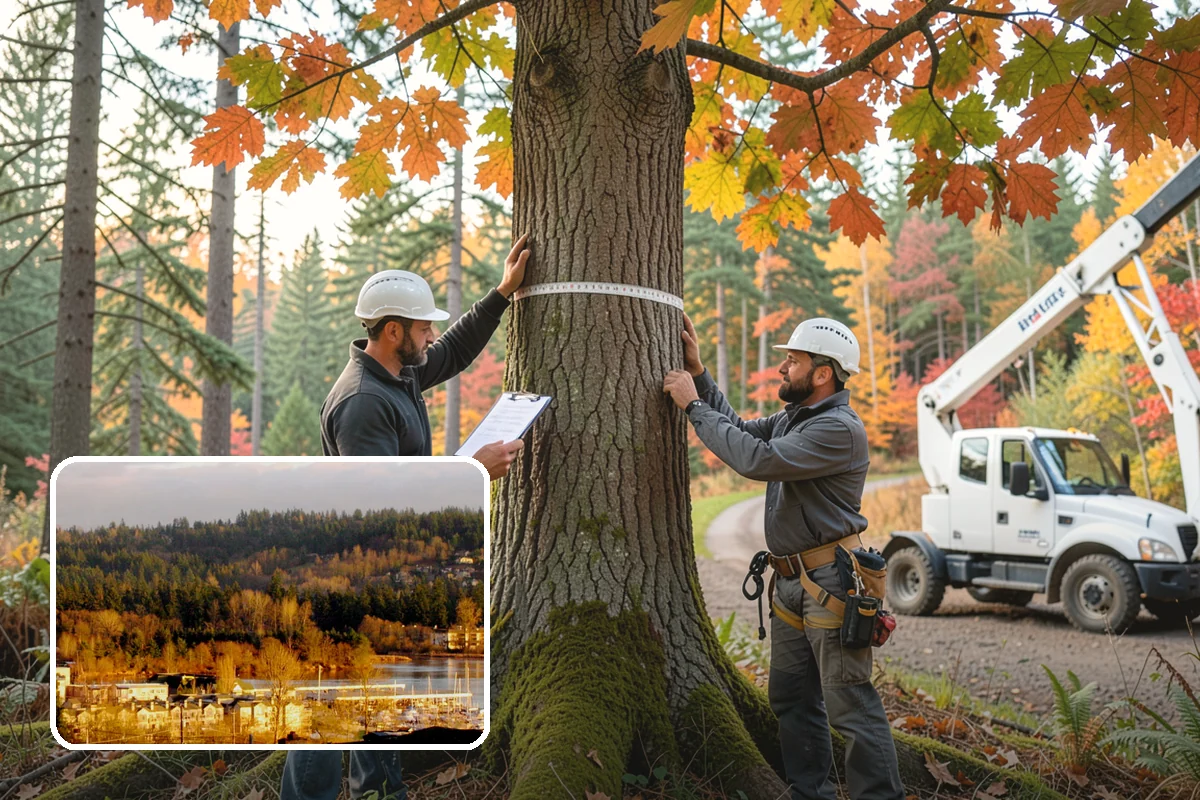
Choosing a Tree Trimming Approach in Kenmore
Most trimming falls into three approaches. Each fits a different goal, and the right pick depends partly on the species in your yard.
- Cleaning: removing dead, broken or rubbing branches. It suits almost any tree and is the usual starting point.
- Thinning: selectively removing live branches to let in light and air and lighten heavy limbs. It suits dense crowns.
- Reduction: shortening a branch back to a suitable side branch to reduce height or spread near structures or lines.
What local conditions favor
Kenmore's street-tree inventory lists 12,435 trees. Douglas-fir is the most common at 11.3%, followed by Eastern arborvitae at 9.8%, Red alder at 8.4%, Western red cedar at 7.4% and Bigleaf maple at 5.1%. That is street trees, not your yard, but it shows the mix of conifers and fast-growing broadleaf trees in town. Conifers like Douglas-fir and cedar usually get cleaning and selective thinning, since they do not respond well to heavy cuts into bare wood. Alder and bigleaf maple often grow long, heavy limbs, so reduction or weight thinning may come up more often.
Timing also matters. Daymet data for 2005 to 2025 shows 81% of Kenmore's yearly rain and snow falls from October to April. Wet months keep tree wounds damp and moving pathogens around, so many owners schedule larger cuts for the drier months and save the wet season for hazard removal of broken limbs.
The approach to avoid
Cutting a tree back to stubs is sometimes requested to cut height fast. A WSU Extension Master Gardener column on tree topping notes that topped trees are likely to rot at the cuts and to sunburn after losing the upper canopy. Reduction to proper side branches is the better route to a shorter tree.
Tell us what the tree is crowding, and our ISA Certified Arborist can suggest which approach fits. Call or text 425-484-4442 for a free estimate.
Kenmore tree conditions at a glance
| USDA hardiness zone | 9a (8b to 9a across the city) |
|---|---|
| Rain and snow falling October to April | 81% of the year’s total |
| Tree canopy | Among the most heavily treed Puget Sound cities (satellite data) |
| Days that freeze at night and thaw by day | 30 a year |
| Electric utility | Puget Sound Energy (PSE) |
Trees near the power line to your house
Puget Sound Energy (PSE): Service line (wire from PSE pole to home or meter pole): PSE does not trim it; homeowner/private arborist trims.
PSE performs a safety disconnection so the homeowner or private tree trimmer/arborist can work; Call at least 5 business days ahead to check crew availability and potential charges.
Safety disconnect: 1-888-321-7779 (5+ business days ahead). Utility page.
Any fee for a disconnect is set by the utility.
Most common street trees in Kenmore
- Douglas-fir11.3%
- Eastern arborvitae9.8%
- Red alder8.4%
- Western red cedar7.4%
- Bigleaf maple5.1%
- Black cottonwood4.8%
Share of 12,435 trees in the city’s street-tree inventory; median trunk diameter 10.0 in, 14.0% at 24 in or wider.
Sources: Daymet daily weather (NASA/ORNL), NOAA Storm Events, USDA plant hardiness map 2023, NRCS soil survey, USGS elevation, WA DNR landslide inventory, USDA Forest Service aerial survey, WSDA, city tree assessments and street-tree inventories, SILVIS Lab, Arbor Day Foundation, and official city and utility pages.
Tree Trimming Serving Kenmore
Kenmore

Tree Trimming in nearby areas
Also serving Kenmore
- Pine Tree Pruning in Kenmoreat Washington Landscaping
- Roof Moss Treatment in Kenmoreat Washington Roofing
- Trail Clearing in Kenmoreat Washington City Services