Where Safety Meets Expert Tree Service.

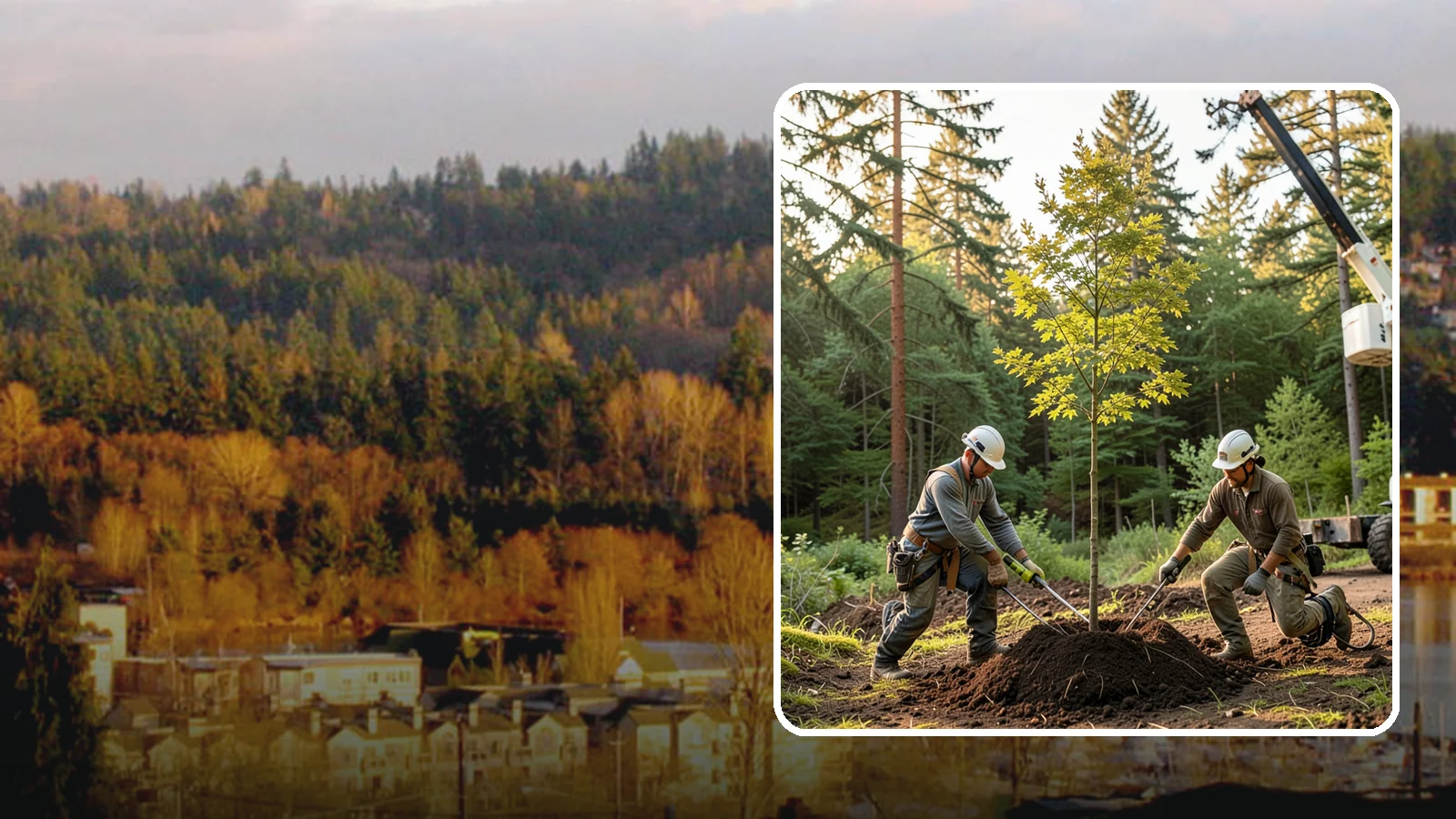
Kenmore Tree Replacement
The replanting of trees to replace those removed.
When should you plant a replacement tree in Kenmore? Fall through early spring is usually the best window. Roots can settle in while the soil is moist and the tree isn't yet working hard to keep its leaves watered.
Replacement means more than putting a new tree where an old one stood. It starts with choosing a species that suits the spot, the soil and the space overhead. It also means checking what is left of the old tree, like stump and roots, before anything goes in the ground.
About Tree Replacement in Kenmore
We help homeowners restore their landscape by replanting trees after removals or other changes. This approach brings back essential shade, privacy, and ecological benefits to your property. Our trained crews work carefully to ensure each new tree is well-suited to its specific site conditions.
What Kenmore Tree Replacement Includes
Tree replacement focuses on restoring canopy cover with healthy specimens chosen for their local adaptability. We match planting methods to the species selected while considering soil quality and access constraints at your location. The goal is to establish a robust foundation that supports long-term growth and stability in your yard.
Kenmore Tree Replacement Process
Our team begins by assessing site conditions to select suitable tree varieties before preparing the planting area. Soil amendments are added as needed, followed by careful placement at the correct depth with proper spacing between trees. We finish each job by applying mulch, watering thoroughly, and providing guidance on care during the establishment phase.
Equipment We Use for Kenmore Tree Replacement
Successful replanting relies on digging tools designed for precise hole preparation alongside equipment for efficient soil handling. We bring necessary supplies such as soil amendments, mulch, and specialized watering gear to support new growth immediately after planting. Staking materials are used when required to help young trees withstand wind until their root systems strengthen.
Kenmore Tree Replacement Safety & Best Practices
Before any digging begins, we take steps to locate underground utilities to protect both workers and your infrastructure. We select species that fit the site dimensions to prevent future conflicts with structures or power lines. Proper planting depth is maintained throughout the process, and care is taken during handling to avoid damaging delicate root systems.
Signs You Need Tree Replacement in Kenmore
You may need this service if you are looking to replace trees removed for safety reasons or development projects. Situations where canopy has been lost often call for replanting to regain privacy screening and cooling shade. If your soil feels compacted or if previous plantings struggled, establishing new, healthy trees can improve overall site ecology.
What Affects the Cost of Tree Replacement in Kenmore
The investment varies based on the specific species chosen and how accessible the planting location is for our equipment. Soil conditions that require amendments will influence the final cost along with any necessary staking requirements to support young saplings. These factors ensure we provide a solution tailored to your unique landscape needs without unnecessary expenses.
Best Time of Year for Kenmore Tree Replacement
The ideal time for replanting arrives in late fall or early spring when soil work is easier and roots can establish before summer heat sets in. We avoid periods of deep dormancy that slow growth as well as times of extreme wetness that make proper depth placement difficult. Choosing the right season gives your new trees the best chance to thrive year after year.
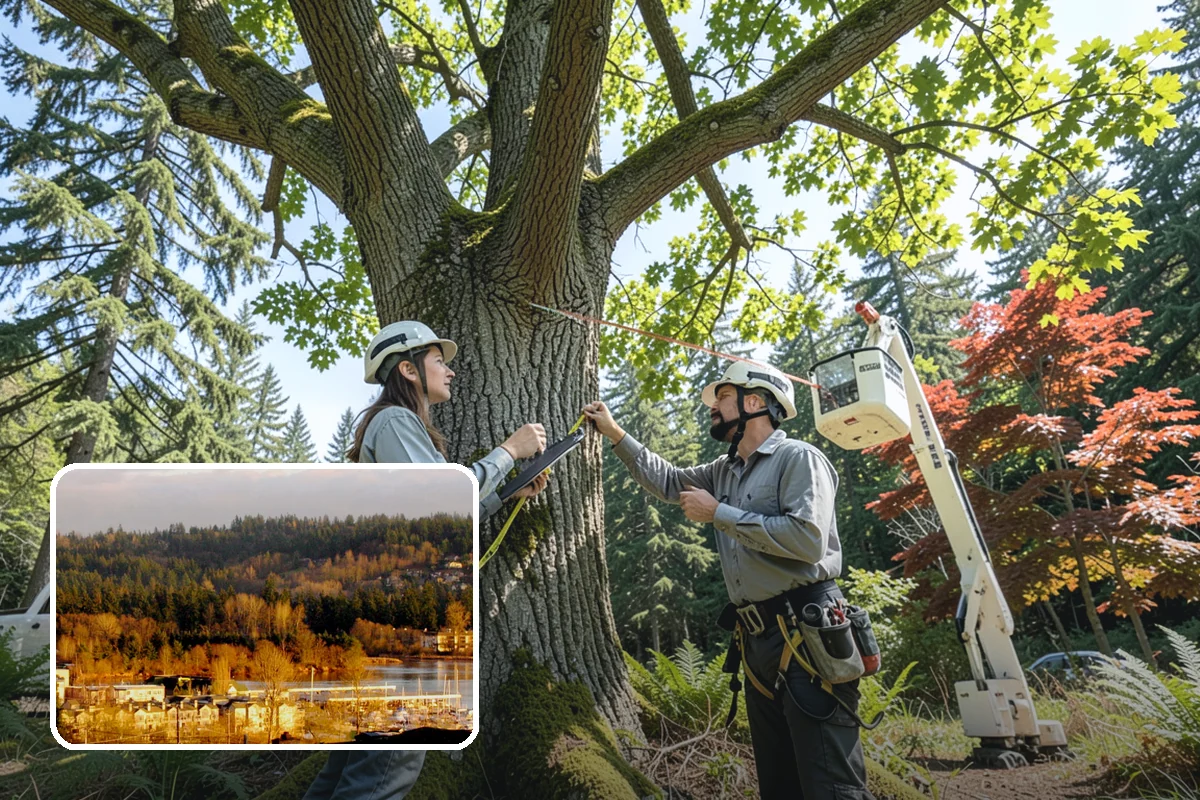
Planning a tree replacement in Kenmore
Plant when the rain does the watering
About 81% of Kenmore's yearly rain and snow falls from October to April, based on Daymet data from 2005 to 2025. That matters for timing. A tree planted in those months gets natural watering while it builds new roots. A tree planted in late spring or summer will depend on you, with deep, slow watering through the dry months. If you must plant in summer, plan for that routine from day one.
Pick a species for your zone and your site
The USDA map from 2023 places Kenmore in hardiness zone 9a, with parts of the city ranging from 8b to 9a. Hardiness zones describe winter cold only, so they are a starting point. You still need to look at sun, drainage, soil and the room the tree will have at full size. Keep mature height and spread in mind near power lines, roofs, driveways and the house foundation. A tree that fits its space needs far less corrective pruning later.
Check the rules before the old tree comes out
The Kenmore tree rules we found do not clearly spell out which removals need city approval. Because of that, we check with the city before work starts, rather than guess. If you are removing a tree as part of a replacement, ask us to confirm this first. Our ISA Certified Arborist can walk through the site with you, and estimates are free.
- Note the location of the old tree, its stump and any utilities nearby.
- Decide how large the new tree can grow in that spot.
- Plan to water and mulch the new tree for its first few seasons.
Call or text 425-484-4442 to talk through your replacement.
Kenmore tree conditions at a glance
| USDA hardiness zone | 9a (8b to 9a across the city) |
|---|---|
| Soils | 51% of land has hardpan or another restrictive layer within 40 in; most common series Alderwood |
| Rain and snow falling October to April | 81% of the year’s total |
| Days that freeze at night and thaw by day | 30 a year |
Tree removal rules in Kenmore
Kenmore’s published rules don’t spell out clearly which removals need city approval. We check with the city before work starts.
Most common street trees in Kenmore
- Douglas-fir11.3%
- Eastern arborvitae9.8%
- Red alder8.4%
- Western red cedar7.4%
- Bigleaf maple5.1%
- Black cottonwood4.8%
Share of 12,435 trees in the city’s street-tree inventory; median trunk diameter 10.0 in, 14.0% at 24 in or wider.
Sources: Daymet daily weather (NASA/ORNL), NOAA Storm Events, USDA plant hardiness map 2023, NRCS soil survey, USGS elevation, WA DNR landslide inventory, USDA Forest Service aerial survey, WSDA, city tree assessments and street-tree inventories, SILVIS Lab, Arbor Day Foundation, and official city and utility pages.
Tree Replacement Serving Kenmore
Kenmore

Tree replacement in nearby areas
Also serving Kenmore
- Vegetable Garden Installation in Kenmoreat Washington Landscaping
- Median & Roundabout Landscaping in Kenmoreat Washington City Services