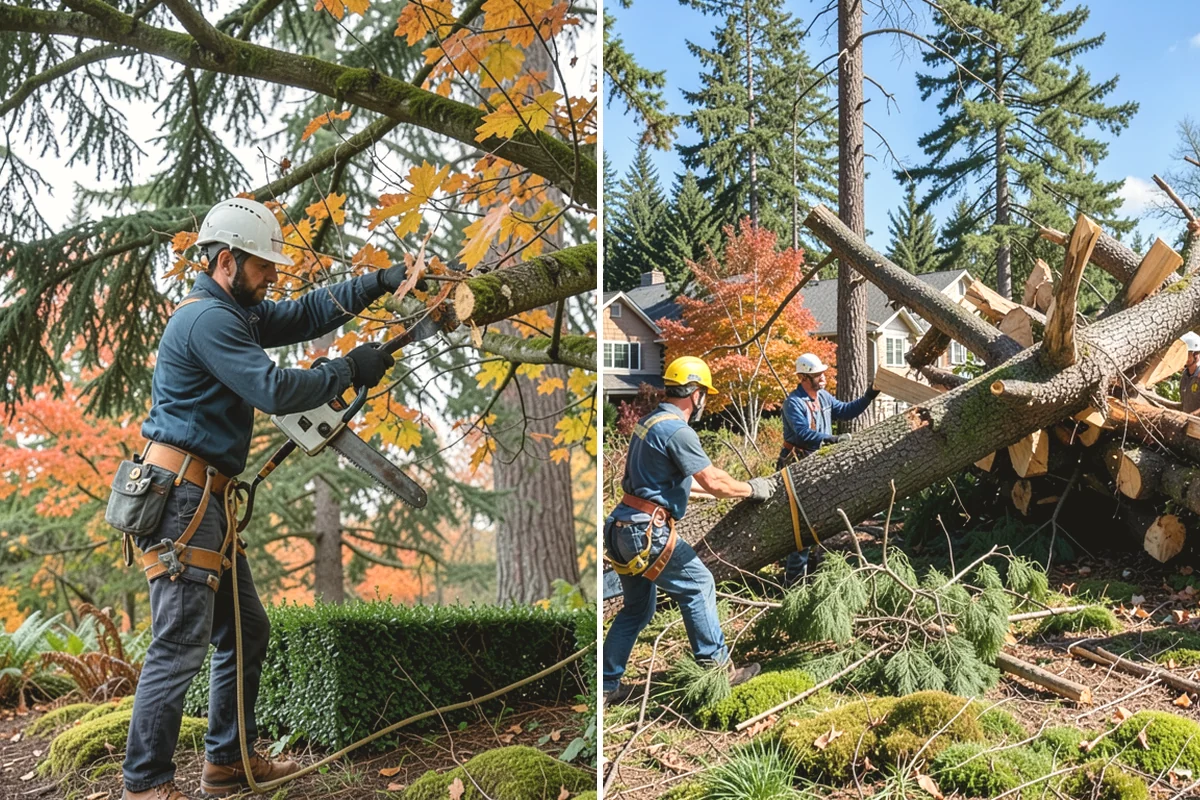
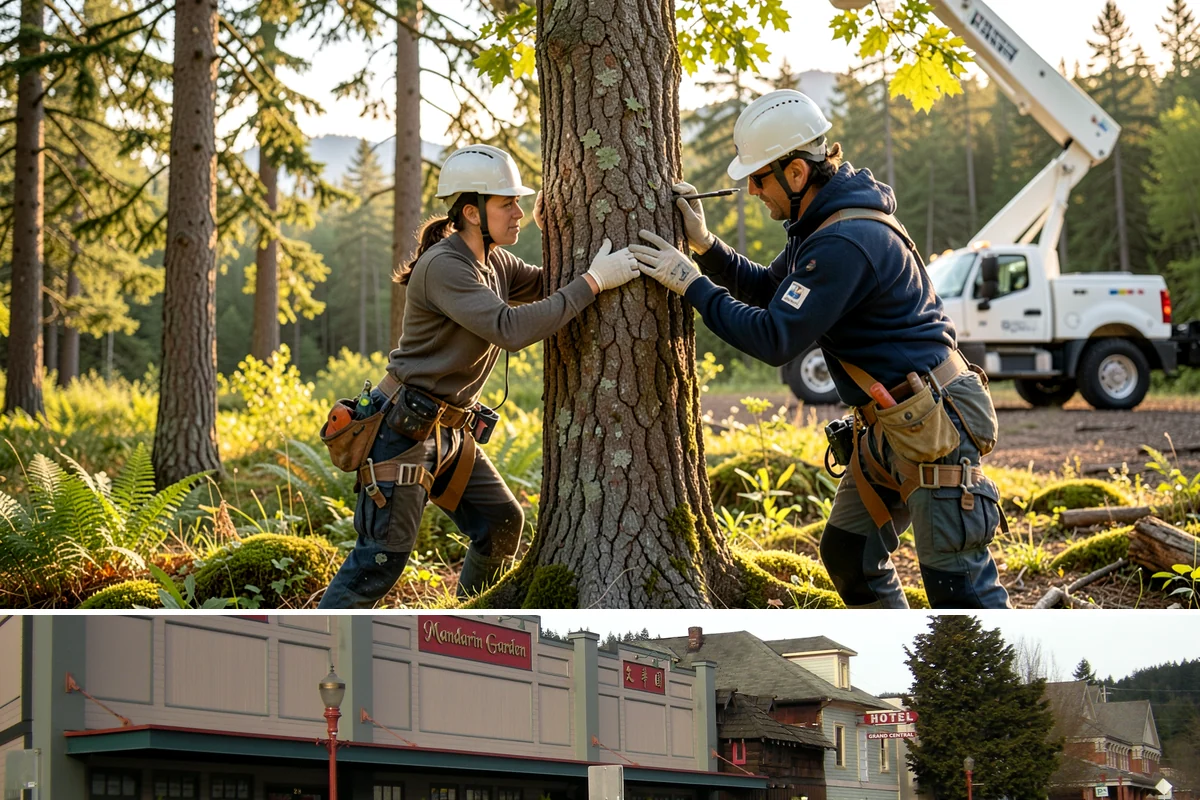
Where Safety Meets Expert Tree Service.

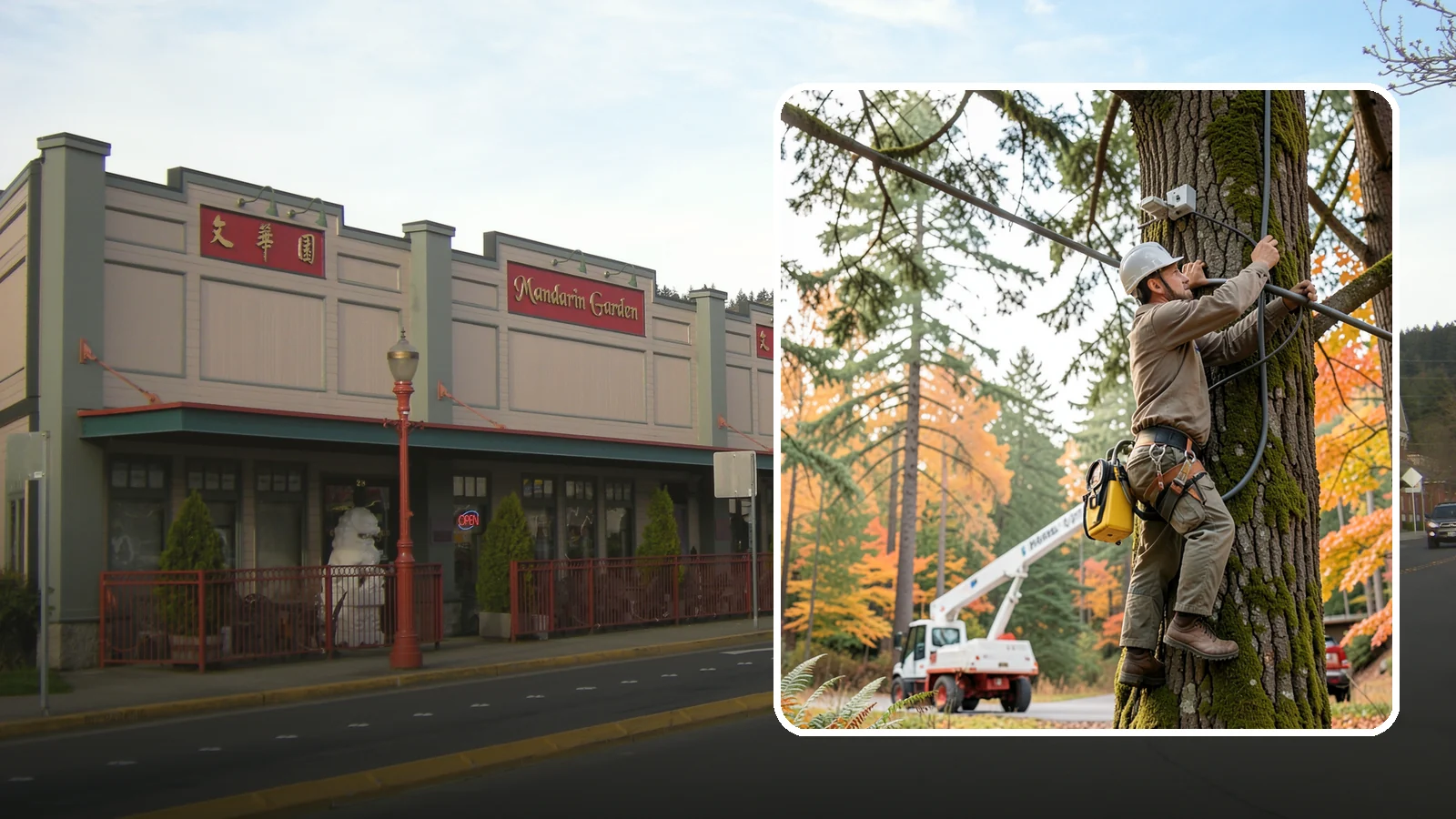
Issaquah Static Cabling Installation
The installation of rigid cable systems that limit movement.
The best time to plan static cabling in Issaquah is before the next run of strong wind, not after it. In the forecast zone that includes the city, the National Weather Service counted 33 high and strong wind episodes between 2005 and 2025. A tree with a weak union is easiest to assess when it is calm and the crown is visible.
Static cabling is a way to support a tree with a structural defect, such as a split or a weak fork, by installing hardware high in the crown. It limits how far the stems can move apart. Late summer and fall, ahead of the windy season, give you time to have the tree looked at and the work scheduled.
About Static Cabling Installation in Issaquah
Static cabling installation is a specialized solution designed to support trees that have structurally weak limbs or codominant stems. This service helps preserve valued specimens by reducing the risk of failure in areas where branches are heavy or unions are included-bark. We work with homeowners who want to extend the safe life of significant trees on their property while following recognized arboricultural standards.
What Issaquah Static Cabling Installation Includes
This category focuses on installing rigid cable systems specifically intended to limit movement and provide structural support. The process includes selecting an appropriate system based on your specific tree species, site conditions, and access requirements. Our trained crews use these methods to reinforce weak unions and heavy limbs without compromising the natural growth of the tree.
Issaquah Static Cabling Installation Process
Work begins with a thorough assessment of structural defects and load paths to determine where support is most needed. We then select an appropriate cabling system and install hardware at correct positions according to industry standards. The final steps involve documenting the installation details and setting up a schedule for future inspections to ensure long-term stability.
Equipment We Use for Issaquah Static Cabling Installation
Our crews utilize specialized cabling and bracing hardware along with professional installation tools to complete the job safely. Depending on the size of the tree, we may use climbing and rigging gear or an aerial lift to reach higher branches. All team members wear personal protective equipment throughout the project to ensure safety for everyone involved in the operation.
Issaquah Static Cabling Installation Safety & Best Practices
We install cabling only where support is appropriate and effective, using hardware that is correctly rated for the specific load it will carry. It is important to recognize when removal might be a safer option than adding new supports or continuing with an aging system. Systems are designed to be inspected periodically so we can address any wear before they become a hazard.
Signs You Need Static Cabling Installation in Issaquah
You may need this service if you notice cracks and cavities, overextended limbs, or signs of included-bark unions in your tree structure. Codominant stems that split under stress often require reinforcement to prevent sudden failure during storms or high winds. Additionally, aging hardware from previous installations should be inspected regularly as part of a proactive maintenance plan for your landscape trees.
What Affects the Cost of Static Cabling Installation in Issaquah
The price is influenced by the specific species of tree you have and how difficult it is to access different parts of the site. Complexity plays a major role in cost, particularly when installing hardware at correct positions around structurally weak limbs that require precise placement. These factors ensure we provide a tailored solution rather than applying a one-size-fits-all approach to every job.
Best Time of Year for Issaquah Static Cabling Installation
Work can generally be performed year-round given our local weather patterns and the flexibility of cabling installation tasks. The main exception occurs when branches are frozen or ice-laden, as these conditions could damage new hardware during placement. We plan projects around branch health rather than strict seasons so we can address your needs whenever they arise safely.
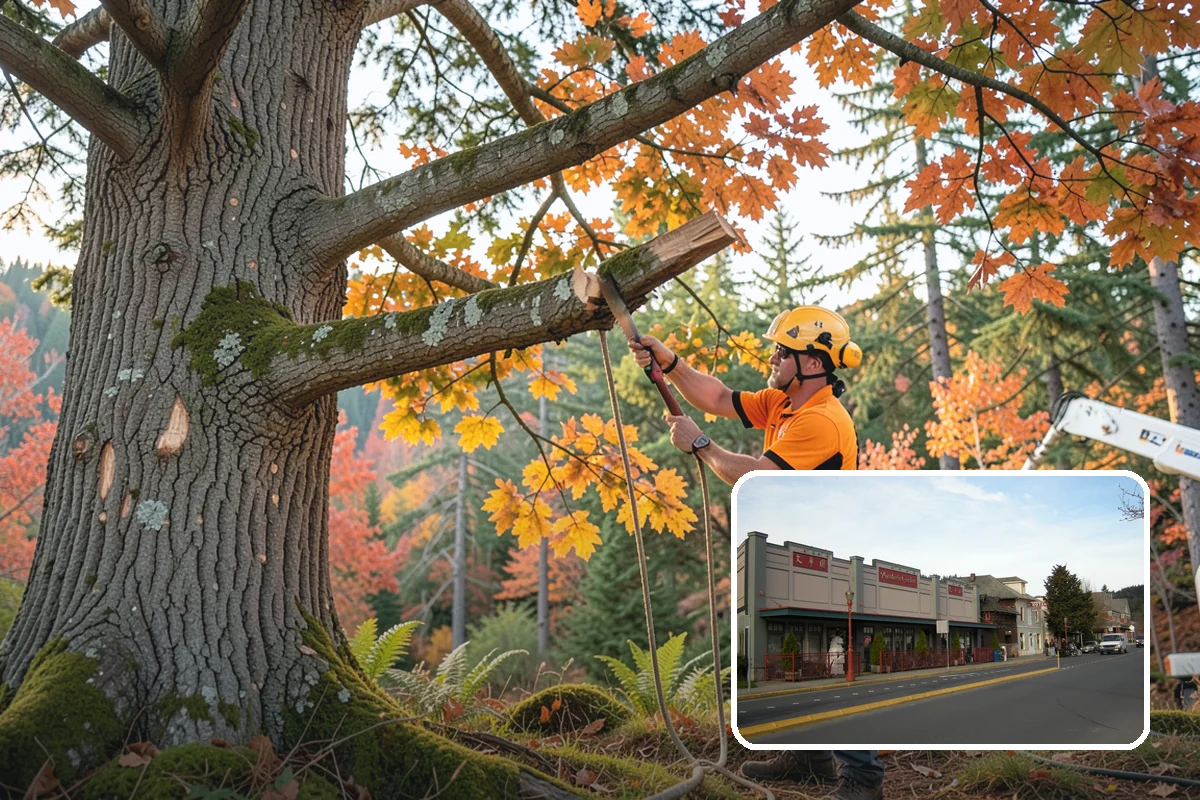
Planning static cabling for your Issaquah tree
Planning starts with a close look at the tree. We check where the stems join, whether bark is trapped inside the fork, and whether there are cracks, decay or old wounds. Cabling is not right for every tree. Some defects call for pruning, and some trees are better removed. A cable also does not fix a rotten or badly leaning trunk.
What affects the scope
The number of cables depends on the size of the tree, how many stems need support, and how high the union sits. Standard practice under ISA A300 is to place the anchor point roughly two thirds of the way up the length of the stem above the weak point. The cable is then installed with a bit of slack so the tree can still move. Light pruning to reduce end weight on the affected stems often goes along with it.
Local weather is one reason to take weak unions seriously. The same forecast zone that includes Issaquah recorded a 72 mph gust on December 17, 2010, and two ice storm episodes from 2005 to 2025. These are zone figures, not readings from your yard. They show that wind and ice loading both happen here, and cables are meant for exactly that kind of stress.
What to expect on the day
A climber goes up into the crown, drills the anchor points, installs the hardware and sets the cable tension. Expect some noise from drilling and a short time with ropes in the tree. Most single-tree jobs do not need heavy ground disruption. Before we start, we confirm the plan with you. If a city rule might apply to any part of the work, we check with the city first.
Practical tip: after any storm, walk around the tree and look for hanging or dead branches, trunk damage and soil upheaval at the base, as WA DNR Tree Link advises. A cabled tree still needs a checkup, so ask us to re-inspect the hardware on a regular schedule.
Issaquah tree conditions at a glance
| High and strong wind episodes, 2005-2025 | 33 in the forecast zone |
|---|---|
| Ice storm episodes, 2005-2025 | 2 in the forecast zone |
| Average snowfall | 7.8 in a season |
| Soils | 45% of land has hardpan or another restrictive layer within 40 in; most common series Alderwood; 33% well drained |
| Slopes | More steep ground than most Puget Sound cities |
Strongest wind events near Issaquah
- Dec 17, 2010: gusts to 72 mph
- Feb 7, 2012: gusts to 70 mph
- Dec 14, 2006: gusts to 68 mph
NOAA Storm Events, forecast zone that includes Issaquah, 2005-2025.
Sources: Daymet daily weather (NASA/ORNL), NOAA Storm Events, USDA plant hardiness map 2023, NRCS soil survey, USGS elevation, WA DNR landslide inventory, USDA Forest Service aerial survey, WSDA, city tree assessments and street-tree inventories, SILVIS Lab, Arbor Day Foundation, and official city and utility pages.
Static Cabling Installation Serving Issaquah
Issaquah