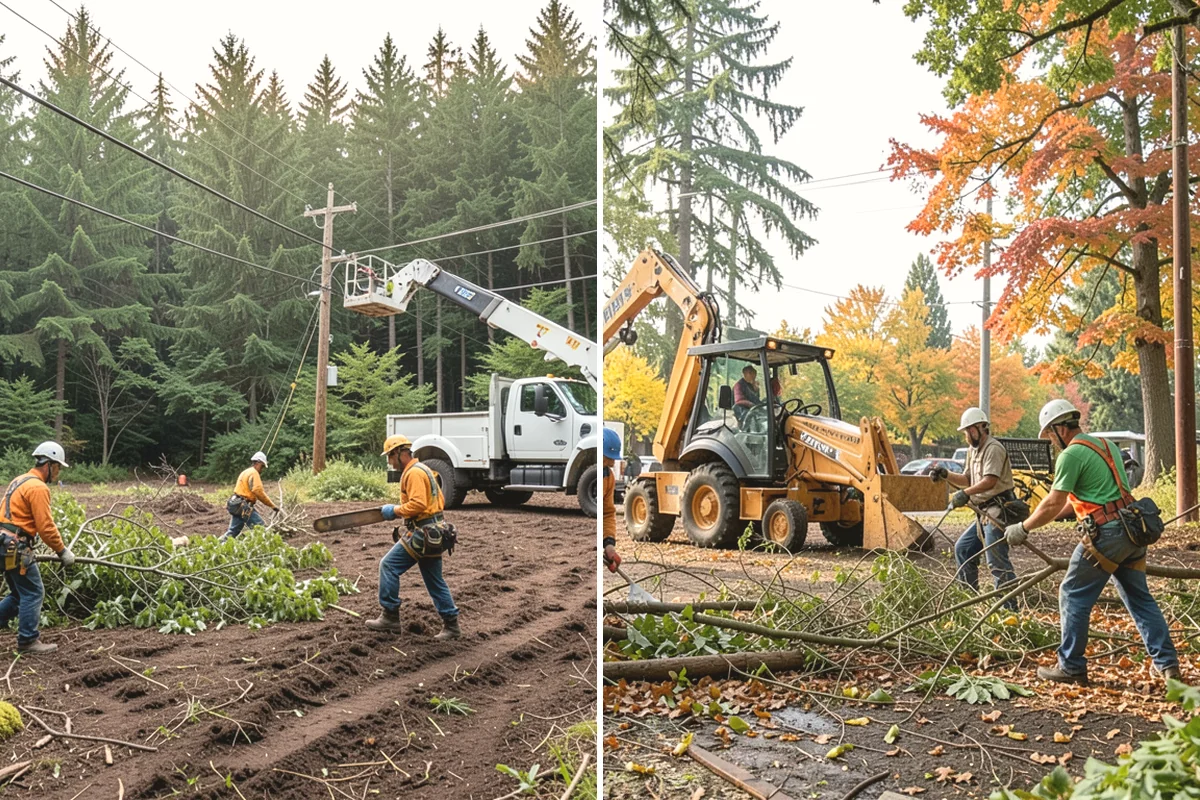
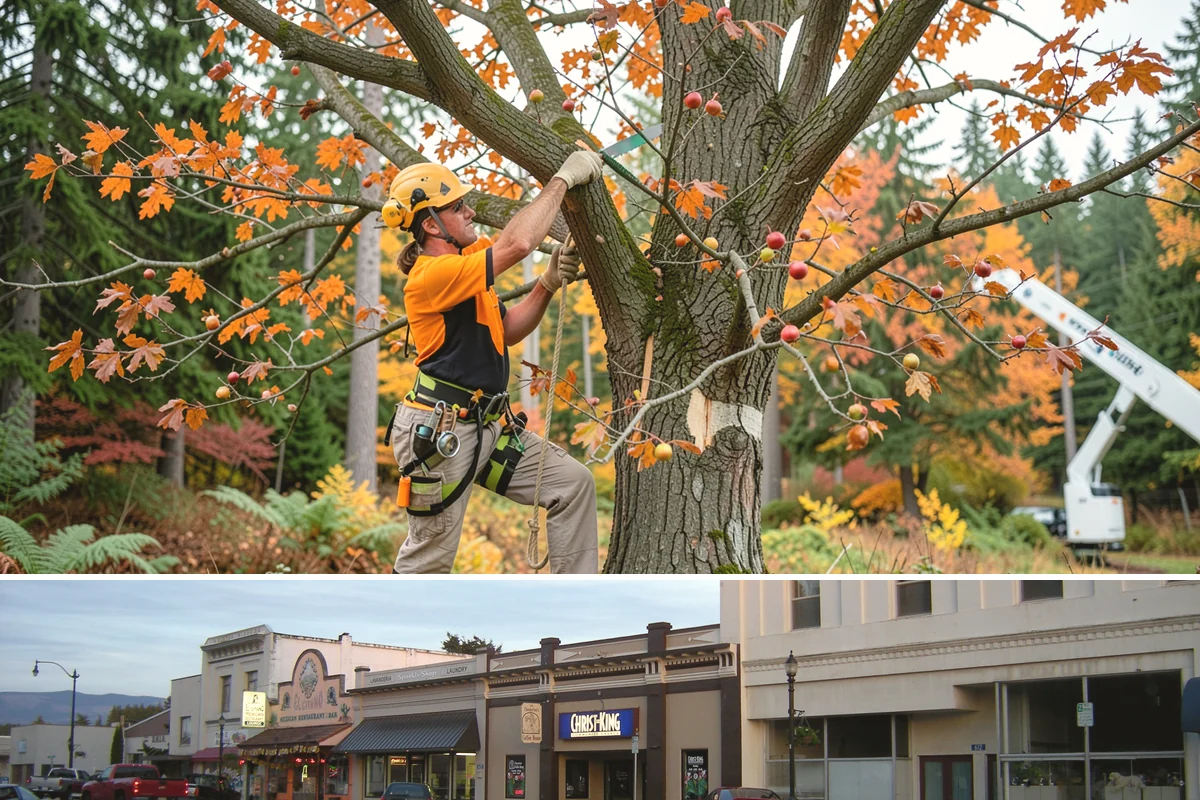
Where Safety Meets Expert Tree Service.

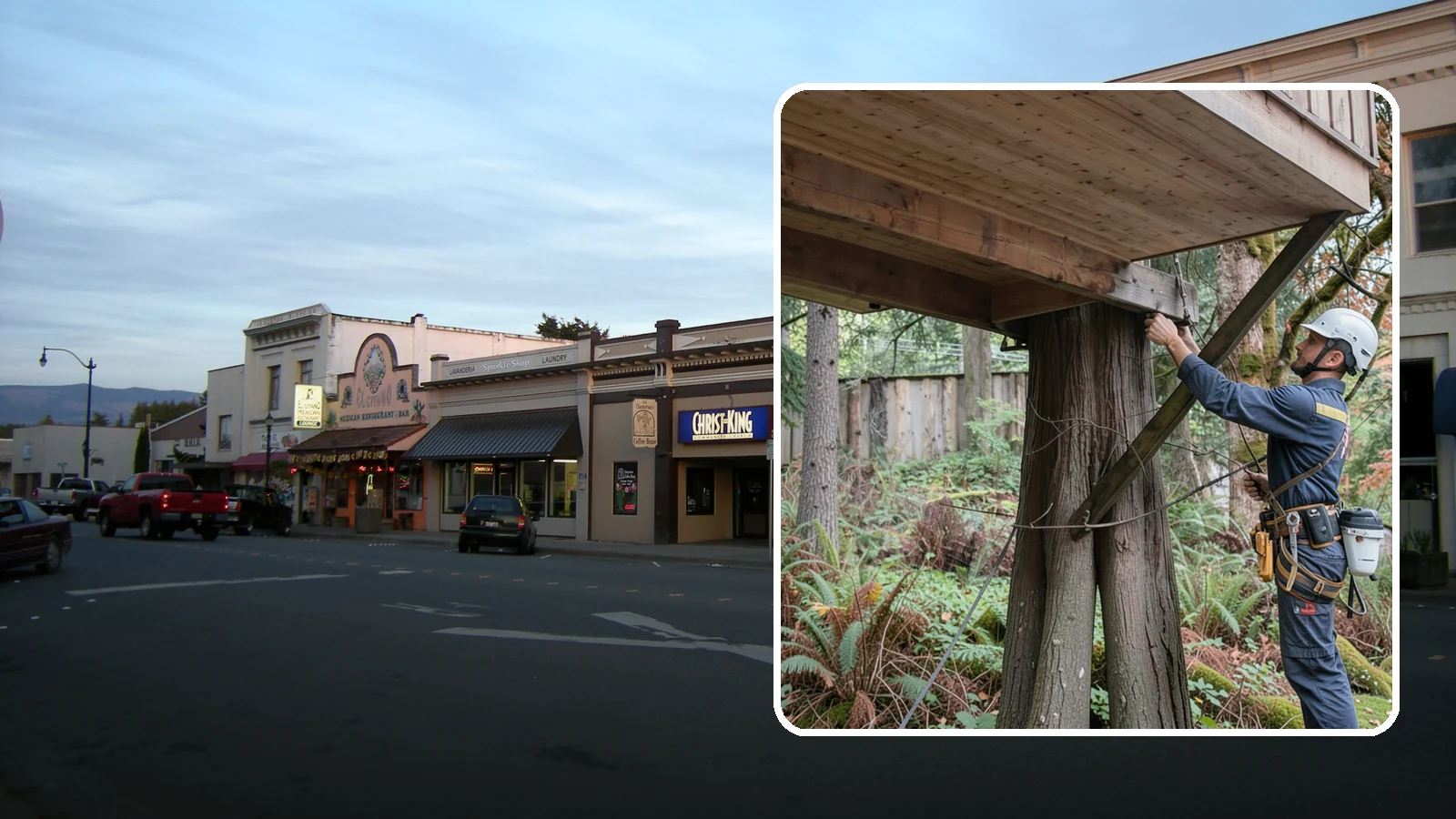
Burlington Tree Bracing
The installation of rods to reinforce splits or weak unions.
Tree bracing is for owners of trees with a structural weakness that is not bad enough to call for removal. That usually means a split or tight V-shaped union in the trunk, a large limb that leans over a house, driveway or play area, or a tree that has already cracked in a storm.
Bracing adds support to a weak point. It does not fix the defect, and it suits some trees and not others. Here is how to tell which approach fits your tree and what to check first.
About Tree Bracing in Burlington
Tree bracing is a supportive solution designed to help homeowners protect their most valued trees from structural stress. By reinforcing weak points in the trunk or branches, we can extend the safe life of significant specimens on your property. This service works well for any location where mature trees face challenges like heavy limbs or included-bark unions.
What Burlington Tree Bracing Includes
Tree bracing involves installing rods to reinforce splits and strengthen cracks within a tree’s structure. We specifically target weak unions and included-bark areas that are prone to failure under load. Our work is tailored to the specific needs of your tree species, site conditions, and access requirements.
Burlington Tree Bracing Process
The typical process begins with an assessment of structural defects and how loads travel through the tree. Once a suitable support system is selected, trained crews install hardware at precise positions following recognized arboricultural standards. We document every installation and set up a schedule for future inspections to ensure long-term stability.
Equipment We Use for Burlington Tree Bracing
Our teams utilize specialized cabling and bracing hardware along with professional installation tools to complete the job safely. Depending on the tree’s height and location, we may use climbing rigging gear or an aerial lift to reach work areas effectively. All crew members wear necessary personal protective equipment throughout the project.
Burlington Tree Bracing Safety & Best Practices
We install support systems only where they are appropriate and effective for preventing limb or stem failure. It is critical that all hardware used is correctly rated for the specific forces it will encounter over time. Periodic inspections help recognize when aging hardware needs replacement or if removal becomes the safer option for your tree’s health.
Signs You Need Tree Bracing in Burlington
You may need this service if you notice cracks, cavities, or included-bark unions forming in your trees’ trunks or branches. Overextended limbs that struggle to support their own weight are another common situation where bracing provides necessary relief. Identifying these issues early helps preserve valued trees before they become hazardous risks for people nearby.
What Affects the Cost of Tree Bracing in Burlington
The cost of tree bracing is influenced by the number of rods required to adequately reinforce your specific tree. Factors such as species-specific hardware selection and site access conditions also play a major role in determining the final price. Additionally, documenting installations with detailed inspection schedules adds complexity that affects overall costs for the project.
Best Time of Year for Burlington Tree Bracing
While work can be performed year-round, we typically schedule projects when trees have full foliage to accurately assess load paths. Freezing temperatures may affect installation safety or require specialized rigging gear, so timing is adjusted based on weather conditions. Planning your service during these optimal windows ensures that our crews can perform the job with maximum efficiency and care.

Bracing options for Burlington trees and local wind
Bracing is one of several ways to deal with a structural defect. The right choice depends on the defect, the tree's condition and what sits beneath it.
The approaches to compare
- Cabling: flexible steel cable installed higher in the crown to limit how far weak limbs or unions can move. It is common for co-dominant stems.
- Rod bracing: threaded steel rods placed through a split or a weak union to hold the parts together. It suits cracks and tight unions.
- Pruning to reduce weight: removing or shortening the heavy limb so the weak point carries less load. Sometimes this is enough alone.
- Removal: the safer choice when wood is decayed, the base is heaving or the tree cannot be made sound.
What local conditions favor
Wind is the main local factor. In the forecast zone that includes Burlington, there were 33 high and strong wind episodes from 2005 to 2025. The strongest gust recorded in that zone since 2005 was 85 mph on December 14, 2006. Those figures cover the whole zone, not your yard. They do show that a weak union here is likely to be tested repeatedly, so support is worth considering for a tree you want to keep.
Check the tree after storms. Washington DNR's Tree Link guidance, Making Urban Forests Stronger, Part 2 - After the Storm, says to look for hanging or dead branches, trunk damage and soil upheaval at the base. Soil upheaval or a lifting root plate points toward removal, because braces cannot fix a failing root system. Hanging branches should be removed before any bracing is installed.
Burlington is in USDA hardiness zone 8b, which tells you about winter cold, not structural strength. It does not change how bracing is chosen.
We can look at the tree and explain which option fits. If a city rule could apply to the work, we check with the city before it starts. Free estimates are available at 425-484-4442.
Burlington tree conditions at a glance
| High and strong wind episodes, 2005-2025 | 33 in the forecast zone |
|---|---|
| Average snowfall | 8.6 in a season |
| Soils | 4% of land has hardpan or another restrictive layer within 40 in; most common series Field |
| Slopes | Some steep slopes |
Strongest wind events near Burlington
- Dec 14, 2006: gusts to 85 mph
- Feb 3, 2006: gusts to 78 mph
- Nov 15, 2006: gusts to 74 mph
NOAA Storm Events, forecast zone that includes Burlington, 2005-2025.
Sources: Daymet daily weather (NASA/ORNL), NOAA Storm Events, USDA plant hardiness map 2023, NRCS soil survey, USGS elevation, WA DNR landslide inventory, USDA Forest Service aerial survey, WSDA, city tree assessments and street-tree inventories, SILVIS Lab, Arbor Day Foundation, and official city and utility pages.
Tree Bracing Serving Burlington
Burlington