Where Safety Meets Expert Tree Service.

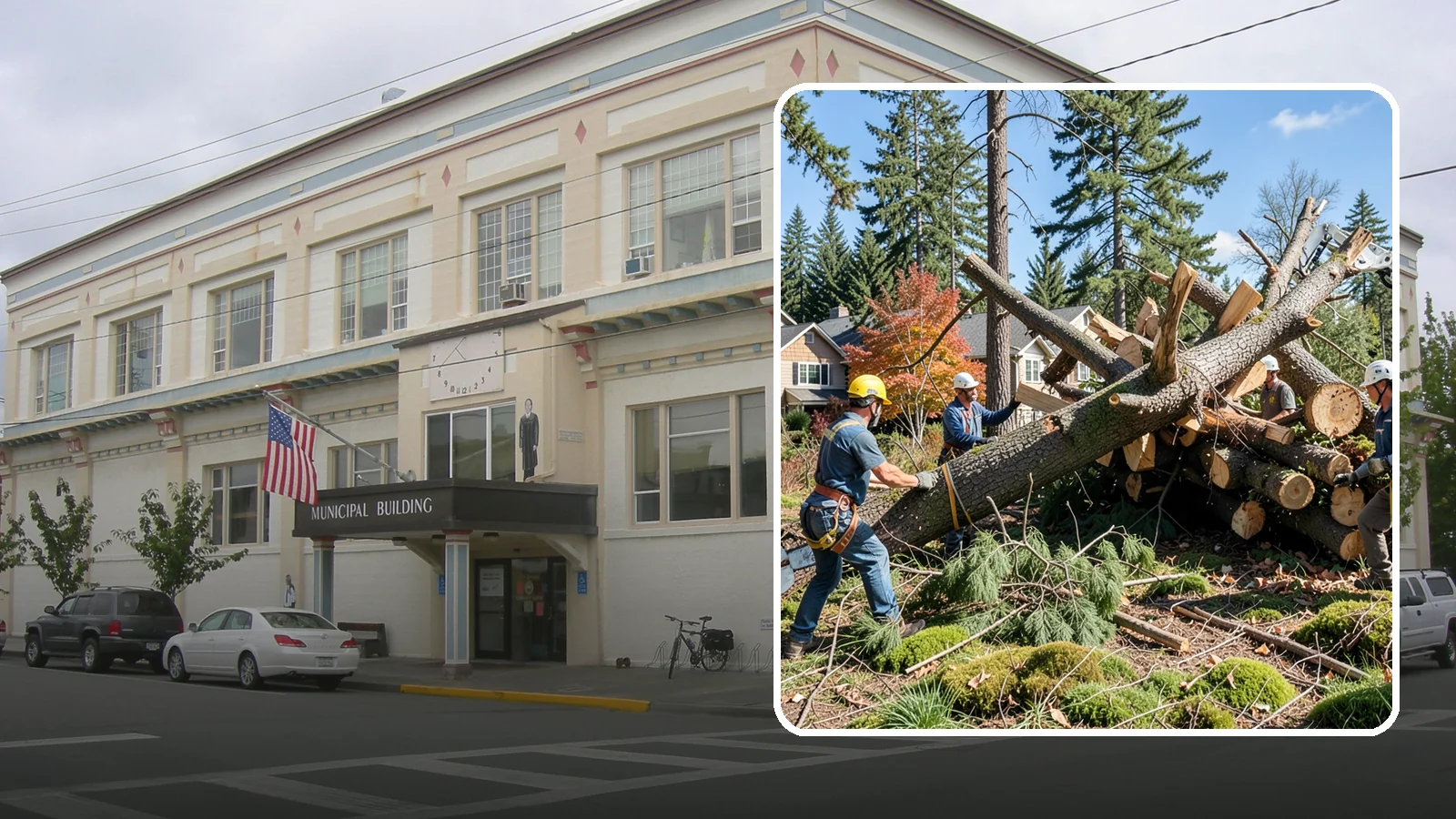
Anacortes Hazardous Tree Removal
The controlled removal of trees that pose a safety risk due to structural defects, decay, or dangerous lean.
You may have noticed a lean that wasn't there last year, dead branches high in the crown, mushrooms at the base, or a trunk that seems to sit straight in the ground with no flare at the bottom. Any of these can be a reason to have a tree looked at before the next storm.
Not every tree with a problem has to come down. Some can be pruned or monitored. This page explains how a hazard tree gets assessed in Anacortes, what local conditions add to the risk, and how removal is handled when it is the right call.
About Hazardous Tree Removal in Anacortes
If a tree on your property shows signs of danger, our team is here to help you remove it safely. This specialized service protects people, homes, and utilities from trees that have become unstable or decayed. We work with homeowners across the region who need immediate attention for hazardous conditions.
What Anacortes Hazardous Tree Removal Includes
Hazardous tree removal involves carefully taking down trees that pose a safety risk due to structural defects, decay, or dangerous lean. This process is necessary when a tree threatens your property and cannot be made safe through simple pruning or support systems. Our crews use controlled methods matched specifically to the species of tree and conditions on your site.
Anacortes Hazardous Tree Removal Process
The work begins with an on-site assessment to evaluate hazards before establishing clear drop zones and safety perimeters. Trained professionals then rig limbs or fell the stem in a controlled sequence while processing the wood for disposal. Once the removal is complete, we clear all debris from the area to leave your property clean and safe.
Equipment We Use for Anacortes Hazardous Tree Removal
We utilize chainsaws and climbing gear along with specialized rigging equipment to handle difficult removals safely. Depending on the job site requirements, an aerial lift or crane may be used alongside a wood chipper for efficient cleanup. Ground protection measures are also in place to shield your landscaping during these operations.
Anacortes Hazardous Tree Removal Safety & Best Practices
Our crews maintain strict safety protocols by keeping drop zones clear and planning controlled fall paths away from structures. We always identify overhead utility lines before starting work and inspect trees thoroughly for hidden decay or defects. Every team member uses proper fall protection and communicates constantly with ground personnel to ensure a safe environment.
Signs You Need Hazardous Tree Removal in Anacortes
You may need this service if you notice an unpredictable lean, visible cracks in the trunk, or signs of internal rot that threaten your home. Situations where a tree is close to power lines or blocking access often require immediate professional intervention rather than simple trimming. If standard pruning cannot stabilize the situation, removal becomes the necessary step for safety.
What Affects the Cost of Hazardous Tree Removal in Anacortes
The final cost depends on factors such as the size of the tree and any hidden internal decay that complicates the work. Proximity to structures or power lines also influences pricing, as does limited access for heavy equipment at your site. Additionally, requirements for wood disposal will play a role in determining the overall expense of the project.
Best Time of Year for Anacortes Hazardous Tree Removal
While we can perform this service year-round with appropriate planning, wet seasons may require specialized rigging gear to manage slippery conditions. Operations must pause immediately if high winds threaten an unstable tree leaning dangerously toward your property or neighbors. We schedule work at times that prioritize safety while accommodating the specific needs of each site condition.
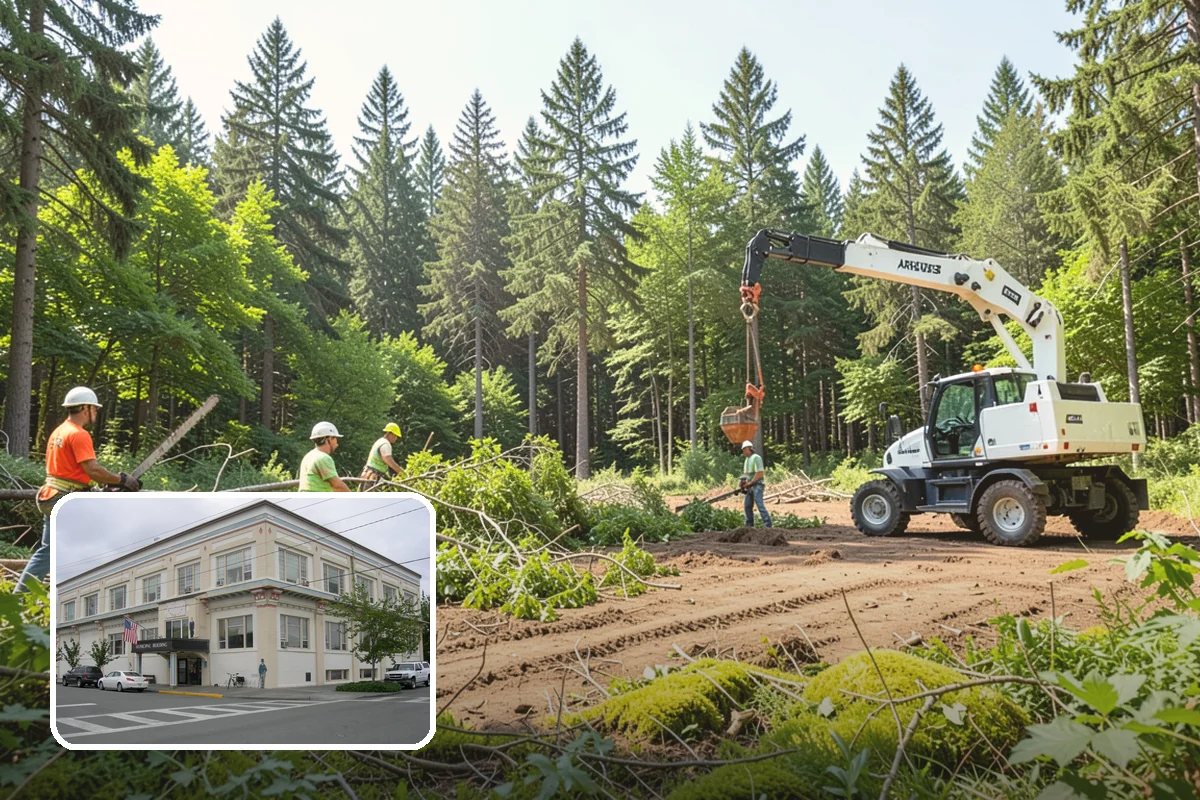
Hazardous tree removal in Anacortes: what to know first
Trees become hazards for a few common reasons: decay in the trunk or roots, dead wood, a structural defect such as a split union, or roots that have been damaged or buried. A tree that is a hazard also needs a target, meaning a house, a driveway, a power line or a place where people gather. The same defect in an empty corner of a lot is a different problem.
Why wind and soil matter here
Federal weather records for the forecast zone that includes Anacortes list 33 high and strong wind episodes from 2005 to 2025. The strongest gust recorded in that zone since 2005 was 85 mph, on December 14, 2006. That is zone-wide data, not a reading from your yard, but it shows that a weakened tree can be tested by real storms. A tree with decay or a lean has less margin when that happens.
Planting depth is worth checking too. The Washington DNR notes that trees with no visible root flare may have been planted too deep and can be prone to storm failure. If the trunk goes straight into the soil like a post, tell us. We can look at it during the assessment.
The state also maps one landslide in Anacortes. That does not mean your slope is unstable. If your tree stands on a steep or soft bank, though, the ground around it is part of the risk and part of how the removal gets planned.
The city rule and the permit question
The city's tree code exempts dead or diseased trees and emergencies from the land clearing permit. In critical areas, a hazard tree may be removed to protect structures or life with prior written approval, unless it is an emergency. The code covers removal only. Because the rules depend on where the tree stands, we check with the city before work starts instead of guessing.
How the work goes
An ISA Certified Arborist can look at the tree, explain what is wrong, and say whether removal or a lesser fix makes sense. If it comes down, the crew usually takes it in sections where there is a house or fence nearby, lowering pieces under control. Stump grinding and cleanup can be discussed at the estimate, which is free.
Anacortes tree conditions at a glance
| USDA hardiness zone | 8b (8a to 9a across the city) |
|---|---|
| Slopes | More steep ground than most Puget Sound cities |
| Landslides mapped by WA DNR | 1 |
| Soils | 48% of land has hardpan or another restrictive layer within 40 in; most common series Whistle; 36% well drained |
| High and strong wind episodes, 2005-2025 | 33 in the forecast zone |
| Electric utility | Puget Sound Energy (PSE) |
Tree removal rules in Anacortes
No standalone single-tree permit found; tree removal is regulated as land clearing (AMC 19.78). Exempt: removal of 6,000 sq ft or less of trees/ground cover on a lot with an existing permitted building (general maintenance/landscaping), removal of dead or diseased trees, and emergencies.
Regulated size: 6 inches diameter measured 5 ft above grade (AMC 19.12.020 / 19.65 definition of significant tree).
Official city source. Rules change; we confirm with the city before work starts.
Trees near the power line to your house
Puget Sound Energy (PSE): Service line (wire from PSE pole to home or meter pole): PSE does not trim it; homeowner/private arborist trims.
PSE performs a safety disconnection so the homeowner or private tree trimmer/arborist can work; Call at least 5 business days ahead to check crew availability and potential charges.
Safety disconnect: 1-888-321-7779 (5+ business days ahead). Utility page.
Any fee for a disconnect is set by the utility.
Strongest wind events near Anacortes
- Dec 14, 2006: gusts to 85 mph
- Feb 3, 2006: gusts to 78 mph
- Nov 15, 2006: gusts to 74 mph
NOAA Storm Events, forecast zone that includes Anacortes, 2005-2025.
Sources: Daymet daily weather (NASA/ORNL), NOAA Storm Events, USDA plant hardiness map 2023, NRCS soil survey, USGS elevation, WA DNR landslide inventory, USDA Forest Service aerial survey, WSDA, city tree assessments and street-tree inventories, SILVIS Lab, Arbor Day Foundation, and official city and utility pages.
Hazardous Tree Removal Serving Anacortes
Anacortes
Hazardous tree removal in nearby areas
Also serving Anacortes
- Herb Garden Installation in Anacortesat Washington Landscaping
- Tree Risk Assessments in Anacortesat Washington City Services
- Firewood Processing in Anacortesat Washington Firewood