Where Safety Meets Expert Tree Service.


Yarrow Point Hanging Limb Removal
The removal of broken, suspended limbs.
This service is for Yarrow Point owners who can see a broken branch caught in a tree, a limb dangling over a driveway, roof or play area, or a cracked branch left after a windy night. It also fits anyone who finds fresh debris under a tree and is not sure where it came from.
A hanging limb can drop without warning, so start by keeping people, cars and pets out from under it. Take a photo from a safe distance and note where the limb is attached. That helps us judge the cut before anyone climbs.
About Hanging Limb Removal in Yarrow Point
If severe weather has left broken branches dangling from your trees, our team is ready to help you restore safety quickly. We specialize in removing these suspended limbs so you can regain access to your property without worry. This service brings peace of mind after a storm by addressing immediate hazards right away.
What Yarrow Point Hanging Limb Removal Includes
Hanging limb removal focuses specifically on clearing broken branches that remain attached or are partially detached from the tree. Our trained crews work according to recognized arboricultural standards, using methods tailored to your specific tree species and site conditions. The goal is simply to eliminate the danger posed by hanging debris efficiently.
Yarrow Point Hanging Limb Removal Process
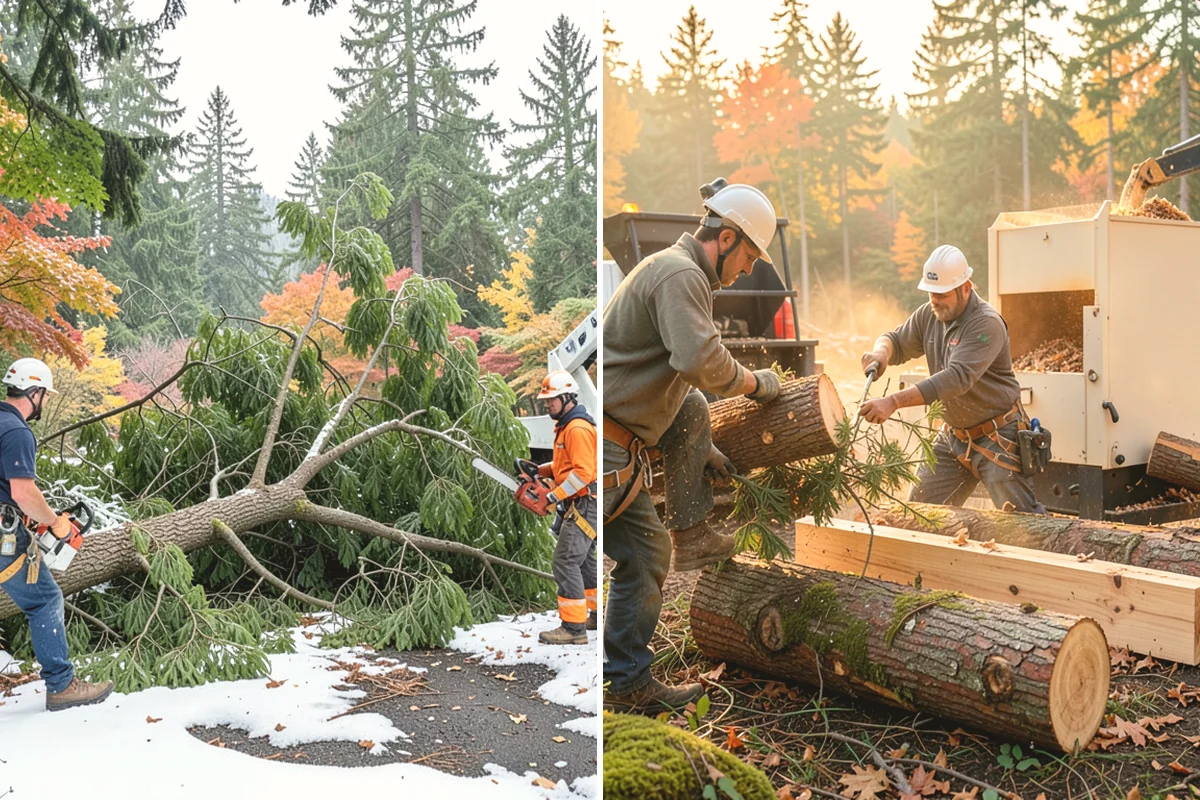
We begin by assessing the damage and identifying any immediate hazards before making the area safe for our crew. Once secure, we carefully remove both the hanging limbs and downed material while processing and hauling away all debris. If documentation of your property’s condition is needed, we will handle that as part of our work.
Equipment We Use for Yarrow Point Hanging Limb Removal
Our crews utilize chainsaws to cut through wood and rigging gear to manage heavy loads safely during removal. Depending on the size of the tree or location of the limb, an aerial lift or crane may be brought in for access. We also bring a chipper and hauling equipment to clear your property quickly after the limbs are downed.
Yarrow Point Hanging Limb Removal Safety & Best Practices
Storm-damaged trees should always be treated as unstable because they remain under significant load until fully removed. Our team stays alert for hidden utility lines that might have been knocked down or buried during the storm. We release tension carefully on bent material and keep all bystanders clear to ensure a safe work environment.
Signs You Need Hanging Limb Removal in Yarrow Point
You likely need this service if you see branches hanging precariously from trees after recent high winds or heavy rain. Hidden cracks in wood or signs of partial failure often indicate that a limb is about to drop unexpectedly. If access to your yard feels blocked by debris, clearing these hazards helps prevent secondary failures later on.
What Affects the Cost of Hanging Limb Removal in Yarrow Point
The price for this work depends heavily on the species of tree you have and how difficult it is to reach the broken limbs. Site conditions play a major role, especially if recent storms have limited vehicle or foot access around your property. Additionally, removing limbs that are pinned under tension requires more careful planning than cutting down healthy branches.
Best Time of Year for Yarrow Point Hanging Limb Removal
This storm response service is performed immediately following severe weather events when hanging branches pose an active threat to people and homes. Waiting too long can increase the risk of sudden failure as stored energy builds up within damaged wood. We aim to be on-site quickly after a storm passes to help homeowners recover from the immediate aftermath.
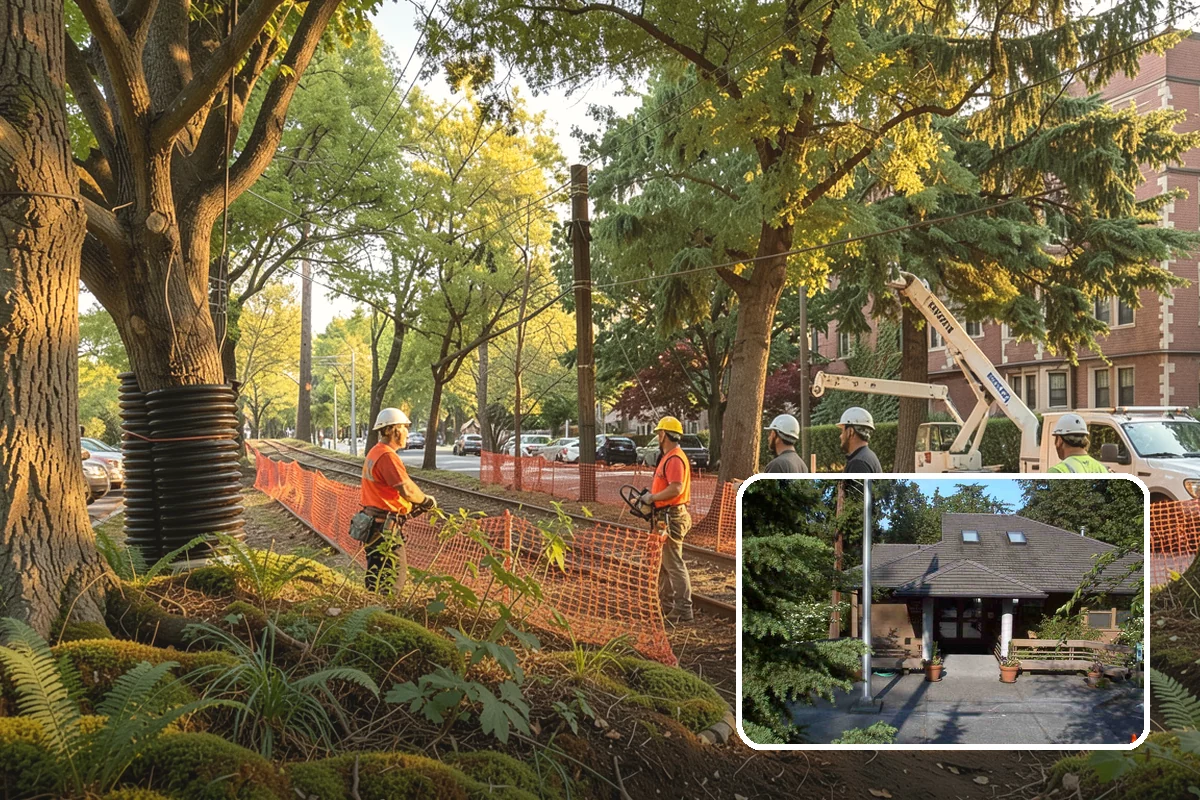
Hanging limb options for Yarrow Point properties
Owners usually choose between a few approaches. The right one depends on the limb, the tree and what sits below it.
Remove only the broken limb
If the damage is limited to one branch and the rest of the crown looks sound, a clean pruning cut at the branch collar is standard practice under ISA/ANSI A300 guidance. It removes the hazard and leaves a wound the tree can seal on its own. Large limbs are usually cut in sections and lowered, so they do not tear bark on the way down.
Remove the limb and inspect the tree
Washington DNR's Tree Link guidance on assessing winter storm damage lists broken or hanging branches alongside torn bark, frost cracks, split trees and broken leaders. If you see any of those signs near the hanging limb, the problem may be bigger than one branch. A closer look at the trunk and main leaders is worth doing before deciding on more work.
Wait and monitor
Waiting makes sense only for small, light damage well away from people and structures. Anything hanging over a target should not wait.
Local conditions favor acting sooner rather than later. The forecast zone that includes Yarrow Point logged 33 high and strong wind episodes from 2005 to 2025, and 2 ice storm episodes. That is zone-wide data, not a record of any one tree. But it shows that wind will test a weakened limb again, and ice adds weight to branches that are already damaged.
Quick checklist before you call:
- Where is the limb hanging, and what is underneath it?
- Is it touching a power line? If so, stay clear and call the utility.
- Are there cracks, torn bark or a split in the trunk or leaders?
- Do you have photos from the ground?
For a free estimate, call or text 425-484-4442. If the tree is large or a city permit could apply, we check with Yarrow Point before work starts.
Yarrow Point tree conditions at a glance
| High and strong wind episodes, 2005-2025 | 33 in the forecast zone |
|---|---|
| Ice storm episodes, 2005-2025 | 2 in the forecast zone |
| Average snowfall | 5.4 in a season |
| Soils | 93% of land has hardpan or another restrictive layer within 40 in; most common series Alderwood |
| Rain and snow falling October to April | 81% of the year’s total |
| Electric utility | unconfirmed |
Tree removal rules in Yarrow Point
A tree removal permit is required to remove any significant tree on private property (YPMC 20.22.030(A)). Minimum density of one significant tree per 5,000 sq ft of lot area must be shown whenever a significant or heritage tree is removed. Trees proposed for removal must be marked with yellow tape at DSH.
Regulated size: Any healthy tree at least 12 in DSH (diameter at 4.5 ft).
Official city source. Rules change; we confirm with the city before work starts.
Strongest wind events near Yarrow Point
- Dec 17, 2010: gusts to 72 mph
- Feb 7, 2012: gusts to 70 mph
- Dec 14, 2006: gusts to 68 mph
NOAA Storm Events, forecast zone that includes Yarrow Point, 2005-2025.
Sources: Daymet daily weather (NASA/ORNL), NOAA Storm Events, USDA plant hardiness map 2023, NRCS soil survey, USGS elevation, WA DNR landslide inventory, USDA Forest Service aerial survey, WSDA, city tree assessments and street-tree inventories, SILVIS Lab, Arbor Day Foundation, and official city and utility pages.
Hanging Limb Removal Serving Yarrow Point
Yarrow Point
Hanging limb removal in nearby areas
Also serving Yarrow Point
- Insurance Claim Documentation in Yarrow Pointat Washington Roofing
- Foundation Crack Injection in Yarrow Pointat Washington Construction
- Seasonal Planting in Yarrow Pointat Washington Landscaping
- Emergency Snow Response in Yarrow Pointat Washington Snow Removal