Where Safety Meets Expert Tree Service.

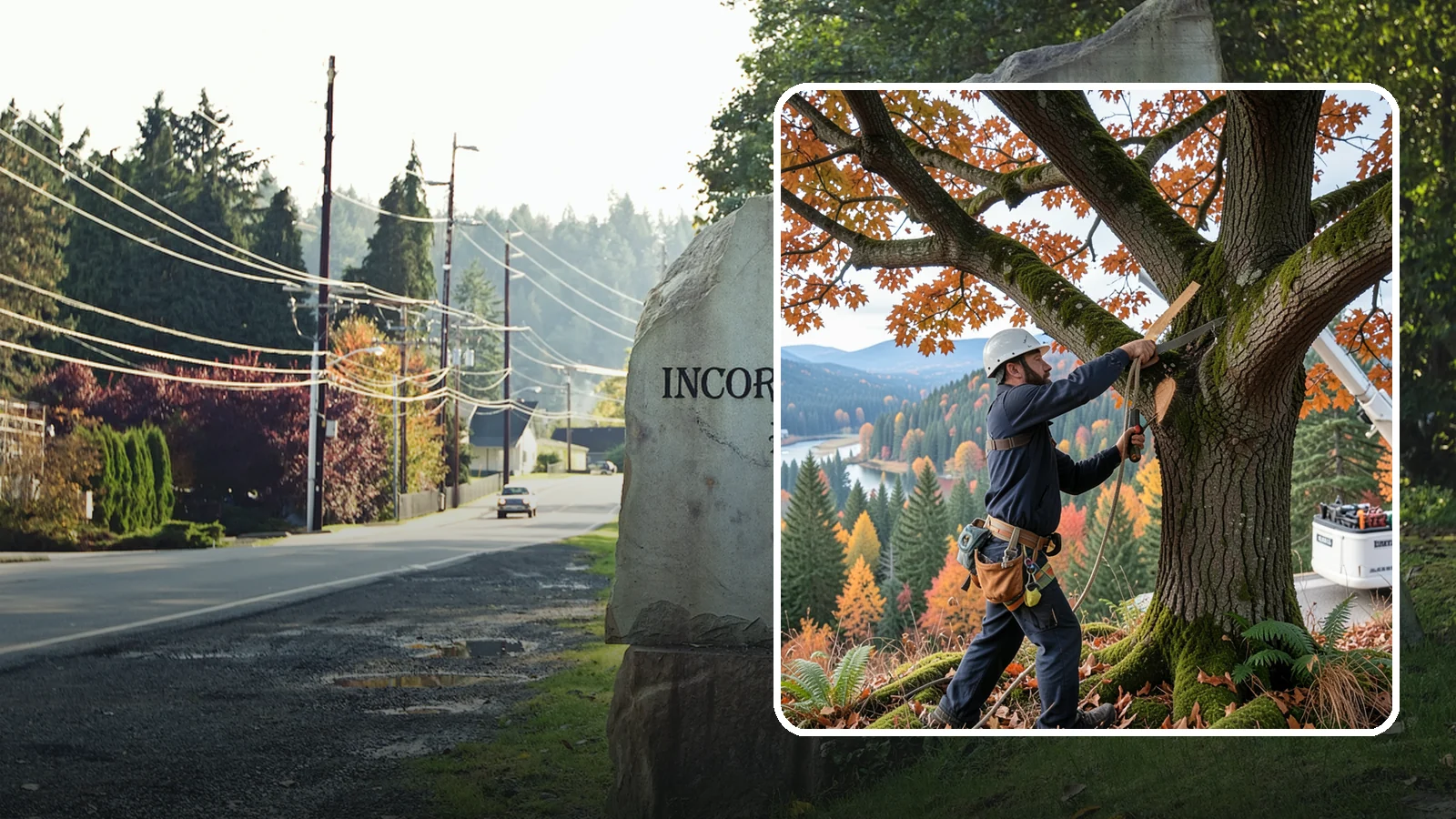
Wilkeson Vista Pruning
Selective pruning to open or improve a view.
Can you get your view back without ruining the trees in front of it? Usually, yes. Vista pruning selectively thins and shortens branches so you can see through or past a tree, instead of cutting the whole tree down or chopping it to a stump.
The first step is to stand where you want the view and note which trees and which branches block it. Then we decide how much can come off each tree while keeping its natural shape and health. Some views can be reopened with a few cuts. Others take a different plan.
About Vista Pruning in Wilkeson
Vista pruning is a specialized tree care approach designed to open up or improve your view without harming the long-term health of your trees. This selective method helps homeowners who want clearer sightlines while ensuring their landscape remains safe and vigorous for years to come. We work with you to balance aesthetic goals with proper arboricultural standards so your property looks its best from any angle.
What Wilkeson Vista Pruning Includes
Vista pruning involves carefully selecting specific cuts that enhance sightlines while protecting the structural integrity of each tree. Our crews match these methods to your unique site conditions and the natural characteristics of your local species, ensuring a tailored approach for every job. The process focuses on improving clearance around structures or pathways without over-pruning or stressing the canopy beyond its recovery ability.
Wilkeson Vista Pruning Process
We begin by assessing the current condition of the canopy and defining exactly what pruning objectives are needed to improve your view. Trained professionals then select the correct cuts based on the species, season, and access points available at your location. After making clean cuts at proper locations, our team lowers branches safely, processes the material efficiently, and cleans up the work area completely.
Equipment We Use for Wilkeson Vista Pruning
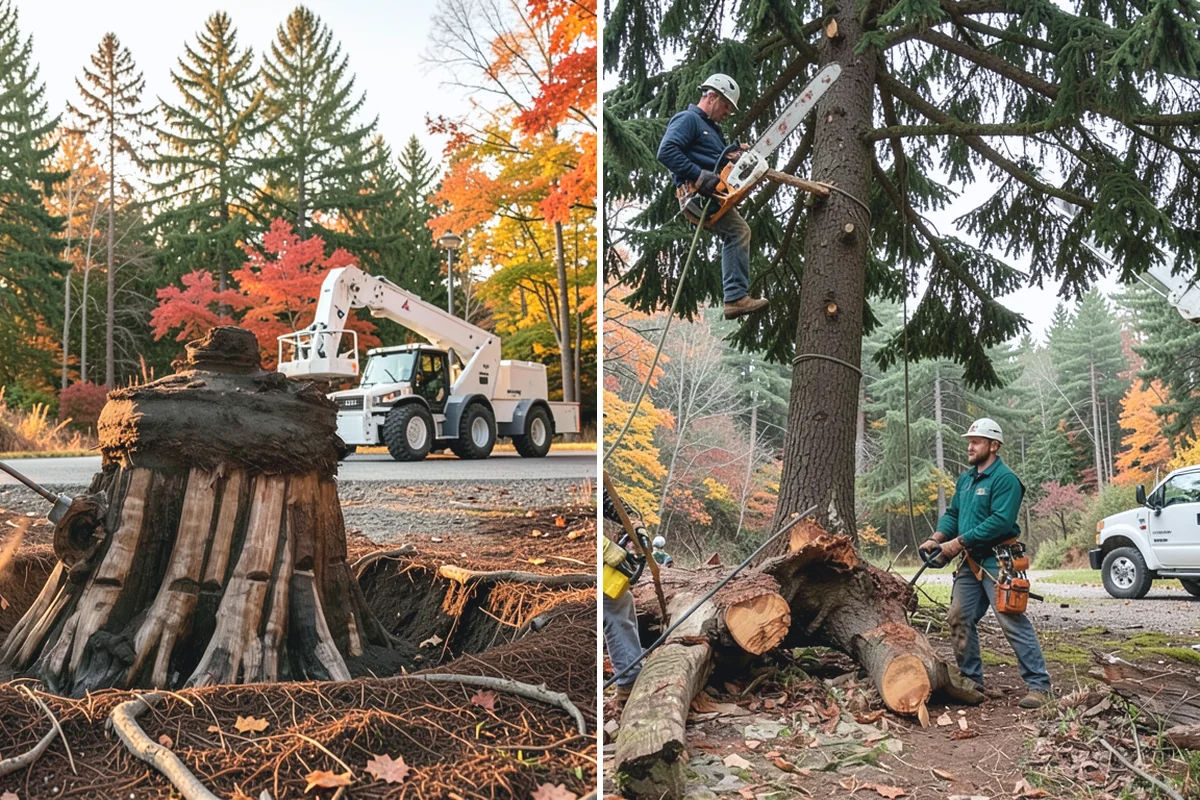
Our crews utilize a variety of tools including hand saws, pole saws, chainsaws, and climbing gear to reach different heights on your trees. Depending on the specific site conditions and tree size, we may also use aerial lifts or rigging equipment to ensure safe access and efficient removal. A wood chipper is used to process cut material right at the job site, keeping debris managed throughout the project.
Wilkeson Vista Pruning Safety & Best Practices
We follow recognized pruning standards that avoid harmful cuts which can cause unnecessary stress or disease entry into your trees. Our team takes extra care when working near overhead power lines and unstable limbs, using appropriate fall protection whenever we are aloft. By limiting removal to healthy amounts of live tissue, we minimize the risk of branch failure while maintaining a safe environment for everyone involved.
Signs You Need Vista Pruning in Wilkeson
You may need vista pruning if you notice deadwood or weak unions interfering with your desired view or blocking important sightlines. Over-pruning from previous work or improper cuts that have caused stress to specific branches are also signs that this service is appropriate. Additionally, if tree growth has encroached on structures or utility lines in a way that impacts visibility or safety, we can help restore balance and clarity.
What Affects the Cost of Vista Pruning in Wilkeson
The cost of vista pruning depends heavily on the current condition of your canopy and how many specific objectives need to be met for sightlines. Factors such as species-specific cut selection, proper disposal of processed material, and necessary site access needs will influence the overall price. We provide transparent discussions about these variables so you understand exactly what drives the investment in this specialized service.
Best Time of Year for Wilkeson Vista Pruning
Work timing is carefully planned according to recognized arboricultural standards that match specific tree species found in our region. Seasonal conditions are considered closely to ensure cuts heal properly and do not stress your trees during vulnerable periods of growth or dormancy. Our crews schedule projects when the weather and biological cycles align best for both safety and the long-term vigor of your landscape.
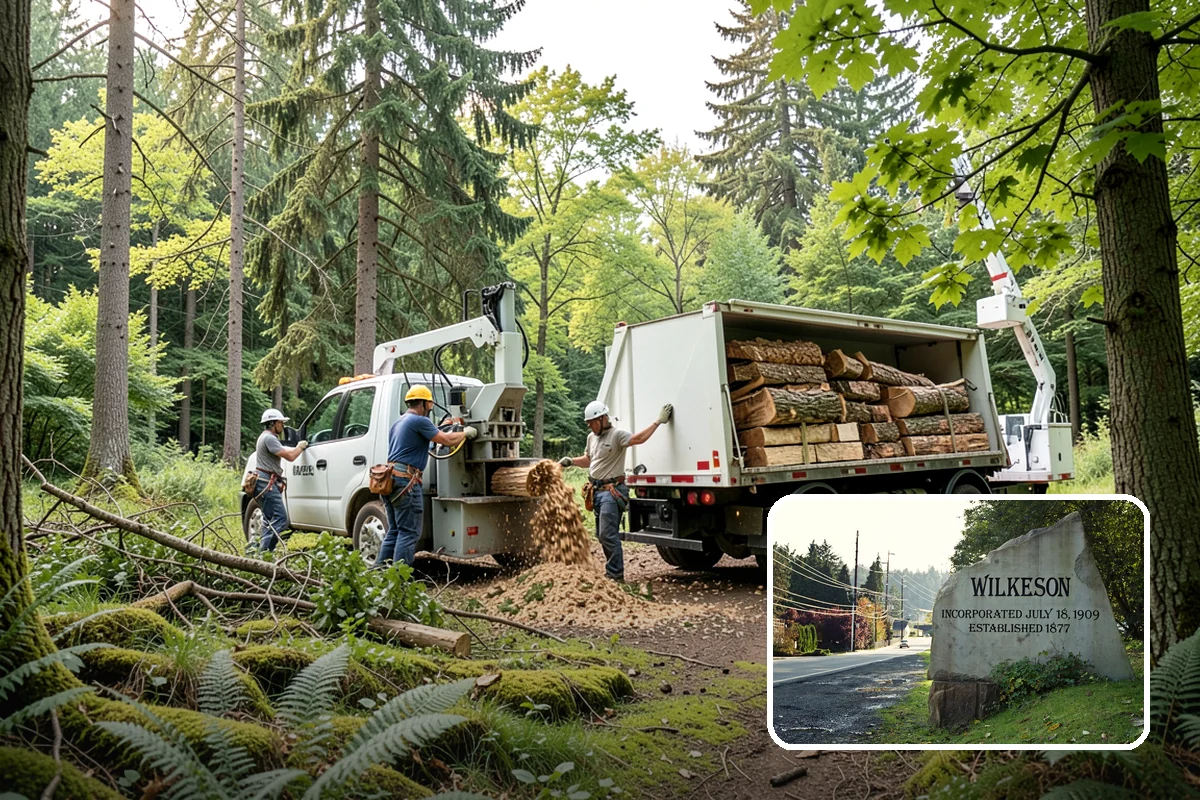
Vista pruning on Wilkeson's steep ground
Why slope changes the job
USGS elevation data shows Wilkeson has a lot of steep ground compared with other Puget Sound cities. On a slope, the trees that block a view are often below you or beside you, and the trunk may be far from the branches that matter. Footing, rigging and where cut limbs will land all need planning before anyone climbs. We look at the slope and the tree together, so the plan for each cut covers both the view and how the branch comes down.
Why we don't top trees
Topping is the quickest way to lower a tree, but it backfires. The WSU Extension Pacific Northwest Gardener's Handbook (Chapter 23, Pruning Woody Landscape Plants) notes that topped deciduous trees respond with heavy growth of poorly attached water sprouts. That means the view returns fast, and the new growth is weaker than what was removed. Standard practice is different. We cut back to a suitable side branch, thin selectively to open sight lines, and take off only as much live crown as the tree can tolerate.
What we check before work starts
The published rules we found for Wilkeson don't spell out clearly which removals need city approval. If your view plan involves taking out a tree rather than pruning it, we check with the city before work starts. Pruning alone is a separate question from removal, and we sort out which one applies when we look at your trees.
To get an accurate plan, it helps to bring a few things to the visit:
- The spot or window where the view matters most
- Which trees are yours and which belong to a neighbor
- Any branches that already worry you
A good vista plan may not clear everything. Sometimes the honest answer is a partial view, with a few windows opened through the canopy. Call or text 425-484-4442 for a free estimate.
Wilkeson tree conditions at a glance
| USDA hardiness zone | 8b |
|---|---|
| Rain and snow falling October to April | 79% of the year’s total |
| Tree canopy | Among the most heavily treed Puget Sound cities (satellite data) |
| Days that freeze at night and thaw by day | 43 a year |
| Electric utility | Puget Sound Energy (PSE) |
Trees near the power line to your house
Puget Sound Energy (PSE): Service line (wire from PSE pole to home or meter pole): PSE does not trim it; homeowner/private arborist trims.
PSE performs a safety disconnection so the homeowner or private tree trimmer/arborist can work; Call at least 5 business days ahead to check crew availability and potential charges.
Safety disconnect: 1-888-321-7779 (5+ business days ahead). Utility page.
Any fee for a disconnect is set by the utility.
Sources: Daymet daily weather (NASA/ORNL), NOAA Storm Events, USDA plant hardiness map 2023, NRCS soil survey, USGS elevation, WA DNR landslide inventory, USDA Forest Service aerial survey, WSDA, city tree assessments and street-tree inventories, SILVIS Lab, Arbor Day Foundation, and official city and utility pages.
Vista Pruning Serving Wilkeson
Wilkeson
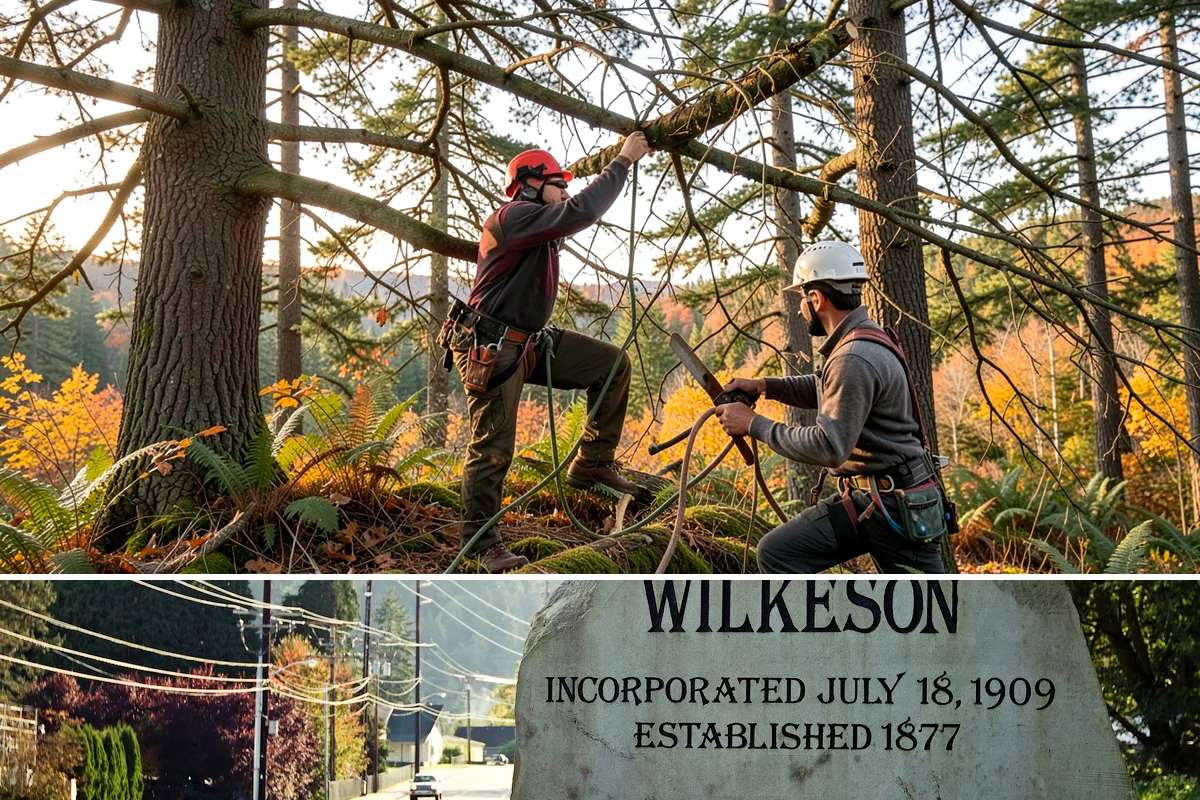
Vista pruning in nearby areas
Also serving Wilkeson
- Magnolia Pruning in Wilkesonat Washington Landscaping
- Preventive Roof Maintenance in Wilkesonat Washington Roofing
- Street Tree Pruning in Wilkesonat Washington City Services