Where Safety Meets Expert Tree Service.


Wilkeson Bamboo Removal
The removal and containment of bamboo.
Can you just cut bamboo down and be done with it? Not usually. Cutting the canes only removes the top growth. The underground stems, called rhizomes, stay alive and send up new shoots, often for several seasons.
Real removal means getting the rhizome network out of the ground, or starving it with repeated cutting. Which approach fits depends on the type of bamboo, how far it has spread, and the soil it is growing in. Here is what that looks like for a yard in Wilkeson.
About Bamboo Removal in Wilkeson
If your property is struggling under spreading bamboo or invasive growth, our team can help clear the land safely and effectively. We work closely with homeowners who need their sites improved for better access, reduced fire risk, and a more usable outdoor space. Our goal is to restore your landscape while protecting existing features like trees and structures.
What Wilkeson Bamboo Removal Includes
This service focuses on the complete removal and containment of bamboo to stop it from spreading further across your lot. We use methods tailored to specific site conditions to discourage regrowth and prepare your land for its intended purpose. The work includes clearing vegetation in a planned sequence so that debris is processed, removed, and disposed of responsibly.
Wilkeson Bamboo Removal Process
Our trained crews begin by assessing the site and marking important features they need to protect during the job. We then clear the bamboo according to a logical plan before grading or tidying the area as needed for your use. Throughout this process, we manage all debris carefully to prevent hazards while ensuring retained trees stay healthy in their root zones.
Equipment We Use for Wilkeson Bamboo Removal
To handle dense growth and uneven terrain safely, our crews utilize brush cutters, chainsaws, chippers, and hauling equipment alongside essential hand tools. We also wear full personal protective gear at all times to ensure the safety of both our team members and your property. These specialized tools allow us to tackle thorny vegetation efficiently without damaging surrounding landscape elements.
Wilkeson Bamboo Removal Safety & Best Practices
Before starting any work, we identify utility lines, property boundaries, and specific features that must remain untouched during clearing operations. We stay alert for uneven ground or hidden obstacles that could create hazards while moving heavy equipment through your yard. By managing debris properly and protecting root zones of nearby trees, we minimize risks to both people and plants throughout the project.
Signs You Need Bamboo Removal in Wilkeson
You may need this service if you notice bamboo spreading rapidly across your property or finding it difficult to control overgrown vegetation. Signs that include dense thorny growth on uneven terrain or invasive species continuing to regrow despite previous attempts also indicate a need for professional help. If wet conditions are making access difficult, our team can assess whether the site is ready for safe clearing work.
What Affects the Cost of Bamboo Removal in Wilkeson
The price of this service depends largely on how thick and thorny the bamboo growth has become in your specific area. Accessibility plays a major role as well, with uneven or wet terrain requiring more careful planning to navigate safely during removal. Additionally, costs are influenced by the need to protect existing features like trees and structures while ensuring invasive debris is disposed of responsibly.
Best Time of Year for Wilkeson Bamboo Removal
Work is best scheduled when ground conditions remain stable enough for hauling equipment but before heavy rains make the site impassable. We aim to complete projects earlier in favorable seasons to avoid periods where rapid regrowth might complicate efforts to contain the bamboo effectively. Choosing the right time ensures that our crews can move safely through your property while maximizing containment success.
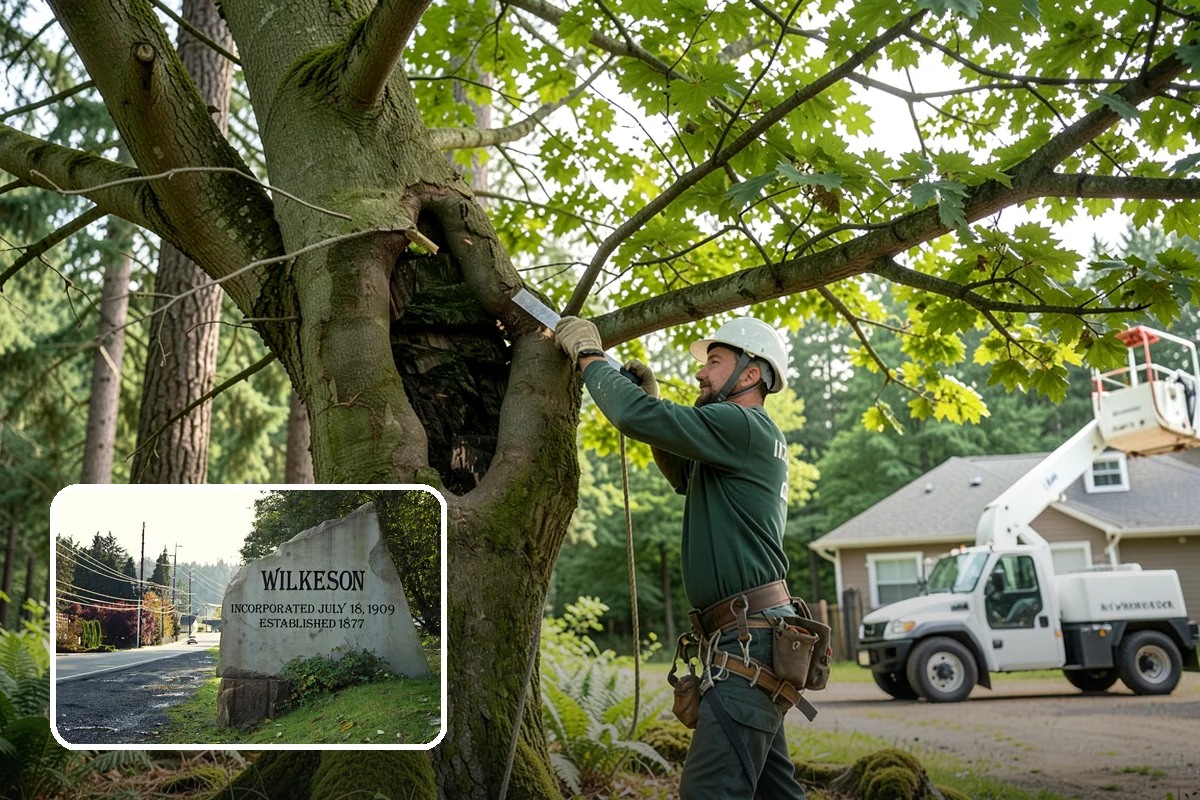
How bamboo removal works in Wilkeson soils and seasons
Why the ground matters
The NRCS soil survey for Wilkeson shows that 37% of the land has a hard or restrictive layer, such as glacial hardpan, within 40 inches of the surface. That is a survey figure for the town, not a measurement of your lot. Still, it changes the job. Where a hard layer sits shallow, rhizomes often run sideways instead of down, so they can travel under a fence or driveway edge and surface in a neighbor's yard. We trace the spread before deciding how wide to dig.
The same survey lists Indianola as the most common soil series, and 61% of the land as well drained. In well-drained ground, digging out rhizomes is usually practical, because the soil breaks apart and the roots can be followed.
Timing the work around rain and snow
Daymet data for 2005-2025 show that 79% of Wilkeson's yearly rain and snow falls from October to April. Wet soil is heavy and easy to compact, and it makes digging messy. Dry months are usually better for excavation, and they are also when new shoots show themselves clearly, which helps us find what was missed. If you want a start sooner, cutting canes to the ground in the wet season keeps the plant from building strength while you wait.
What the work usually includes
- Cutting and hauling away the canes
- Digging out rhizomes and root mass, following them past the visible edge of the stand
- Checking the surrounding ground for stray runners
- Advising on a root barrier if you want to keep any bamboo
Expect follow-up. Even careful removal can leave fragments that sprout, so plan on pulling or cutting new shoots for a season or two. In a small town of about 198 homes, a runner crossing a property line is easy to notice, so it helps to talk with the neighbor early. Call or text 425-484-4442 for a free estimate, and we will check with the city before work starts if anything about the site is unclear.
Wilkeson tree conditions at a glance
| Homes in the wildland-urban interface | 100% |
|---|---|
| Land under dense tree cover (50%+ canopy) | 51% |
| Slopes | More steep ground than most Puget Sound cities |
| Rain and snow falling October to April | 79% of the year’s total |
Tree removal rules in Wilkeson
Wilkeson’s published rules don’t spell out clearly which removals need city approval. We check with the city before work starts.
Tree health near Wilkeson
- Bears6,697 ac
- Decline, cause not identified907 ac
- Douglas-fir engraver894 ac
Forest damage mapped from the air within 10 km of Wilkeson, 2021-2025 (USDA Forest Service and WA DNR). This covers forest land, not street or yard trees. “Decline, cause not identified” is dieback with no single cause found.
Sources: Daymet daily weather (NASA/ORNL), NOAA Storm Events, USDA plant hardiness map 2023, NRCS soil survey, USGS elevation, WA DNR landslide inventory, USDA Forest Service aerial survey, WSDA, city tree assessments and street-tree inventories, SILVIS Lab, Arbor Day Foundation, and official city and utility pages.
Bamboo Removal Serving Wilkeson
Wilkeson

Bamboo removal in nearby areas
Also serving Wilkeson
- Land Grading in Wilkesonat Washington Landscaping
- Selective Demolition in Wilkesonat Washington Construction
- Herbicide Application in Wilkesonat Washington City Services
- Firewood Hauling in Wilkesonat Washington Firewood