Where Safety Meets Expert Tree Service.

Tacoma Tree risk assessment
A structured assessment of the likelihood and consequences of tree failure.
About Tree Risk Assessment in Tacoma
A tree risk assessment helps you understand if your trees are likely to fail and what that failure could mean for your property. This structured evaluation supports informed decisions about keeping a tree, mitigating potential hazards, or removing it safely. It is designed for homeowners who want to ensure the long-term stability of their landscape while protecting people and structures nearby.
What Tacoma Tree Risk Assessment Includes
Tree risk assessment examines both the likelihood of failure and the consequences if an event occurs. Our trained crews follow recognized arboricultural standards to match methods with your specific tree species, site conditions, and access points. This process helps catch problems early before they escalate into serious issues for your valued trees or home safety.
Tacoma Tree Risk Assessment Process
The work begins by inspecting each tree along with its surrounding environment to identify key factors like soil quality, pests, disease, or past construction impacts. Based on these findings, we recommend and apply appropriate treatments such as pruning, fertilization, or cabling to improve root conditions and overall health. We document all observations clearly so you have a record of the current status and any follow-up care needed later.
Equipment We Use for Tacoma Tree Risk Assessment
Our crews utilize diagnostic tools and soil probes to gather accurate data about underground roots and ground stability without causing unnecessary damage. Specialized sampling kits allow us to test for pests or disease, while injection equipment delivers treatments directly where they are most effective. When necessary, air excavation tools help inspect root zones carefully, ensuring we protect the tree during every step of the assessment.
Tacoma Tree Risk Assessment Safety & Best Practices
We strictly follow label and application guidelines for any products used to ensure safety for both our crew and your landscape. Our methods prioritize avoiding damage to roots or trunks while keeping surrounding plantings healthy throughout the work process. Accurate documentation of site conditions is essential, helping us maintain a safe environment that accounts for weather changes and soil limitations.
Signs You Need Tree Risk Assessment in Tacoma
You may need this service if you notice signs like compacted soils, girdling roots, or visible decline from past construction activities nearby. It becomes especially important when pests or disease are suspected to be affecting the structural integrity of your trees over time. If recent grade changes have altered how water drains near a tree’s base, an assessment helps determine if mitigation is required now.
What Affects the Cost of Tree Risk Assessment in Tacoma
The investment for this service depends on factors such as the size of the trees and how difficult it is to access them safely. Sites with complex soil conditions that require specialized probing equipment will naturally influence the overall cost more than open areas. Additionally, identifying multiple contributing issues like widespread disease or pest infestations during inspection can affect the final price.
Best Time of Year for Tacoma Tree Risk Assessment
In our Puget Sound climate, these assessments can be performed year-round to keep your trees healthy and stable throughout all seasons. However, we may need to adjust scheduling when the ground is frozen because proper soil probing becomes difficult in those conditions. We also plan around extreme weather events that could affect crew safety or make it unsafe to work near unstable branches.
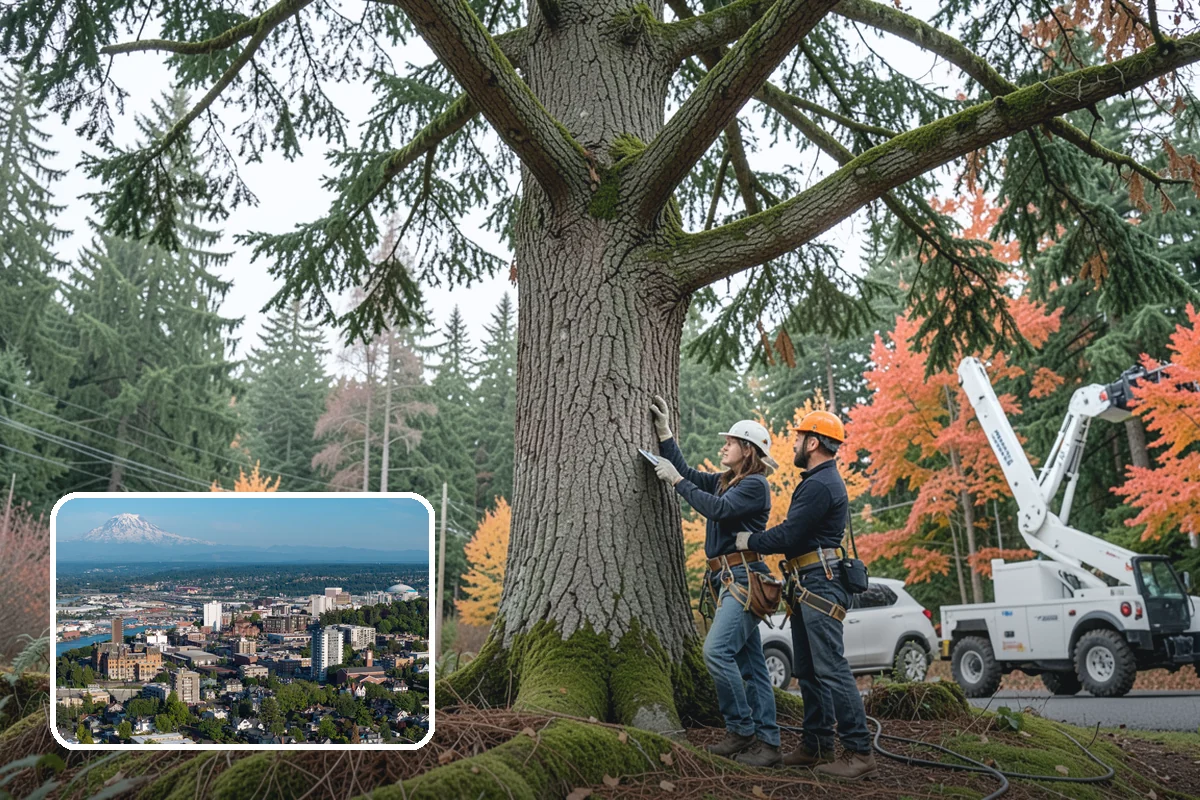
Tree Risk Assessment Serving Tacoma
Tacoma
The Pierce County seat and a major port city on Commencement Bay of Puget Sound.
Growing Conditions in Tacoma
Permits & Local Notes for Tacoma
Tree risk assessment in nearby areas
Also serving Tacoma
- Shrub Pruning in Tacomaat Washington Landscaping
- Soil Amendments in Tacomaat Washington City Services