Where Safety Meets Expert Tree Service.


Redmond Campus Tree Management
Tree management for campuses and institutional grounds.
Redmond's street-tree inventory lists 7,985 trees, and almost half of them (44.9%) are maple. If you manage a campus, that mix is a useful starting point. A site with many trees of one kind can see the same problems repeat across a lot of them, so a walk-through by species often finds patterns early.
Start with a tree map of the grounds. Mark the trees along walkways, parking, building entries and utility lines. Those are the ones where a dropped limb causes the most harm, and they should be looked at first.
About Campus Tree Management in Redmond
Campus tree management provides professional care for large institutional properties like schools or community centers. Our trained crews help keep your grounds safe, presentable, and aligned with recognized arboricultural standards while respecting the unique needs of each site. This service is designed to support consistent maintenance across expansive campus landscapes without disrupting daily operations.
What Redmond Campus Tree Management Includes
This service covers comprehensive tree management tailored specifically for campuses and other institutional grounds. We match our methods to local tree species and specific site conditions, ensuring that every task from pruning to inspection fits the environment perfectly. The goal is to maintain a healthy canopy while managing access challenges common in high-traffic areas around buildings and walkways.
Redmond Campus Tree Management Process
Work begins with an inventory and assessment of all trees on your property to establish priorities for care. We then develop a customized maintenance schedule that includes recurring pruning, inspections, and necessary treatments. Throughout the project, we document our work and regularly update the plan to address deferred issues or changing conditions across the site.
Equipment We Use for Redmond Campus Tree Management
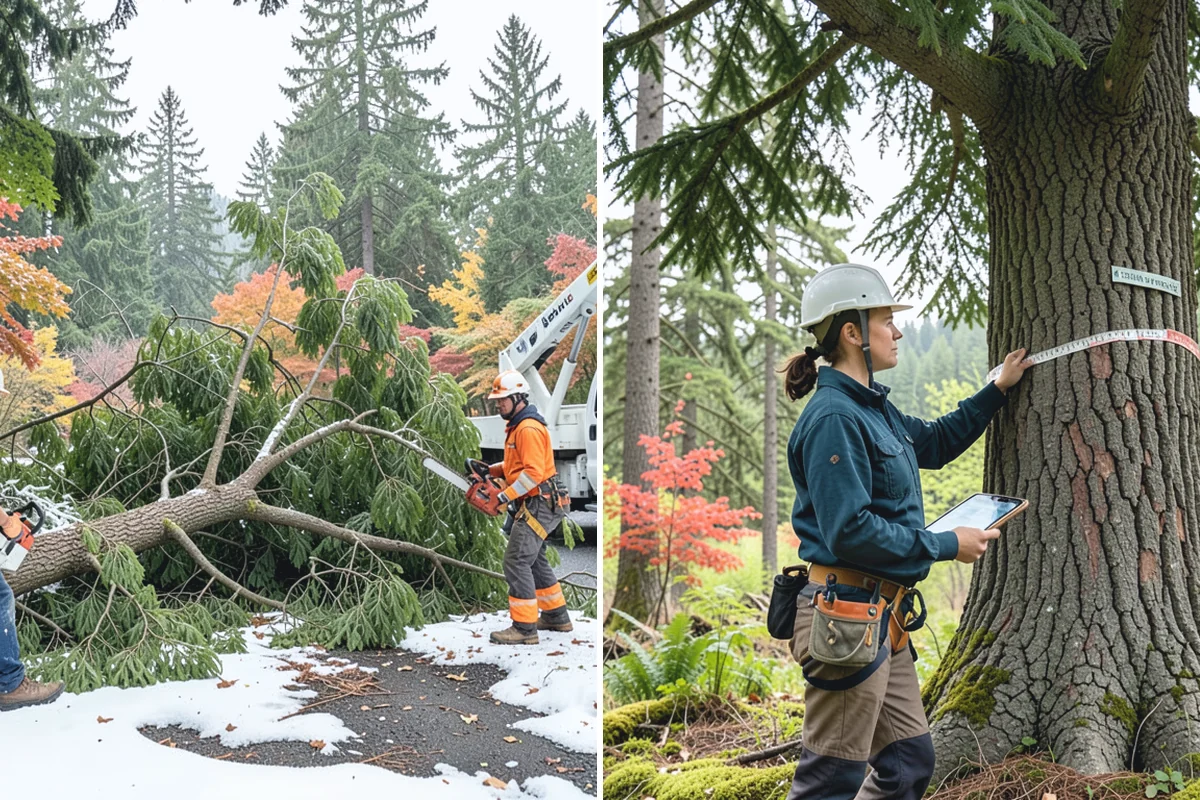
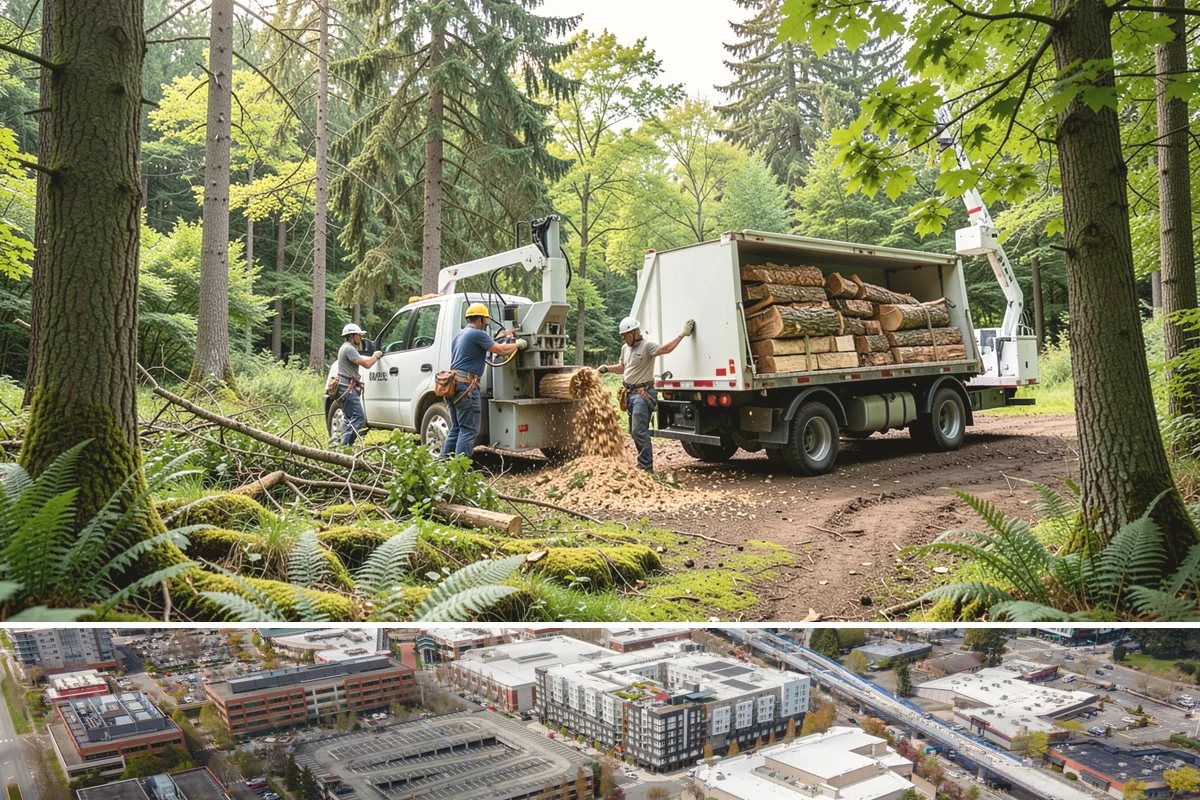
Our crews utilize specialized gear such as rigging equipment, inspection tools, and personal protective equipment for every job. Depending on the height of your trees and access points, we may bring in aerial lifts to reach difficult branches safely. We also use chippers and hauling equipment to remove debris efficiently while minimizing disruption to campus activities.
Redmond Campus Tree Management Safety & Best Practices
Safety is a top priority as we coordinate all work around building occupants and active traffic patterns. We maintain strict safe work zones in public areas and follow recognized standards to protect both our team and your community members. Detailed records are kept for accountability, ensuring that every step of the process meets high safety expectations.
Signs You Need Campus Tree Management in Redmond
You may need this service if you face a backlog of deferred maintenance or struggle with varied tree conditions across different parts of your campus. High-traffic areas often require extra attention to ensure trees remain safe and do not interfere with daily movement around the property. Coordinating schedules around these complex site conditions is another common reason institutions seek our help for institutional grounds management.
What Affects the Cost of Campus Tree Management in Redmond
The investment depends largely on the total size of your campus property and how many acres or buildings are included in the scope. Access challenges within high-traffic zones can influence pricing, as well as the specific timing required to work around varied tree conditions across the site. We aim to provide budget-friendly care that supports consistent maintenance without unexpected financial surprises for institutional budgets.
Best Time of Year for Redmond Campus Tree Management
Our schedules follow local Puget Sound weather patterns to ensure trees receive care when they need it most. Inspections are typically prioritized during dormancy, while pruning is timed according to species-specific needs and any specific constraints of your institution. This approach allows us to maintain a steady rhythm of work that respects both the biology of your trees and the operational calendar of your campus.

Managing campus trees in Redmond, step by step
Redmond has college, hospital and corporate campuses, including several Microsoft campuses and the Aerojet Rocketdyne campus, according to OpenStreetMap. Each one has its own mix of buildings, parking and open ground. A plan that works for one may not fit another. Here is how campus tree work usually goes.
1. Survey and rank
An ISA Certified Arborist walks the site and records species, size, condition and what sits under each tree. Trees over paths, cars and entrances rank highest. This follows standard risk assessment practice, and it gives you a list in a sensible order rather than a pile of requests.
2. Match the work to the tree
Most of the work is pruning to ANSI A300 standards. That means removing dead, crossing or weakly attached branches and raising canopies for clearance. We do not recommend topping, because it leaves weak regrowth and stresses the tree. Some trees will need removal when decay or structural defects cannot be corrected by pruning.
3. Check the city rule before removals
Redmond's tree removal tip sheet, an official city source, says a Tree Removal Permit is required to remove any Significant Tree. The regulated size is 6 inches in diameter at 4.5 feet above grade. The tip sheet's yearly limit of up to 2 trees applies to developed residential lots up to 10,000 square feet. It does not describe how campus properties are handled, so we check with the city before any removal begins. The tip sheet covers removal only, not pruning.
4. Schedule around use
Work near buildings, lots and walkways can be staged by area so access stays open. Tell us about events, class schedules or visiting hours and we can plan around them.
To set up a site walk, call or text 425-484-4442. Estimates are free, and the company is licensed, bonded and insured.
Redmond tree conditions at a glance
| Tree canopy | 37.36% of the city (city assessment, 2023) |
|---|---|
| USDA hardiness zone | 8b (8b to 9a across the city) |
| Tree City USA | 27 years |
| High and strong wind episodes, 2005-2025 | 33 in the forecast zone |
| Soils | 62% of land has hardpan or another restrictive layer within 40 in; most common series Alderwood |
Tree removal rules in Redmond
A Tree Removal Permit is required to remove any Significant Tree. Developed neighborhood residential lots may remove per year: lots up to 10,000 sq ft - up to 2; 10,001-20,000 - up to 4.
Regulated size: 6 in. diameter at 4.5 ft above grade.
Official city source. Rules change; we confirm with the city before work starts.
Most common street trees in Redmond
- Maple44.9%
- Oak14.4%
- Ash11.8%
- London Planetree9.6%
- Honeylocust6.2%
- Pear4.0%
Share of 7,985 trees in the city’s street-tree inventory.
Sources: Daymet daily weather (NASA/ORNL), NOAA Storm Events, USDA plant hardiness map 2023, NRCS soil survey, USGS elevation, WA DNR landslide inventory, USDA Forest Service aerial survey, WSDA, city tree assessments and street-tree inventories, SILVIS Lab, Arbor Day Foundation, and official city and utility pages.
Campus Tree Management Serving Redmond
Redmond
Also serving Redmond
- Vegetation Management in Redmondat Washington City Services
- Property Beautification in Redmondat Washington Landscaping
- Storefront Construction in Redmondat Washington Construction
- Parking Garage Cleaning in Redmondat Washington Pressure Washing