Where Safety Meets Expert Tree Service.


Puyallup Canopy Reduction
The reduction of overall canopy size with measured cuts.
In Puyallup, 81% of the year's rain and snow falls between October and April, according to Daymet data for 2005 to 2025. That makes late summer and early fall a sensible time to look at a crowded or heavy canopy, before the wet months load the branches and soften the soil.
Canopy reduction means shortening selected branches to reduce a tree's height or spread. It is not the same as topping. If a tree is too big for its spot, the aim is to take off less, cut in the right places, and keep its natural shape.
About Canopy Reduction in Puyallup
Canopy reduction helps homeowners manage large trees by carefully lowering their overall size while keeping a natural look. This approach improves safety around your property without harming the tree’s long-term health or structure. It is an ideal solution for those dealing with heavy branches that might interfere with overhead lines or viewlines.
What Puyallup Canopy Reduction Includes
This service reduces the total canopy volume using precise, measured cuts designed to lower weight and wind resistance. We focus on maintaining the tree’s natural form while removing excess growth that could lead to branch failure. The work is tailored specifically to your tree species and current site conditions for a balanced result.
Puyallup Canopy Reduction Process
Our trained crews begin by assessing the condition of your canopy and defining clear pruning objectives before making any cuts. Each cut is placed at proper points using techniques matched to the specific needs of your tree type and season. Afterward, we lower all removed material safely and clean up the entire work area to leave your property tidy.
Equipment We Use for Puyallup Canopy Reduction
We utilize a range of tools including hand saws, pole saws, chainsaws, and wood chippers to handle branches efficiently. Climbing gear and rigging equipment allow our team to access high limbs securely when necessary. An aerial lift is used only if the site conditions or tree size require additional height assistance.
Puyallup Canopy Reduction Safety & Best Practices
We strictly follow recognized arboricultural standards to avoid making harmful cuts that could stress your trees. Our crew watches closely for unstable limbs and overhead power lines while working at heights with proper fall protection. By limiting removal to healthy amounts of live tissue, we prevent unnecessary shock or damage during the process.
Signs You Need Canopy Reduction in Puyallup
You may need this service if you notice deadwood in weak unions or branches that block sightlines near your home. Interference with structures or utility lines often indicates it is time for a measured reduction of canopy size. Over-pruning from past attempts can also signal a need to correct structure and restore the tree’s natural vigor.
What Affects the Cost of Canopy Reduction in Puyallup
The price varies based on the overall size of the trees, how complex the site access is, and the volume of wood that needs disposal. Larger jobs with difficult terrain or significant amounts of cut material will naturally require more time and resources. These factors combine to determine a fair estimate for your specific project scope.
Best Time of Year for Puyallup Canopy Reduction
Work should be scheduled according to species-specific timing sensitivities common in our region to avoid stressing trees during active growth. We plan around dormancy periods so that cuts do not coincide with times when the tree is most vulnerable to weather or disease. Following these seasonal windows ensures the best recovery and health for your canopy after reduction.
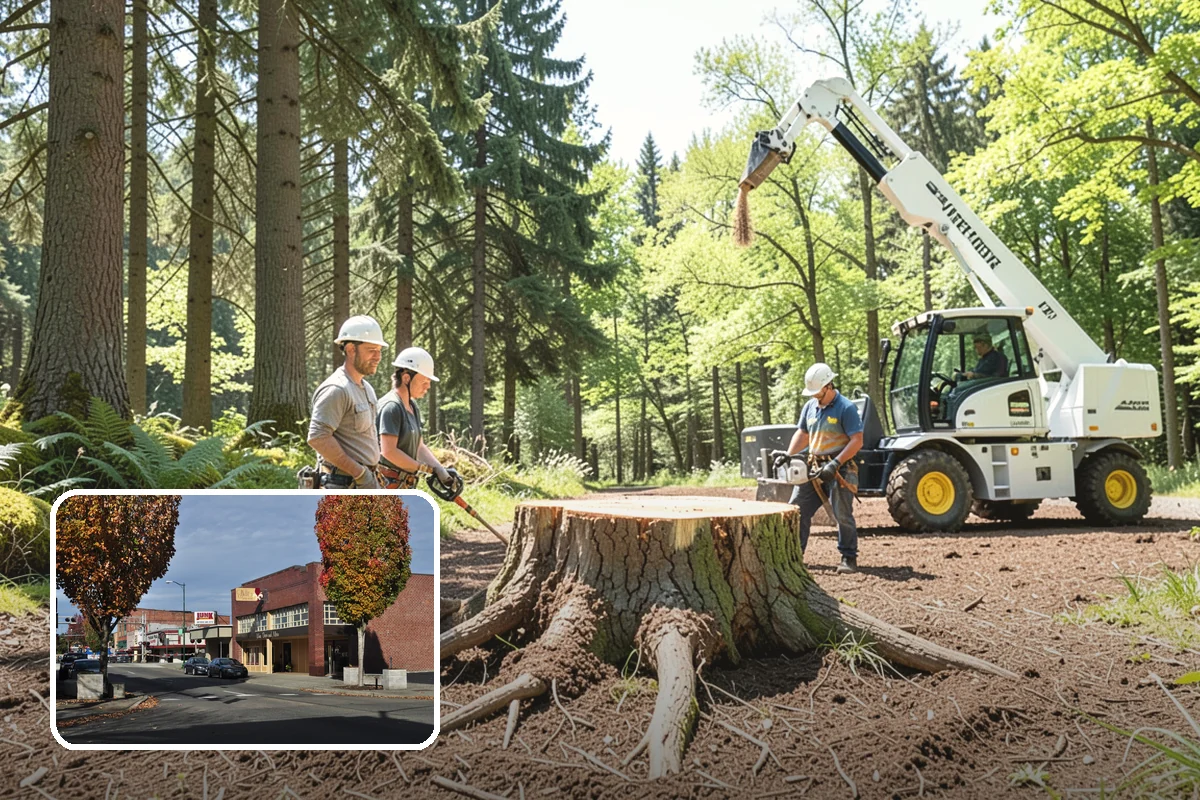
How canopy reduction works on Puyallup properties
Canopy reduction is careful, selective pruning. Here is how the work usually goes.
- Walk the tree and decide what needs to change: clearance over a roof, weight over a driveway, or a crown that has outgrown its space.
- Choose the branches to shorten. Each one is cut back to a side branch large enough to take over as the new growing tip, in line with ISA and ANSI A300 pruning practice.
- Remove dead or crossing wood while we are in the tree.
- Stop before the crown looks stripped. Taking too much at once stresses a tree.
Why we avoid topping
Cutting large limbs to stubs is topping, and we do not recommend it. Linda Chalker-Scott of the WSU Puyallup Research and Extension Center notes that shoots sprouting after topping are weakly attached and become more likely to fall as they grow. A tree topped to cut risk can end up with more of it.
Wind and the wet season
The forecast zone that includes Puyallup logged 25 high and strong wind episodes from 2005 to 2025. That figure covers the whole zone, not one yard, but it is a reminder that a dense, heavy crown catches wind. Thinning and shortening long, overextended limbs can lessen that load. It cannot make a tree storm-proof, and a tree with decay or structural defects may need a different plan.
Since most precipitation arrives from October to April, scheduling reduction work before then gives you a clearer look at the tree's structure and easier access to the ground beneath it.
Before work starts
The tree's size, species and condition decide how much can be taken off. If a city rule could apply to your tree, we check with the City of Puyallup before any work begins. For an on-site look and a free estimate, call or text 425-484-4442. An ISA Certified Arborist is on staff, and the company is licensed, bonded and insured.
Puyallup tree conditions at a glance
| USDA hardiness zone | 8b |
|---|---|
| Rain and snow falling October to April | 81% of the year’s total |
| Days that freeze at night and thaw by day | 29 a year |
| Tree City USA | 8 years |
| Electric utility | unconfirmed |
Most common street trees in Puyallup
- Flowering Pear14.6%
- Hornbeam9.4%
- Crabapple8.9%
- Linden7.3%
- Ash6.9%
- Green ash5.9%
Share of 812 trees in the city’s street-tree inventory; median trunk diameter 9.5 in, 0.0% at 24 in or wider.
Sources: Daymet daily weather (NASA/ORNL), NOAA Storm Events, USDA plant hardiness map 2023, NRCS soil survey, USGS elevation, WA DNR landslide inventory, USDA Forest Service aerial survey, WSDA, city tree assessments and street-tree inventories, SILVIS Lab, Arbor Day Foundation, and official city and utility pages.
Canopy Reduction Serving Puyallup
Puyallup
Also serving Puyallup
- Dogwood Pruning in Puyallupat Washington Landscaping
- Roof Tune-Up in Puyallupat Washington Roofing
- Tree Mulching in Puyallupat Washington City Services