Where Safety Meets Expert Tree Service.

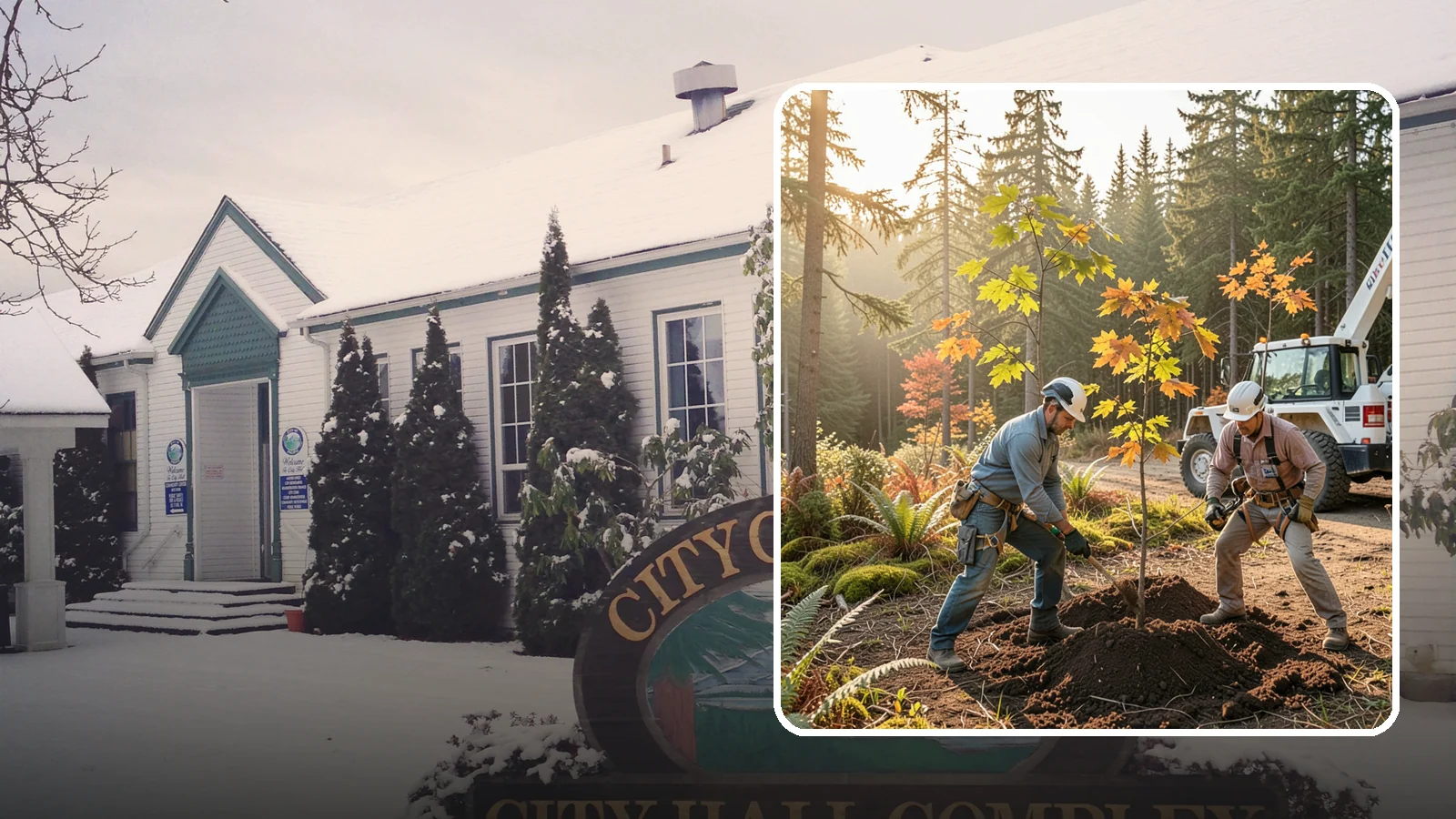
Pacific Native Tree Planting
The planting of species native to the region.
When is the right time to plant a native tree in Pacific? Fall through early spring usually works well, because the ground is wet and the tree has months to root in before dry weather. Pick the species after you know how your soil drains.
Native planting is mostly about matching tree to site. Some spots hold water, some sit on a hard layer below the surface, and a few drain freely. Each one suits different species, and each changes how deep and how wide the planting hole should be.
About Native Tree Planting in Pacific
Native tree planting helps restore local ecology while adding privacy and shade to your property. This service is designed for homeowners who want healthy trees that are naturally suited to their site conditions. We use trained crews to ensure every new addition supports long-term resilience in the region.
What Pacific Native Tree Planting Includes
Our work focuses on selecting and installing species native to Washington State to improve overall site health. The process includes preparing the soil, planting at the correct depth, and providing guidance for proper establishment. Every method is matched specifically to the tree type and your unique location conditions.
Pacific Native Tree Planting Process
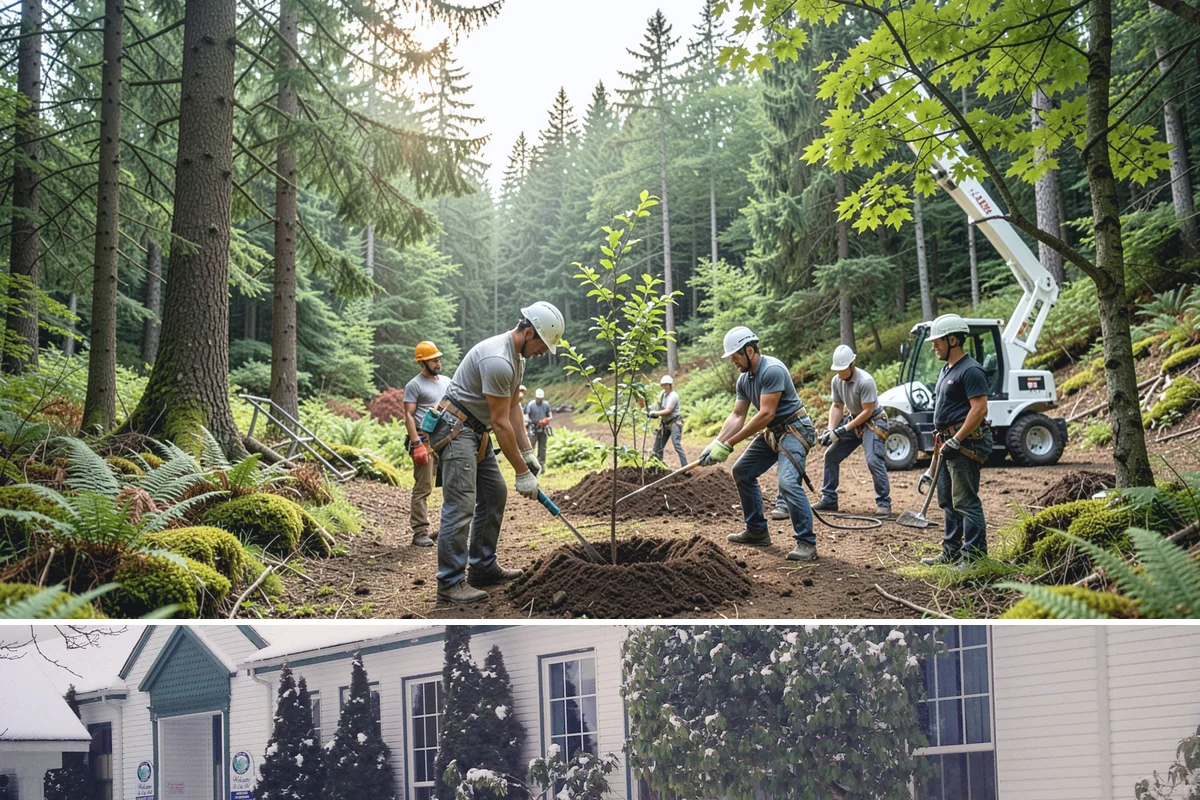
We begin by assessing your land to choose suitable trees that will thrive in local environments. After clearing and amending the area as needed, our crew plants each tree with care to protect its roots. Finally, we apply mulch and water before offering advice on how to keep your new planting healthy for years to come.
Equipment We Use for Pacific Native Tree Planting
The job requires digging tools, watering equipment, and materials like soil amendments and mulch. We also bring staking supplies when necessary and ensure all crew members wear personal protective gear during the work. These resources allow us to handle different site conditions safely and effectively.
Pacific Native Tree Planting Safety & Best Practices
Before any digging begins, we locate underground utilities to prevent damage or injury. Our team selects species that fit your space well to avoid future conflicts between roots and structures. We also take care not to harm existing root systems while handling the new trees for planting.
Signs You Need Native Tree Planting in Pacific
You may need this service if you notice poor soil quality or compacted ground in your yard. Signs of improper past planting, such as shallow depth or unsuitable species choices, are another reason to call us. If you want to expand tree cover without risking transplant shock later on, native planting is a great option for you.
What Affects the Cost of Native Tree Planting in Pacific
The price depends heavily on how accessible the site is and whether soil amendments are required. Choosing species that match your local conditions helps avoid extra costs related to poor growth or replacement needs. Additionally, ensuring proper depth and spacing during installation influences the overall investment in your project.
Best Time of Year for Pacific Native Tree Planting
Planting works best when done during dormancy in late fall or early spring to reduce stress on the trees. We aim to schedule work before frozen ground sets in so roots can establish themselves properly. Specific timing must always align with the unique requirements of each native species we select for your landscape.
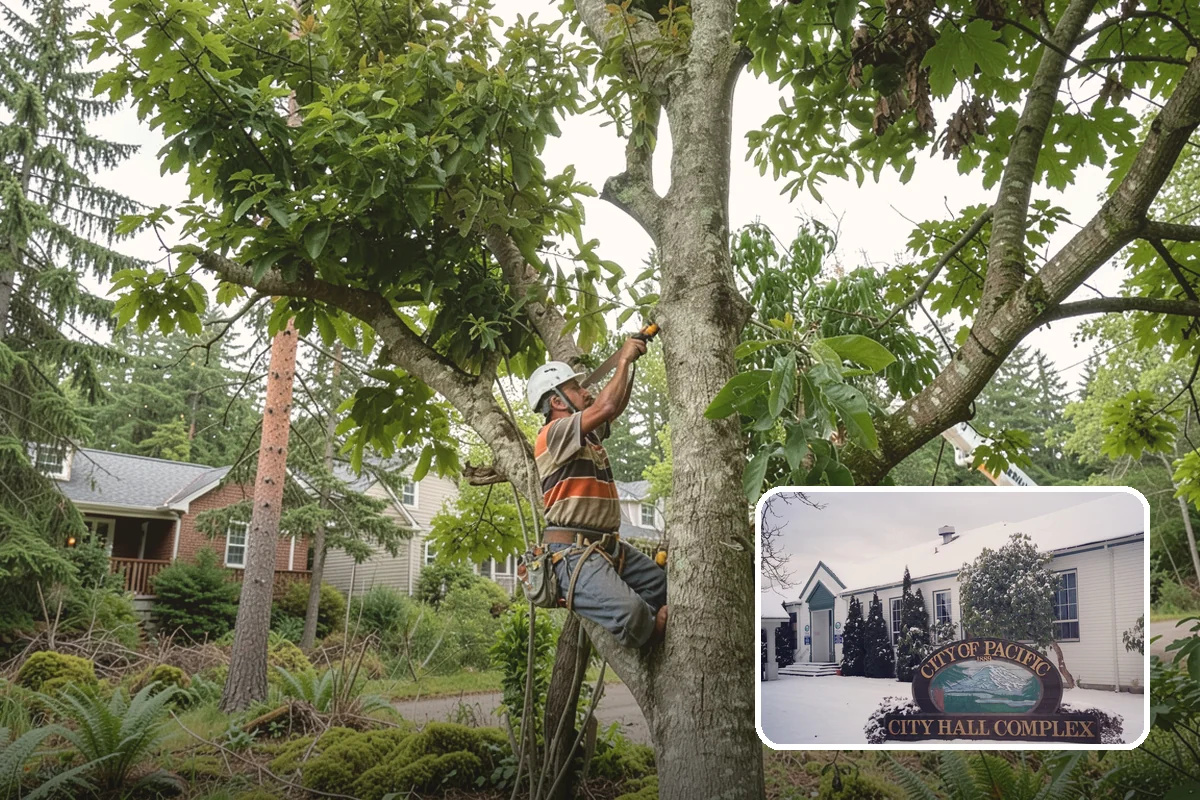
Planting native trees in Pacific: timing, soil and staking
Plant when the rain does the watering
Daymet climate data for 2005-2025 shows that 81% of Pacific's yearly rain and snow falls from October to April. That is why cool-season planting makes sense here. Roots establish while the soil is moist, and the tree is not asking for much water yet. Summer is the hard part. A new tree still needs regular watering through its first dry months, so plan for that before you buy.
Check drainage before choosing a species
The NRCS soil survey for Pacific shows Puyallup as the most common soil series. It also reports that 45% of the land is poorly drained and 27% is well drained. About 29% has a hard or restrictive layer, such as glacial hardpan, within 40 inches of the surface. These are survey figures for the area, not a reading of your yard. They do tell you to test your own spot. Dig a hole, fill it with water, and see how long it takes to drain. Slow drainage points toward species that tolerate wet feet. Fast drainage opens up drier-site natives. If you hit a hard layer, we would talk through the options before planting, since a hole that holds water can drown roots.
Pacific sits in USDA hardiness zone 8b (USDA map, 2023). Most Pacific Northwest natives handle that range, so soil and light usually matter more than cold.
Stake only if needed, and remove it
Many young trees do fine without stakes. If a tree needs one because of wind or a loose root ball, the WSU Extension Pacific Northwest Gardener's Handbook says to remove stakes within about a year. Ties left on can girdle the trunk. Put a reminder on your calendar when the tree goes in.
- Test drainage in the planting spot first
- Plant in the wet season, then water through summer
- Set the root flare at or just above grade
- Take off stakes and ties within a year
If you want help choosing a species or checking a tricky spot, call or text 425-484-4442 for a free estimate. An ISA Certified Arborist is on staff.
Pacific tree conditions at a glance
| USDA hardiness zone | 8b |
|---|---|
| Soils | 29% of land has hardpan or another restrictive layer within 40 in; most common series Puyallup; 27% well drained |
| Rain and snow falling October to April | 81% of the year’s total |
| Days that freeze at night and thaw by day | 28 a year |
Tree removal rules in Pacific
Pacific’s published rules don’t spell out clearly which removals need city approval. We check with the city before work starts.
Sources: Daymet daily weather (NASA/ORNL), NOAA Storm Events, USDA plant hardiness map 2023, NRCS soil survey, USGS elevation, WA DNR landslide inventory, USDA Forest Service aerial survey, WSDA, city tree assessments and street-tree inventories, SILVIS Lab, Arbor Day Foundation, and official city and utility pages.
Native Tree Planting Serving Pacific
Pacific
Also serving Pacific
- Evergreen Tree Planting in Pacificat Washington Landscaping
- Municipal Turf Management in Pacificat Washington City Services