Where Safety Meets Expert Tree Service.

North Bend Tree Removal
Safe and complete removal of unwanted, dead, or hazardous trees.
You notice a lean that wasn't there last year, a cracked trunk, dead limbs in a green canopy, or roots lifting a patio. Maybe a tree is simply too close to the house now. Those are the usual reasons people start looking into removal.
Before you book anyone, measure the trunk and look up. The trunk size decides whether the city regulates the tree. What hangs above, especially any wire, decides how the job has to be planned.
About Tree Removal in North Bend
We handle the safe removal of unwanted or hazardous trees so you can feel secure on your property again. Whether a tree has fallen in a storm or is simply blocking access to part of your yard, our team is ready to help. This service brings peace of mind by eliminating risks and restoring order to your landscape.
What North Bend Tree Removal Includes
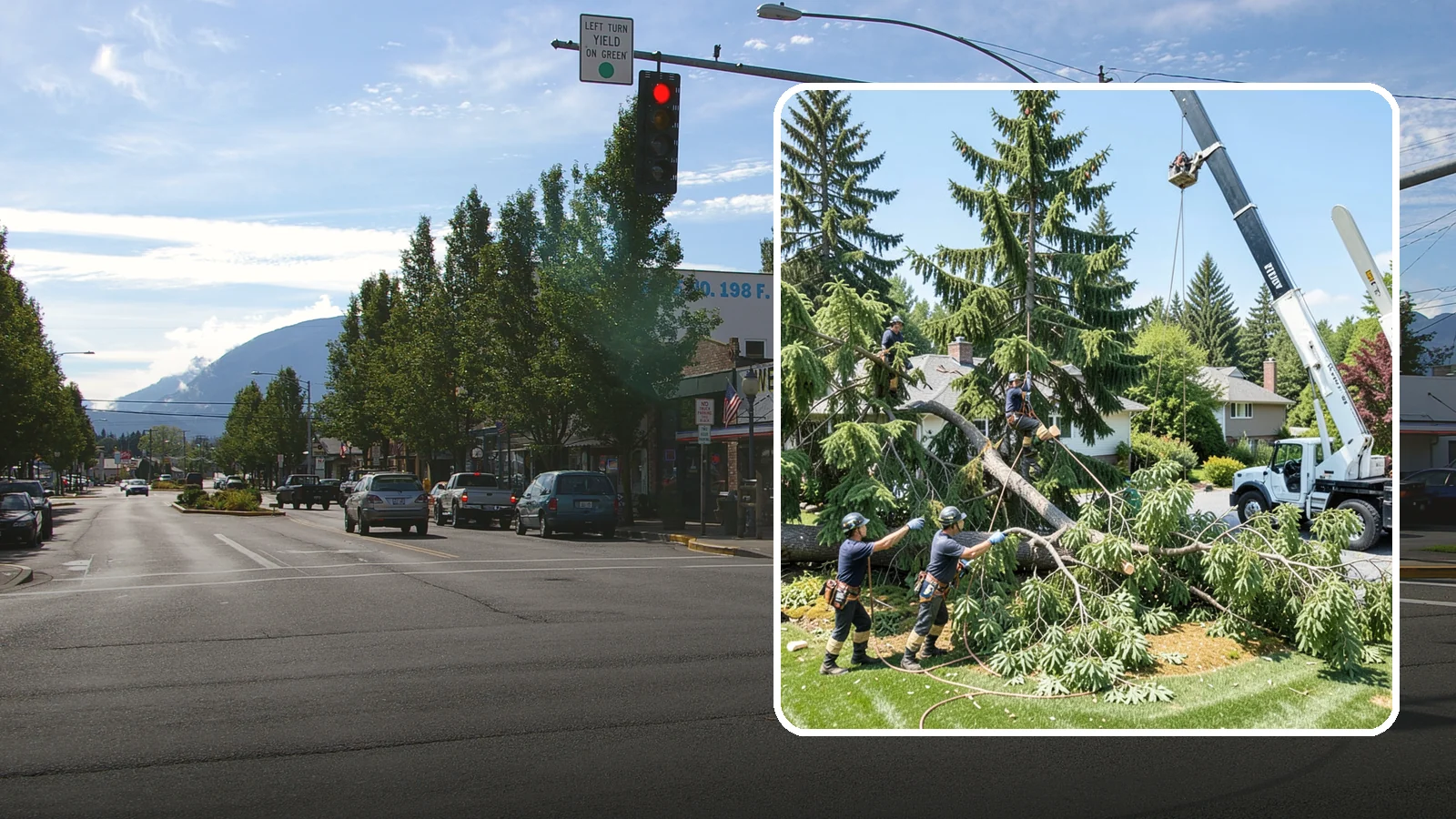
Tree removal involves cutting down the entire structure from top to bottom and clearing it from your site completely. We manage every step of this process to ensure no damage occurs to nearby buildings, fences, or other vegetation. The work includes taking away all limbs and trunk sections once they are safely lowered to the ground.
North Bend Tree Removal Process
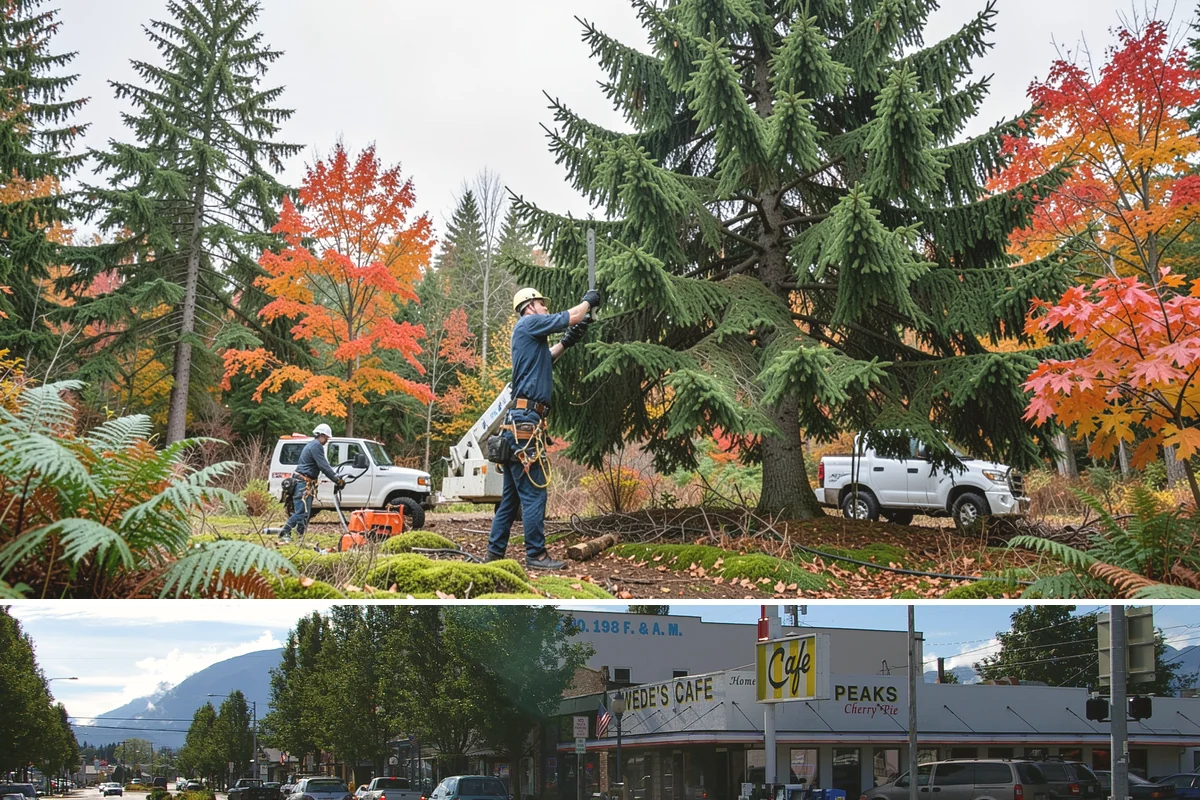
Our team begins with a careful assessment to plan how each tree will be taken down without causing harm. We establish clear drop zones and safety perimeters before starting any cutting from top-down sectioning or full felling. After removing the main structure, we handle limb extraction and optional stump grinding followed by thorough debris cleanup.
Equipment We Use for North Bend Tree Removal
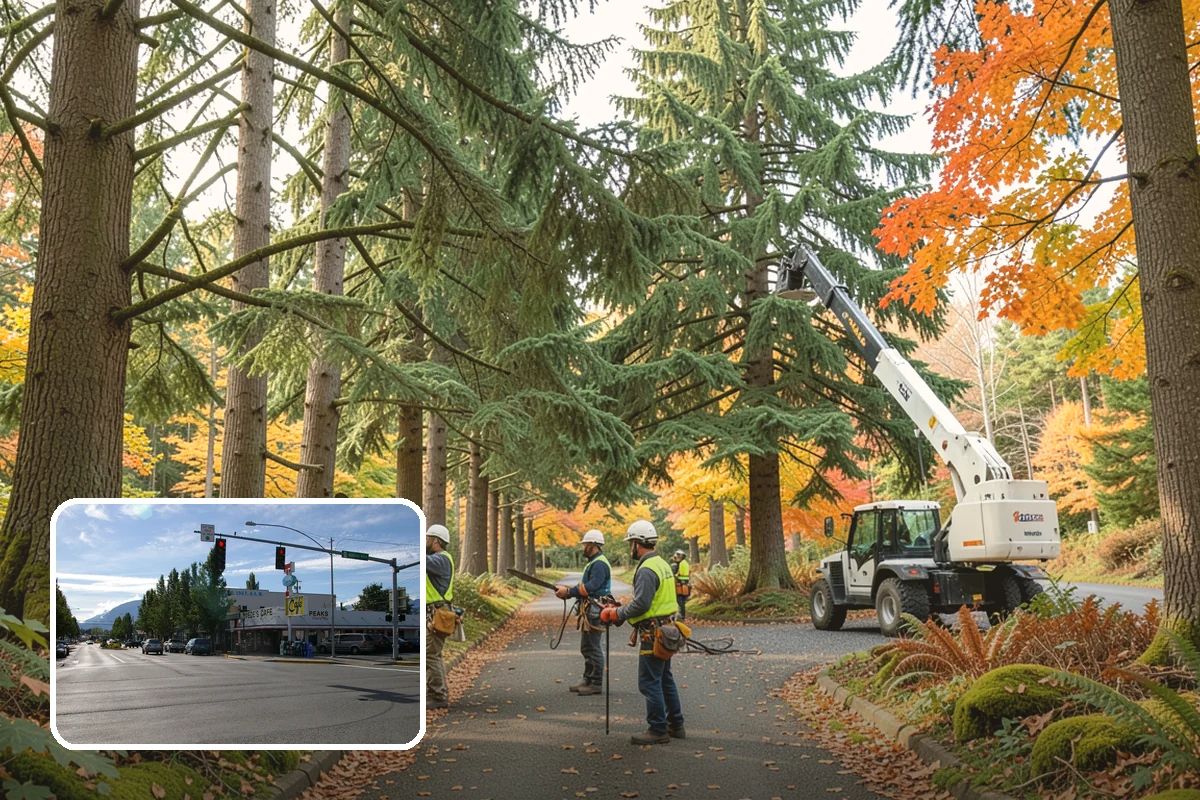
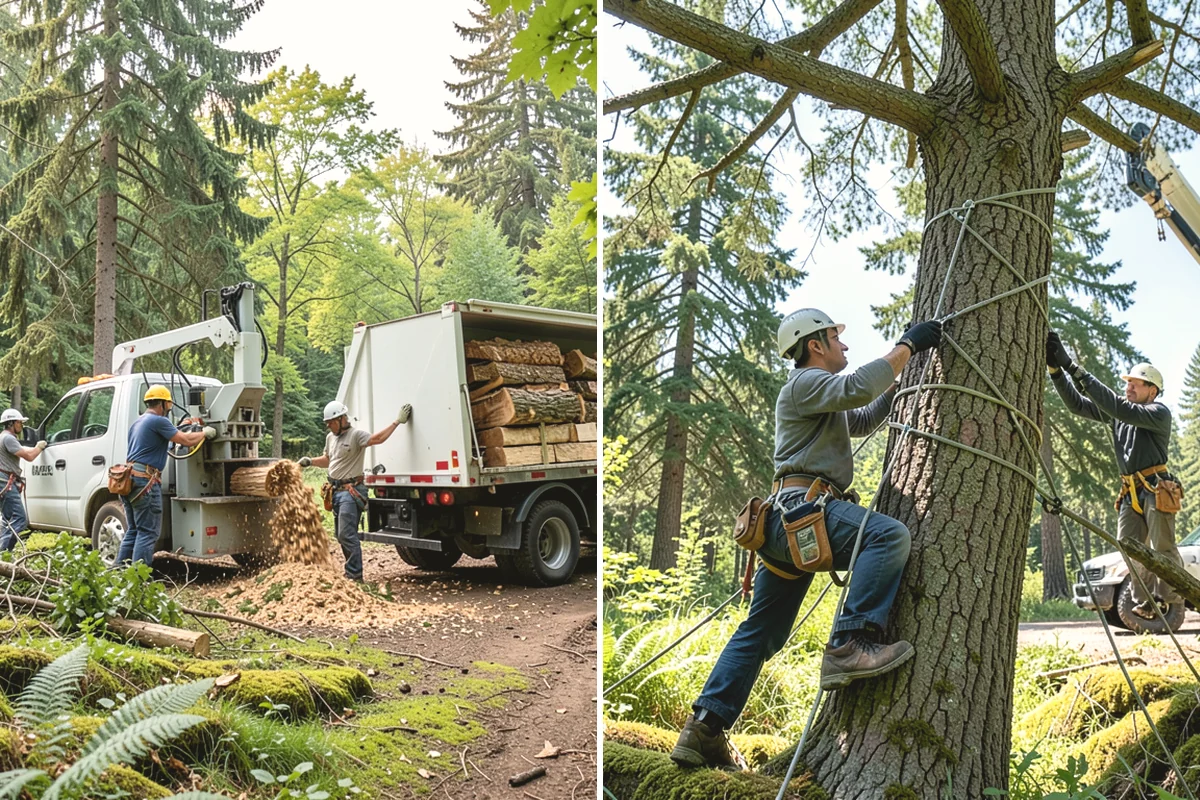
Professional work relies on chainsaws for precise cuts and heavy-duty rigging gear to control how trees fall safely. We utilize wood chippers to process branches efficiently and stump grinders to address remaining roots at ground level. For taller jobs or tight spaces, we bring bucket trucks or cranes to reach high clearance areas without risk.
North Bend Tree Removal Safety & Best Practices
Maintaining clear drop zones is essential so that falling limbs do not strike people or property unexpectedly. We always watch closely for overhead power lines and never work alone when removing large trees from a site. Checking for hidden structural rot before climbing ensures our team stays safe while working at height on your job.
Signs You Need Tree Removal in North Bend
You may need this service if a tree has died, become diseased, or is leaning dangerously toward your home. Storm damage that leaves branches hanging precariously or roots damaging foundations are clear indicators it is time to act. If you plan new construction and the existing trees interfere with building plans, removal might be necessary for progress.
What Affects the Cost of Tree Removal in North Bend
The final price depends heavily on the size of the tree and how dense its branch structure becomes during cutting. Access requirements play a major role, such as needing a bucket truck when working around high clearance obstacles or limited space. Whether stump grinding and debris haul-away are included in your project scope will also influence the total investment required.
Best Time of Year for North Bend Tree Removal
While we can perform removal year-round here in Washington State, many homeowners prefer scheduling during drier months for better ground conditions. Waiting until the soil is firm prevents heavy machinery from sinking into soft earth while ensuring a stable base for our equipment. This approach allows us to complete your project efficiently regardless of when you decide it needs attention.
Removing a tree in North Bend: size, wires and slopes
Most removals start with a defect. Decay at the base, a split union, root damage from construction or a long-term lean can all weaken a tree. An arborist looks at where the tree could fall, what it could hit, and whether the problem can be managed without taking it down. Sometimes pruning is enough. Sometimes it is not.
In North Bend, size matters before any cutting starts. The city requires a clearing and grading permit to remove a significant tree under NBMC 19.10. On private property, an evergreen counts at 15 inches DSH or larger. A deciduous tree counts at 12 inches DSH or larger, except red alder, holly, poplar and cottonwood. DSH is the trunk diameter measured at standard chest height. Per the city's published rule, removing 7 or fewer significant trees carries no permit cost, but replacement planting is required. That rule covers removal only. It says nothing about pruning, so if we are unsure how it applies to your tree, we check with the city before work starts.
Wires change the plan too. Puget Sound Energy is the electric utility here. Its rule for the service line, the wire from the PSE pole to your house or meter pole, is that PSE does not trim it. The homeowner or a private arborist handles that. If a tree touches or leans toward that wire, tell us when you call. Work near it needs extra planning, and the utility may need to be involved.
Slope is the third point. The Washington DNR maps 4 landslides in North Bend. That is a statewide agency record for the city, not a finding about your lot. Still, if the tree sits on or above a steep bank, its roots may be helping hold the soil. Ask about that before removal. The answer may affect how the tree comes down, whether the stump stays in place, and what you plant afterward.
A typical job involves a site walk, a plan for the fall direction or for sectional removal, rigging where space is tight, and cleanup. Stump grinding is a separate choice. Call or text 425-484-4442 for a free estimate.
North Bend tree conditions at a glance
| USDA hardiness zone | 8b |
|---|---|
| Landslides mapped by WA DNR | 4 |
| Soils | 5% of land has hardpan or another restrictive layer within 40 in; most common series Barneston; 54% well drained |
| High and strong wind episodes, 2005-2025 | 40 in the forecast zone |
| Electric utility | Puget Sound Energy (PSE) |
Tree removal rules in North Bend
A clearing and grading permit is required for the removal of any significant tree (NBMC 19.10). Removing 7 or fewer significant trees: no permit cost, but replacement is required; removing 8 or more triggers a significant tree inventory and a deposit.
Regulated size: Evergreen tree at least 15 in. DSH, or deciduous tree (other than red alder, holly, poplar, cottonwood) at least 12 in. DSH.
Official city source. Rules change; we confirm with the city before work starts.
Trees near the power line to your house
Puget Sound Energy (PSE): Service line (wire from PSE pole to home or meter pole): PSE does not trim it; homeowner/private arborist trims.
PSE performs a safety disconnection so the homeowner or private tree trimmer/arborist can work; Call at least 5 business days ahead to check crew availability and potential charges.
Safety disconnect: 1-888-321-7779 (5+ business days ahead). Utility page.
Any fee for a disconnect is set by the utility.
Strongest wind events near North Bend
- Dec 17, 2010: gusts to 72 mph
- Feb 1, 2017: gusts to 70 mph
- Feb 7, 2012: gusts to 70 mph
NOAA Storm Events, forecast zone that includes North Bend, 2005-2025.
Sources: Daymet daily weather (NASA/ORNL), NOAA Storm Events, USDA plant hardiness map 2023, NRCS soil survey, USGS elevation, WA DNR landslide inventory, USDA Forest Service aerial survey, WSDA, city tree assessments and street-tree inventories, SILVIS Lab, Arbor Day Foundation, and official city and utility pages.
Tree Removal Serving North Bend
North Bend
Tree Removal in nearby areas
Also serving North Bend
- Bulb Planting in North Bendat Washington Landscaping
- Trail Clearing in North Bendat Washington City Services
- Firewood Hauling in North Bendat Washington Firewood